

Written by: Cellular Institute Editorial Team
Medical reviewer: Dr. Matilde Rodríguez – CP 12651081
Laboratory reviewer: Biotecnóloga Diana Navarrete – CP 15029468
Quick Answer
Stem cell therapy for peripheral neuropathy may support nerve repair, reduce neuroinflammation, and improve function in appropriately selected patients. Early evidence is encouraging, particularly for diabetic neuropathy and chemotherapy-induced nerve damage. However, results vary significantly by patient, and no regenerative therapy can guarantee outcomes. A thorough physician evaluation is required before any protocol can be recommended.
What Patients with Peripheral Neuropathy Are Really Asking
Most patients who reach us have already tried medications like gabapentin or duloxetine. Some have tried physical therapy. Many have adjusted their lives around numbness, burning, or weakness in their hands and feet.
The question they are really asking is not just whether stem cells exist. They want to know whether regenerative medicine can do something that their current treatment has not been able to do: support the body in repairing damaged nerves.
That is a fair and honest question. The answer requires nuance.
Understanding Peripheral Neuropathy: Why It Is So Difficult to Treat
Peripheral neuropathy occurs when nerves outside the brain and spinal cord become damaged. Common causes include diabetes, chemotherapy, autoimmune conditions, alcohol toxicity, and idiopathic polyneuropathy, where no clear cause is identified.
Nerve tissue repairs slowly. Conventional medications manage symptoms but do not address the underlying nerve damage. This is precisely why patients explore regenerative approaches.
The peripheral nervous system does retain some capacity for repair, unlike the central nervous system. This is a meaningful distinction. It means regenerative support has a biological rationale in peripheral neuropathy that differs from conditions involving the brain or spinal cord.
How Stem Cell Therapy May Support Nerve Repair
Mesenchymal stem cells, the type most commonly used in regenerative protocols, do not simply replace damaged nerve cells. Their primary mechanism involves paracrine signaling: the release of growth factors, anti-inflammatory molecules, and signaling proteins that may support the environment around damaged nerves.
In the context of peripheral neuropathy, this may include:
- Releasing neurotrophic factors that support nerve survival and regrowth
- Modulating local inflammation that contributes to ongoing nerve damage
- Supporting remyelination, the process of repairing the protective sheath around nerve fibers
- Improving microcirculation to nerve tissue, which is especially relevant in diabetic neuropathy
Early clinical studies and patient reports suggest that some individuals experience improvements in pain levels, sensation, and function after regenerative protocols. These results are not universal, and the science continues to evolve. Responsible expectations matter.
For patients interested in learning more about the types of therapies available, our overview of types of stem cell treatments in Mexico provides helpful educational context.

What Affects Quality and Safety in a Regenerative Protocol
Not all stem cell therapies are equivalent. The biologic product itself matters enormously. Key variables include cell viability, passage number, sterility testing, sourcing, and how the cells were processed and stored before administration.
At Cellular Institute, biologics are prepared through our affiliated lab ecosystem, Cellgenic. This means the medical team has direct visibility into traceability, quality documentation, and safety standards before any product reaches a patient.
Our certified stem cells meet documented quality standards that many clinics cannot verify. Patients should always ask a clinic for transparency around these details before moving forward.
Delivery method also matters. Intravenous administration allows cells to circulate systemically. Intrathecal or targeted delivery may be considered in certain cases. The medical team determines the most appropriate approach based on individual evaluation.
Who May Be a Candidate for This Type of Protocol
Patients who tend to respond most meaningfully to regenerative protocols for peripheral neuropathy often share certain characteristics:
- Earlier-stage nerve damage rather than severe, long-standing loss of function
- Diabetic peripheral neuropathy with reasonably managed blood sugar levels
- Chemotherapy-induced peripheral neuropathy in patients who have completed treatment
- Idiopathic polyneuropathy without an active inflammatory trigger that remains uncontrolled
- Patients in generally stable health who can support the recovery process
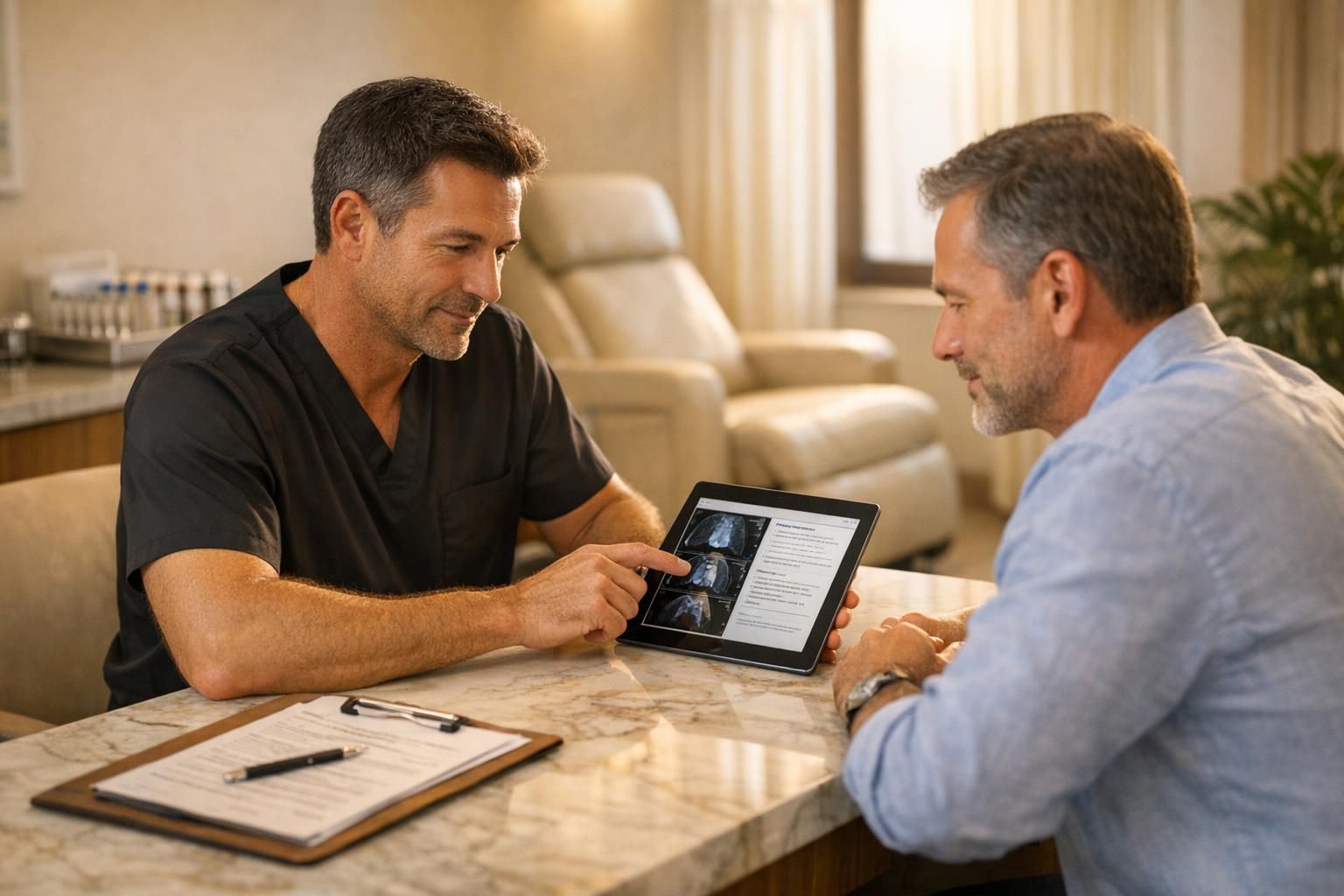
Each case requires individual evaluation. The physician reviews lab work, medical history, current medications, inflammation status, and overall health before any protocol discussion begins.
Who May Not Be a Good Candidate
Candidacy is not universal. Patients with advanced nerve degeneration, active uncontrolled systemic disease, or certain immune conditions may not respond as meaningfully. Some may require additional preparation before a regenerative protocol is appropriate.
This is why physician evaluation comes first. A responsible clinic never skips this step.
How Cellular Institute Approaches Peripheral Neuropathy Protocols
Cellular Institute does not offer a single-injection solution. The medical team designs a personalized protocol based on each patient’s specific case, goals, and biological context.
A neuropathy-focused protocol may combine stem cell therapy with complementary modalities. These can include exosome therapy to enhance cell signaling support, EBOO therapy in Cancún to address oxidative stress and systemic inflammation, peptide therapy to support neurological recovery and tissue optimization, and recovery technologies such as hyperbaric oxygen therapy and PEMF, which may further support nerve tissue repair.
The goal is not to treat one symptom. The goal is to create an internal environment where the body has a better opportunity to support its own repair processes.
Medical oversight throughout the protocol is led by Dr. Rafael Moguel, Medical Director, alongside our broader physician team. Every protocol begins with a structured evaluation and ends with a clear follow-up plan.
Patients traveling from the United States or Canada can learn more about what to expect through our complete guide to medical tourism in Mexico.
How Long Does It Take to See Results?
This is one of the most common questions patients ask. The honest answer is that timelines vary.
Some patients notice early changes in pain levels or sensory symptoms within four to eight weeks. Others experience more gradual shifts over three to six months as the regenerative process unfolds. Nerve tissue repairs slowly by its biological nature, so patience is part of the process.
For a deeper look at what to realistically expect, our article on how long stem cell therapy results may last offers helpful guidance on timelines and patient expectations.
Questions to Ask Before Choosing a Clinic
If you are evaluating clinics for peripheral neuropathy treatment, consider asking the following:
- Where do the cells come from, and what quality documentation is available?
- Does the clinic have in-house lab support or does it outsource biologics?
- What does the full protocol include beyond the injection itself?
- Will a physician evaluate my specific case before a protocol is designed?
- What follow-up support does the clinic provide after treatment?
- What is the clinic’s regulatory standing in Mexico?
Our guide on how to choose a stem cell clinic in Mexico walks through these questions in greater detail and helps patients avoid common mistakes.
Frequently Asked Questions
Can stem cell therapy reverse peripheral neuropathy completely?
Regenerative protocols may support nerve repair and reduce symptoms in appropriately selected patients, but no therapy can guarantee complete reversal of nerve damage. Results depend on the type, severity, and duration of neuropathy, as well as the patient’s overall health. A physician evaluation is required to discuss realistic expectations for each individual case.
What type of peripheral neuropathy responds best to regenerative therapy?
Early-stage diabetic peripheral neuropathy and chemotherapy-induced nerve damage tend to be among the most studied in the context of regenerative protocols. Idiopathic polyneuropathy may also respond in some patients. Severe or long-standing nerve degeneration may limit how much the body can respond, which is why earlier intervention tends to produce more meaningful outcomes.
Is it safe to travel to Cancún for this type of treatment?
Many international patients from the United States and Canada travel to Cancún for regenerative medicine each year. Cellular Institute provides coordinated support for the full patient journey, including medical evaluation, treatment scheduling, and follow-up planning. For general travel information, our article on whether it is safe to travel to Cancún may be helpful to review before planning your trip.
How much does stem cell therapy for neuropathy cost in Mexico?
The cost of a regenerative protocol varies depending on the patient’s specific case, the modalities included, the number of sessions, and the quality of the biologic product used. A personalized evaluation is the most accurate way to receive a protocol-specific estimate. Our overview of stem cell therapy cost in Mexico provides a general framework for understanding pricing across different protocol types.
Final Thoughts
Peripheral neuropathy is one of the conditions where regenerative medicine holds genuine promise. The biological rationale is sound. Early evidence is encouraging. And for patients who have not found adequate relief from conventional medications, exploring a physician-guided regenerative protocol is a reasonable next step to consider.
What matters most is the quality of the evaluation, the quality of the biologic product, and the thoughtfulness of the protocol designed around your specific case.
If you are living with diabetic neuropathy, chemotherapy-induced nerve damage, or idiopathic polyneuropathy and want to understand whether a regenerative protocol may be appropriate for your situation, we invite you to schedule a discovery call with our team. Candidate evaluation is the first step, and it starts with a conversation.
Medical Disclaimer
This article is for educational purposes only and does not replace medical advice, diagnosis, or treatment. Regenerative therapies are not appropriate for every patient, and outcomes vary. A licensed physician must evaluate your medical history, goals, and candidacy before any treatment can be recommended.