
Written by: Cellular Institute Editorial Team
Medical reviewer: Dr. Matilde Rodríguez – CP 12651081
Laboratory reviewer: Biotecnóloga Diana Navarrete – CP 15029468
Quick Answer
Stem cell therapy for COPD does not reverse or cure the disease. However, emerging evidence suggests that mesenchymal stem cells may help modulate inflammation, support tissue repair signaling, and improve quality of life in appropriately selected patients. Results vary significantly by individual, and physician evaluation is required before any treatment can be considered. This is not a replacement for conventional care, but it may be explored as part of a broader, personalized regenerative medicine protocol.
What Patients with COPD Should Know
Chronic obstructive pulmonary disease, or COPD, progressively damages the airways and air sacs in the lungs. Over time, this damage limits airflow and makes everyday breathing increasingly difficult. Bronchodilators, inhaled corticosteroids, and pulmonary rehabilitation remain the foundation of standard care.
Many patients reach a point where these tools no longer feel sufficient. Symptoms continue. Flare-ups increase. Quality of life declines. This is where some patients begin researching whether regenerative medicine offers additional support options.
Stem cell therapy for COPD is not a cure, and it does not rebuild destroyed lung tissue. What the current science suggests is more nuanced. Mesenchymal stem cells, or MSCs, may release anti-inflammatory signals, reduce oxidative stress, and communicate with the immune system in ways that could help slow the inflammatory cycle driving further lung damage.
Patients should approach this topic with realistic expectations. The goal of a well-designed protocol is not to replace damaged lungs. The goal is to support the body’s own repair environment and help the patient breathe with greater comfort and resilience over time.
How Stem Cell Therapy May Work in a COPD Protocol
When physicians administer MSCs intravenously, the cells travel through the bloodstream toward areas of inflammation and tissue stress. In COPD, the lungs represent a major site of chronic inflammatory activity. Research suggests that MSCs may release paracrine signals that help reduce immune overactivation, support cellular repair processes, and promote a less inflammatory environment in the lung tissue.
They do not directly replace damaged alveoli or repair scarred airways. Instead, they act as signaling agents that may help the body shift away from a sustained inflammatory state toward a more balanced repair response.
Some protocols also incorporate exosome therapy alongside stem cells. Exosomes are small extracellular vesicles that carry molecular signals between cells. They may amplify the regenerative and anti-inflammatory effects of a stem cell protocol, adding another layer of cellular communication support.
At Cellular Institute, protocols are never standardized around a single injection. The medical team evaluates each patient individually and builds a plan that may combine stem cells, exosomes, recovery technologies, and supportive therapies based on the patient’s specific condition, inflammation burden, and overall health status.
The Role of Inflammation in COPD Progression
Chronic inflammation drives much of the progressive damage seen in COPD and emphysema. The immune system remains chronically activated, releasing inflammatory mediators that gradually destroy healthy lung tissue over years and decades.
Some patients at Cellular Institute also receive EBOO therapy in Cancún as part of their protocol. EBOO, or extracorporeal blood ozonation and oxygenation, is an advanced blood filtration therapy designed to reduce systemic inflammatory load and oxidative stress. For patients with significant inflammatory burden, this may support the environment in which stem cells work.
Reducing systemic inflammation before or alongside regenerative therapy may help the body respond more effectively to the biological signals the cells deliver.
What Affects Quality and Safety in Stem Cell Therapy for COPD
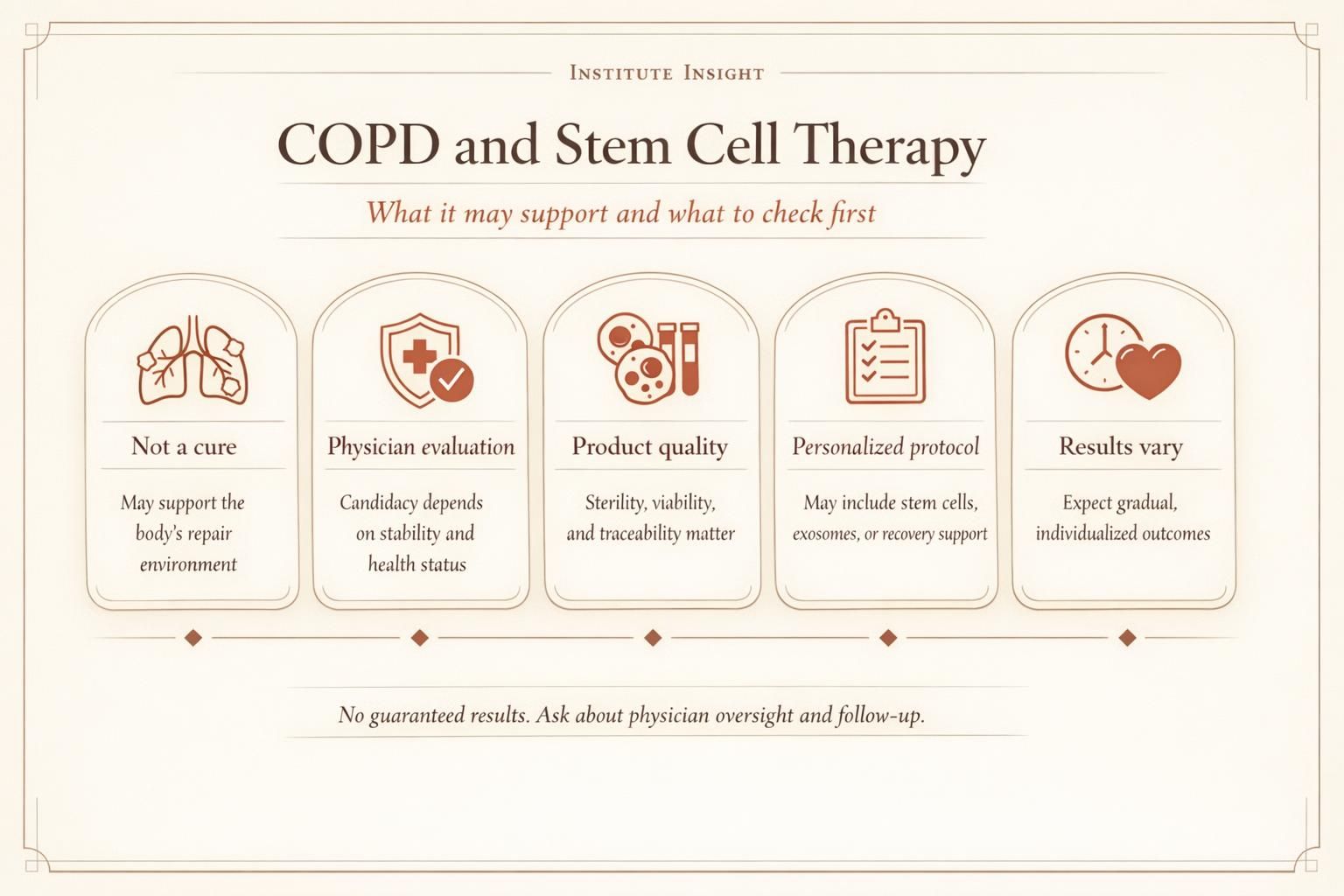
Not all stem cell products are equal. The source, processing method, viability, sterility, and documentation behind the cells matter enormously. Patients researching stem cell therapy for COPD should ask direct questions before choosing any clinic.
At Cellular Institute, biologic products are prepared through the affiliated Cellgenic lab ecosystem. This relationship supports greater traceability, xeno-free processing standards, viability documentation, and quality control at every stage. Patients receive certified stem cells backed by quality documentation rather than undisclosed sourcing.
Many clinics outsource biologics with limited visibility into product origin or safety testing. Cellular Institute’s integrated approach places lab quality at the center of the patient protocol, not as an afterthought. You can explore the clinic’s commitment to lab quality and transparency in more detail on the science page.
Physician oversight also matters. Every candidate at Cellular Institute undergoes a medical evaluation before any protocol begins. Dr. Roni Moya, Immunologist, brings specialized expertise in immune system health and chronic inflammatory conditions, which is highly relevant to COPD patients whose disease involves significant immune dysregulation.
Who May Be a Candidate for Stem Cell Therapy with COPD
Candidacy depends on many individual factors. Patients who may be appropriate candidates generally include those with moderate to severe COPD who have stable disease and are not in acute respiratory failure. They should be non-smokers or former smokers who have stopped, medically stable enough to travel and receive treatment, and open to a realistic, evidence-informed conversation about expected outcomes.
Patients with emphysema, chronic bronchitis, or a combination of both may be considered, depending on their clinical profile, lung function measurements, and overall health status.
Who May Not Be a Candidate
Stem cell therapy is not appropriate for everyone. Patients currently in an acute COPD exacerbation, those with active infection or significant comorbidities that increase procedural risk, or those with end-stage disease and severely compromised respiratory function may not be appropriate candidates. Active smokers are typically not considered until they have stopped for a meaningful period.
A thorough physician evaluation determines candidacy. This step protects the patient and ensures that regenerative medicine is applied responsibly, not speculatively.
How Cellular Institute Approaches COPD and Regenerative Medicine
Cellular Institute offers regenerative medicine in Cancún as part of a complete, physician-guided experience. For COPD patients, this means the team evaluates the individual’s pulmonary history, inflammation status, immune profile, and treatment goals before designing any protocol.
The protocol may include intravenous stem cell therapy, exosomes, EBOO, and supportive recovery technologies such as hyperbaric oxygen therapy. The clinic also offers recovery technologies including HBOT and red light therapy that may complement the regenerative protocol for lung and immune support.
International patients from the United States and Canada travel to Cancún for this level of integrated care. Cellular Institute coordinates the full patient journey, from pre-arrival evaluation to treatment-day support and structured follow-up after returning home.
Questions to Ask Before Choosing a Clinic
Before committing to stem cell therapy for COPD anywhere, patients should ask the following questions. Where do the stem cells come from, and how are they processed? What quality documentation is available, including viability and sterility testing? Does a licensed physician evaluate candidacy before treatment begins? Is the protocol personalized, or is it the same for every COPD patient? What complementary therapies are included in the protocol? What follow-up support does the clinic provide after treatment?
Patients researching how to compare clinics may also benefit from reading about how to choose a stem cell clinic in Mexico before making any decisions.

Frequently Asked Questions
Can stem cell therapy cure COPD?
No. Stem cell therapy does not cure COPD or rebuild destroyed lung tissue. The goal of a well-designed protocol is to support the body’s inflammatory environment, potentially slow disease progression in some patients, and improve quality of life. Results vary by patient, and physician evaluation is always required.
How many sessions might a COPD patient need?
This depends entirely on the individual patient’s condition, disease stage, and overall health status. Some patients receive a single protocol during one visit, while others may benefit from follow-up sessions. The physician team at Cellular Institute evaluates each patient’s needs individually rather than offering a one-size-fits-all answer.
Is it safe to travel to Cancún for this type of treatment?
Many international patients travel safely to Cancún for regenerative medicine. Cellular Institute provides coordinated support for the full patient journey, including pre-arrival preparation and logistics. Patients can also review information about stem cell therapy safety in Mexico to better understand what responsible clinics should provide.
What should I expect in terms of results and timeline?
Results vary significantly by patient. Some individuals report gradual improvements in energy, breathlessness, and exercise tolerance over weeks to months following treatment. Others experience more modest changes. There are no guaranteed outcomes. A physician consultation helps set responsible expectations based on your specific condition and baseline health status. You can also learn more about how long stem cell therapy results may last in our educational resources.
Final Thoughts
Living with COPD is difficult. When inhalers and medications no longer feel like enough, it makes sense to research what else may be available. Stem cell therapy for COPD is not a miracle treatment, and it does not replace conventional pulmonary care. However, for appropriately selected patients, it may offer meaningful support as part of a personalized, physician-guided regenerative medicine protocol.
The most important step is an honest, thorough medical evaluation. At Cellular Institute, that evaluation comes first. The protocol follows the patient, not the other way around.
If you are wondering whether you may be a candidate, we invite you to schedule a discovery call with our patient coordination team. We will listen to your situation, answer your questions honestly, and help you understand whether regenerative medicine may be a meaningful part of your journey forward.
Medical Disclaimer
This article is for educational purposes only and does not replace medical advice, diagnosis, or treatment. Regenerative therapies are not appropriate for every patient, and outcomes vary. A licensed physician must evaluate your medical history, goals, and candidacy before any treatment can be recommended.