
If you’re comparing Cellular Institute vs other clinics in Mexico, you’re probably asking the same question most patients ask:
“What actually makes one clinic different from another?”
After all, many clinics offer similar treatments, make similar promises, and claim to put patients first.
Unfortunately, some clinics invest more effort into marketing than into helping patients understand what truly matters. Important factors like physician involvement, laboratory standards, treatment personalization, safety protocols, and long-term patient support often receive far less attention than flashy websites and bold claims.
That’s where the real differences begin to emerge.
When you look beyond the marketing, you’ll often find that the quality of care isn’t defined by what a clinic says; it’s defined by how it operates, how it treats its patients, and the standards it follows behind the scenes.
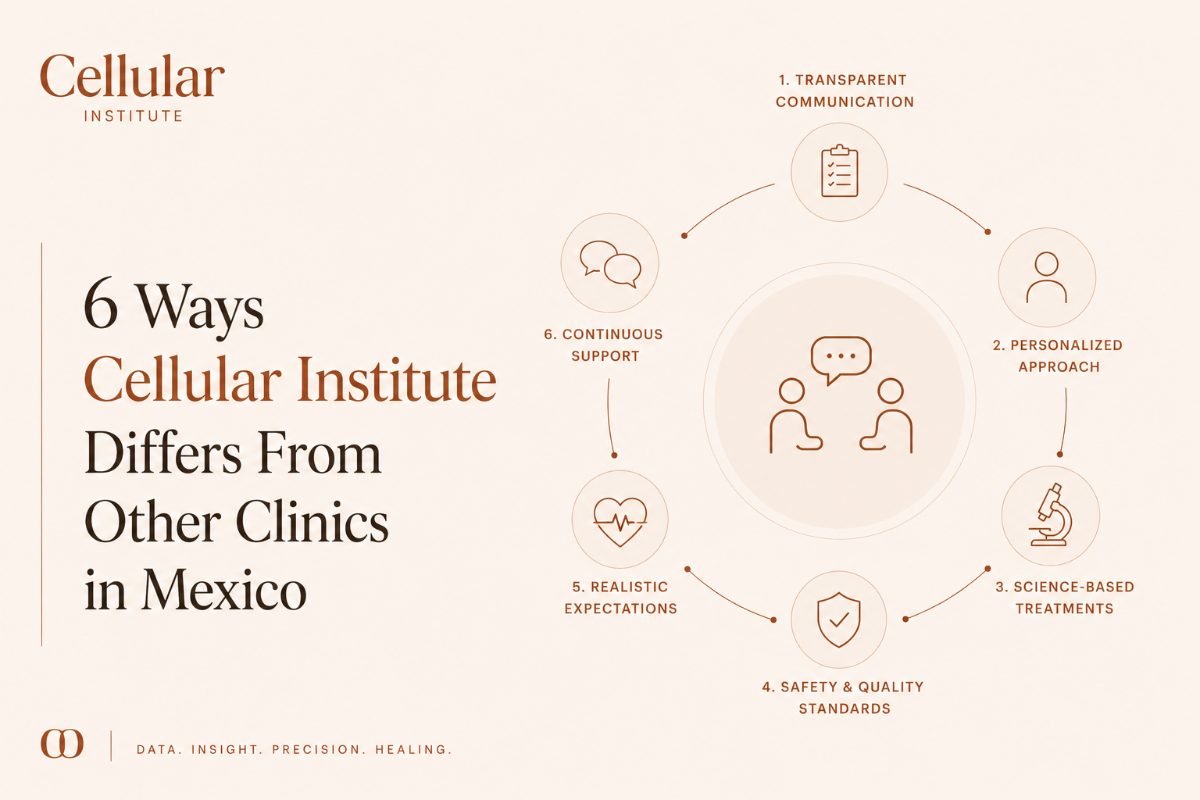
And this is exactly where this article is going. Let’s take a look at 6 key ways in which Cellular Institute differs from many other clinics in México:
1. We Have Greater Control Over What Goes Into Your Treatment
One of the biggest differences between Cellular Institute and many other clinics in Mexico is something most patients never see: what happens before treatment even begins.
If you’re comparing Cellular Institute vs other clinics in Mexico, it’s easy to focus on websites, reviews, testimonials, or treatment pricing. However, one of the most important factors often receives the least attention: where the cells come from, how they’re handled, and what quality controls exist behind the scenes.
In regenerative medicine, the quality of the cellular product can influence consistency, safety, sterility, traceability, and overall treatment standards. That’s why understanding a clinic’s laboratory practices is so important.
Many clinics rely heavily on third-party suppliers for their cellular products. While there is nothing inherently wrong with that approach, it can create additional layers between the laboratory and the patient.
Depending on the provider, this may involve transportation logistics, cold-chain management, storage procedures, and varying levels of oversight regarding processing and documentation.
At the Cellular Institute, we take a different approach.
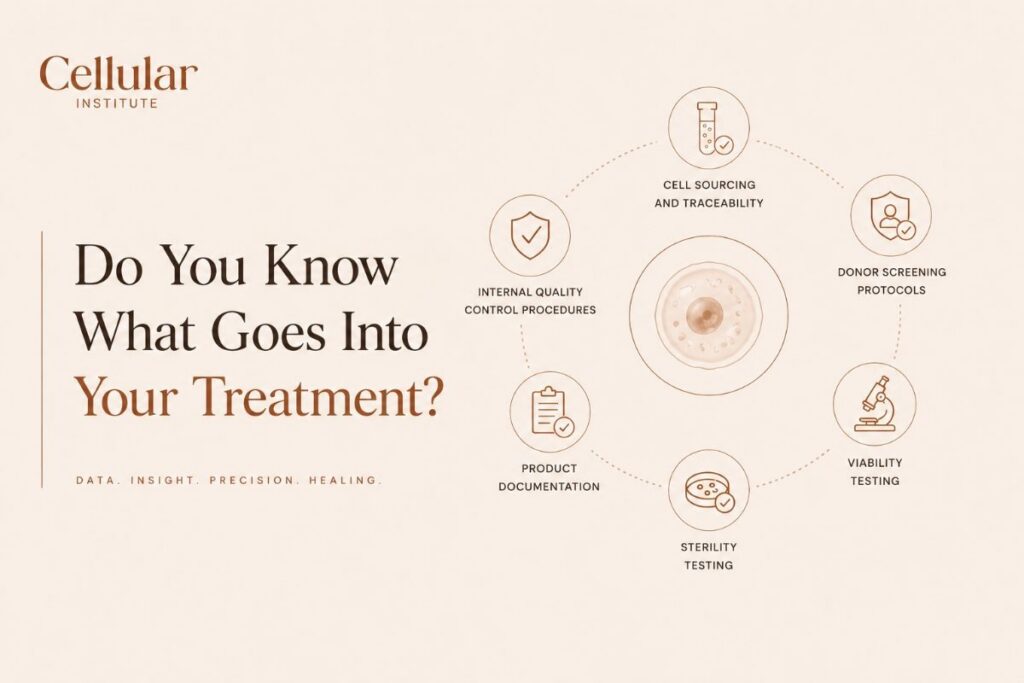
Through our in-house laboratory partner, Cellgenic, we have greater visibility into the preparation and quality-control process. This allows us to maintain oversight of important factors such as:
- Cell sourcing and traceability
- Donor screening protocols
- Viability testing
- Sterility testing
- Product documentation
- Internal quality-control procedures
Our laboratory processes also include standards and technologies such as fresh cellular products, early-passage cells, hypoxic incubation, and xeno-free media, all designed to support consistency and quality throughout the process.
Unfortunately, many patients spend weeks researching clinics without ever asking one of the most important questions:
“What quality controls are in place before the treatment reaches me?”
The answer can tell you a great deal about how a clinic operates.In fact, before choosing any clinic, patients should feel comfortable asking questions such as:
- Where do the cells come from?
- How are they processed and stored?
- What testing is performed before treatment?
- Can the clinic provide viability or sterility documentation?
- Who oversees laboratory quality control?
A reputable clinic should be willing to answer these questions openly. Transparency shouldn’t be viewed as a bonus; it should be expected.
When patients compare Cellular Institute vs other clinics in Mexico, many tell us that this level of visibility and accountability helped them feel more confident in their decision. They weren’t simply looking for treatment, they wanted to understand the process behind it and know that quality, safety, and consistency were priorities from the very beginning.
2. Your Care Is Led By Physicians From The Start
One of the most common frustrations patients experience when researching regenerative medicine clinics is that they spend a lot of time talking to coordinators, consultants, or sales representatives before ever speaking with a doctor.
When you’re making important decisions about your health, that’s not ideal.
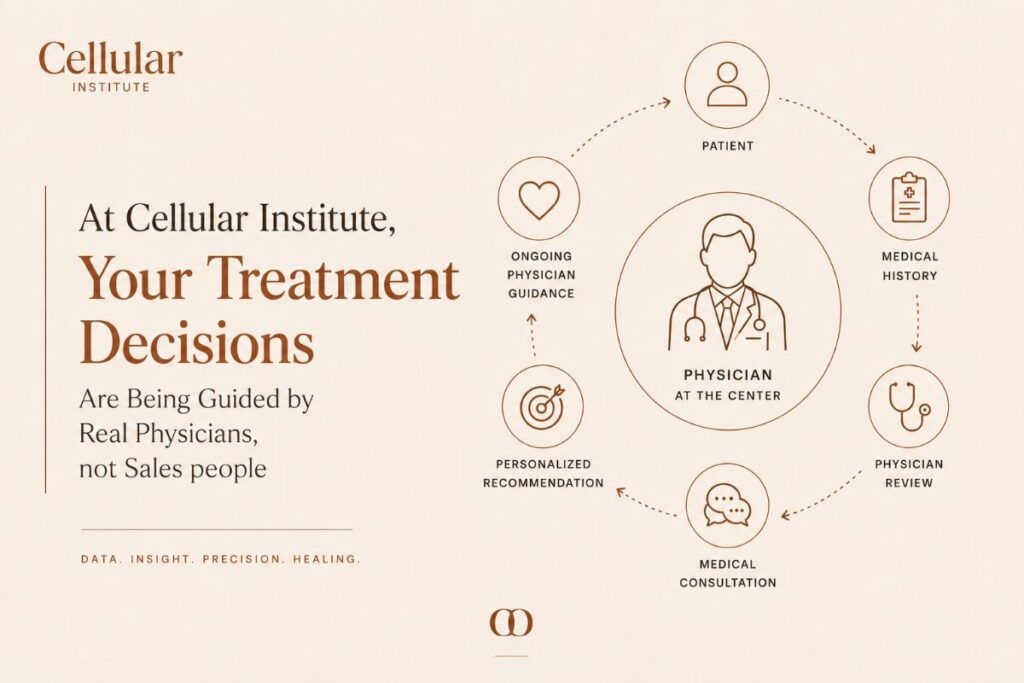
At Cellular Institute, physician involvement isn’t something that happens at the end of the process, it’s a core part of the process from the beginning.
Why does this matter?
Because regenerative medicine is complex. Every patient arrives with a unique medical history, different symptoms, previous treatments, medications, and health goals. Understanding those factors requires medical expertise, not simply administrative support.
A physician-led approach helps ensure that treatment decisions are based on clinical considerations rather than generic recommendations.
Patients should feel comfortable asking questions such as:
- Who will be overseeing my care?
- What experience do the physicians have?
- How are treatment recommendations made?
- What role will the physician play throughout the process?
These are important questions, yet many patients never think to ask them.
The reality is that physician involvement can significantly impact the patient experience. Doctors are trained to evaluate medical histories, understand complex conditions, assess risk factors, and determine whether a particular treatment approach makes sense based on the patient’s situation.
At Cellular Institute, our physicians play an active role in helping patients understand their options and navigate the decision-making process.
This physician-centered approach also creates a more direct line of communication. Instead of feeling like information is being passed through multiple layers, patients have access to medical professionals who can explain procedures, answer questions, and provide guidance based on their clinical experience.
For many patients comparing Cellular Institute vs other clinics in Mexico, that level of physician involvement provides an additional sense of confidence. They know that medical decisions are being guided by healthcare professionals rather than treated as a purely administrative process.
When it comes to your health, that’s exactly how it should be.
3. Your Treatment Plan Is Built Around You, Not Your Diagnosis
One of the biggest differences patients notice when looking for the best stem cell clinics in Mexico is how treatment recommendations are made.
At first glance, this might not seem like a major factor. After all, if two patients have the same diagnosis, shouldn’t they receive the same treatment?
Not necessarily.
Research increasingly shows that factors such as age, overall health, immune function, inflammation levels, genetics, lifestyle habits, and coexisting conditions can influence how patients respond to medical interventions and their success rate.
This is one reason why personalized medicine has become one of the fastest-growing areas of healthcare globally. In fact, the personalized medicine market is projected to exceed $869 billion by 2030, reflecting a broader shift away from one-size-fits-all approaches.
In regenerative medicine, this becomes especially important.
A 45-year-old athlete recovering from a knee injury may have very different goals, health characteristics, and recovery expectations than a 72-year-old patient dealing with chronic osteoarthritis. Even when the diagnosis appears similar, the treatment strategy may not be.
That’s why at Cellular Institute, treatment planning goes beyond simply matching a diagnosis to a protocol.
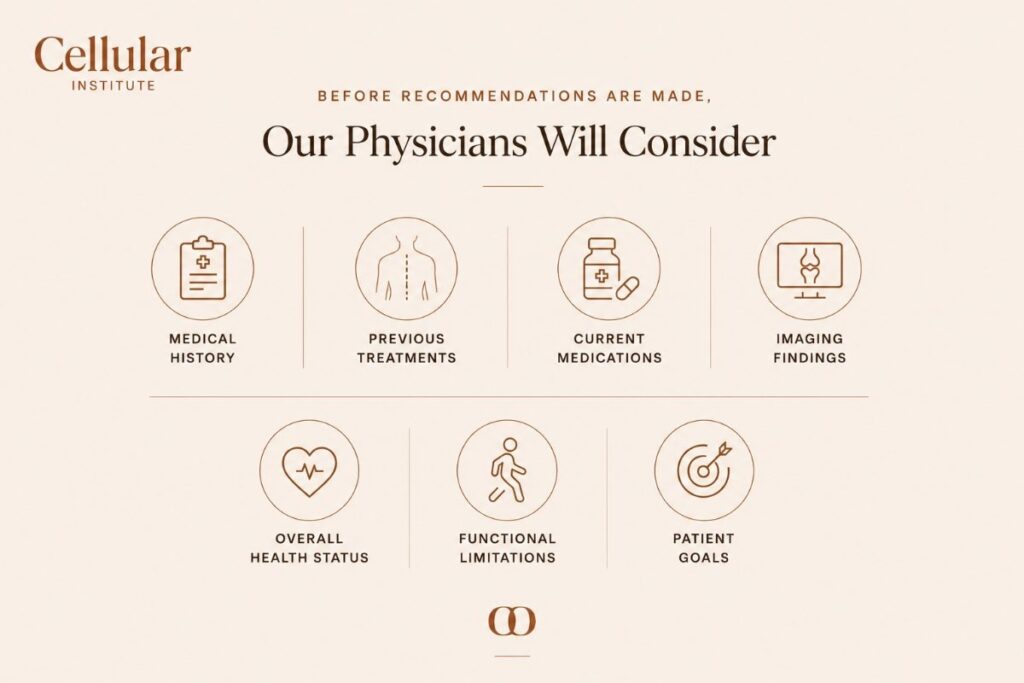
Before recommendations are made, our physicians may consider factors such as:
- Medical history
- Previous treatments
- Current medications
- Imaging findings
- Overall health status
- Functional limitations
- Patient goals
This helps create a more individualized treatment strategy rather than relying on a standardized formula.
According to the CDC, approximately 6 in 10 adults in the United States live with at least one chronic disease, while 4 in 10 live with two or more. Many patients seeking regenerative medicine are therefore dealing with multiple health factors simultaneously, making individualized evaluation increasingly important.
If you are comparing Cellular Institute to other clinics in Mexico, this personalized approach is often one of the most meaningful differences. Rather than focusing solely on a diagnosis, the conversation focuses on the person behind it.
And when people are investing significant time, travel, and resources into their healthcare decisions, that distinction matters.
Many patients who initially begin by evaluating several regenerative medicine clinics in Mexico ultimately tell us they appreciated being treated as individuals with unique circumstances rather than simply another case fitting a predefined treatment pathway.
4. We Believe Patients Deserve Complete Transparency
One of the biggest complaints patients have about the healthcare industry in general is the feeling that they’re not getting the full picture.
Questions go unanswered. Important details get glossed over. Conversations feel rushed. And sometimes, you are expected to make significant medical and financial decisions without fully understanding what they’re agreeing to.
At Cellular Institute, we believe transparency shouldn’t be something patients have to fight for.
According to a 2023 survey by PwC, nearly 80% of patients said trust and transparency influence their healthcare decisions, making it one of the most important factors when choosing a provider. That makes sense.
When you’re considering regenerative medicine, you’re not simply purchasing a service, you’re making a decision about your health, your time, and often a significant financial investment.
That’s why we encourage patients to ask questions. In fact, some of the most important conversations happen before treatment ever begins.
You should feel comfortable asking:
- Where do the cells come from?
- How are treatment recommendations made?
- What documentation is available?
- What are the potential benefits and limitations?
- What can I realistically expect during recovery?
A reputable clinic shouldn’t avoid these discussions. It should welcome them.
If you are researching Cellular Institute vs other clinics in Mexico, transparency often becomes one of the deciding factors. Many people begin their search focused on treatment options, but eventually realize that how a clinic communicates can be just as important as the treatment itself.
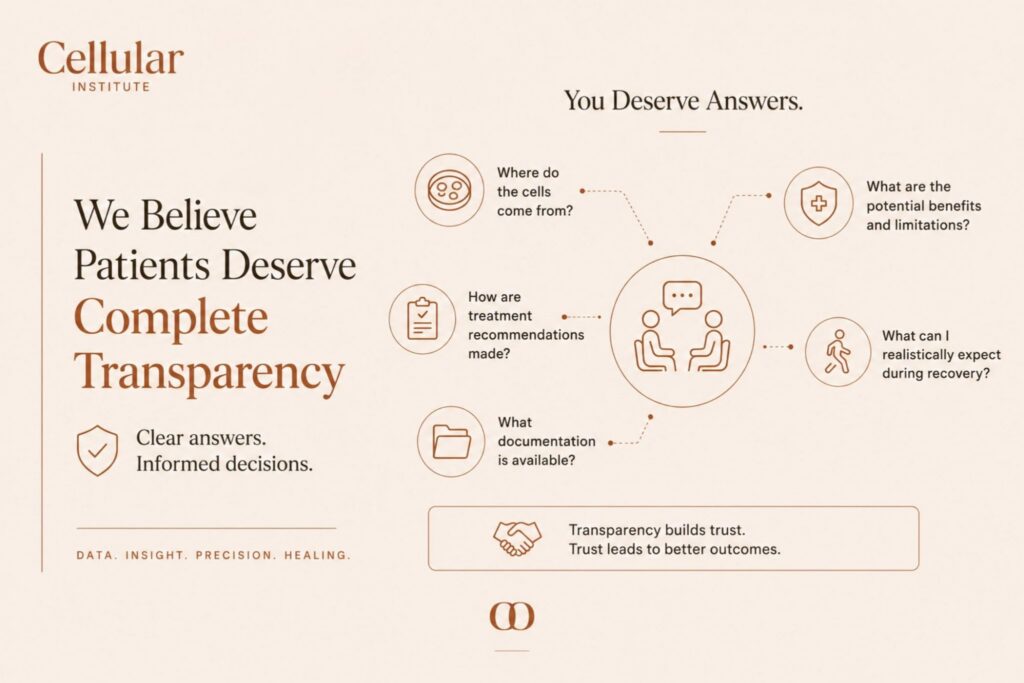
Transparency also means being willing to discuss topics that aren’t always highlighted in marketing materials.
That includes explaining procedures in understandable language, discussing potential limitations, reviewing available documentation, and making sure patients have enough information to make decisions confidently rather than emotionally.
The reality is that regenerative medicine can be complex. Most patients are not physicians, scientists, or laboratory specialists, and they shouldn’t have to be. Our job is to help translate that complexity into clear, honest information that patients can actually understand.
When you compare providers, you are often looking for more than medical expertise. You’re looking for a team you can trust.
For many patients evaluating regenerative medicine clinics in Mexico, that trust begins with transparency. It’s one of the reasons so many people tell us they felt more comfortable moving forward after having their questions answered openly and without pressure.
Because at the end of the day, when you are more informed you are more confident, and we believe that’s exactly how healthcare decisions should be made.
5. We Tell You What You Need to Hear, Not What You Want to Hear
When you’re considering regenerative medicine, it’s natural to want certainty. You want to know whether treatment will help, how long it may take to notice changes, and what kind of outcome you can realistically expect.
The challenge is that medicine doesn’t always provide definitive answers.
Two people with the same diagnosis can respond very differently to the same treatment. Factors such as age, overall health, inflammation levels, disease severity, lifestyle habits, genetics, and medical history can all influence the body’s response.
That’s why one of the biggest differences you’ll notice when comparing Cellular Institute to other clinics in Mexico is how we talk about treatment outcomes.
Instead of focusing on guarantees, we focus on education. Instead of telling you what will happen, we help you understand what may happen based on your individual circumstances and the available scientific evidence.
In fact, the U.S. Food and Drug Administration (FDA) has repeatedly cautioned patients against providers making unproven claims or guaranteeing results from regenerative medicine treatments.
Responsible healthcare providers understand that biology is complex and that no treatment works identically for every person.
At Cellular Institute, we believe you deserve honest conversations about both the potential benefits and the limitations of treatment.
That means discussing topics such as:
- What the treatment is designed to accomplish
- Factors that may influence your results
- What a typical recovery timeline may look like
- Why outcomes vary from person to person
- What current research suggests for your condition
You should feel comfortable asking questions like:
- What results have you seen in patients with similar conditions?
- What factors could affect my outcome?
- How long might it take to notice changes?
- What are realistic expectations for my situation?
A reputable clinic should welcome those questions.
According to a survey published in JAMA Internal Medicine, approximately 80% of patients prefer receiving realistic information about their prognosis and treatment outcomes, even when that information is uncertain or less optimistic than they hoped. Patients consistently report that honesty helps build trust and allows them to make more informed healthcare decisions.
When researching Cellular Institute vs other clinics in Mexico, many people discover that one of the most important differences isn’t the treatment itself. It’s the quality of the information they receive before making a decision.
Many patients who compare multiple regenerative medicine providers tell us they appreciate having straightforward conversations about what is known, what isn’t known, and what can realistically be expected.
If you’re evaluating Cellular Institute vs other clinics in Mexico, remember that no clinic can ethically promise a specific outcome before thoroughly evaluating your case. What a clinic can do is provide transparency, answer your questions honestly, and help you make a decision based on facts rather than expectations.
Because when you’re making an important healthcare decision, honesty is often more valuable than certainty.

6. Our Relationship With You Doesn’t End After Treatment
For many patients, treatment day isn’t the end of the journey, it’s the beginning. That’s why follow-up care matters.
Unfortunately, some clinics focus heavily on getting patients through the door but provide limited support once treatment has been completed. When questions arise weeks or months later, patients can sometimes feel like they’re on their own.
At Cellular Institute, we believe ongoing communication is an important part of the patient experience.
Whether you have questions about recovery, progress, timelines, or what to expect moving forward, our team remains available to help guide you through the process.
This is another area where patients often notice a difference when comparing Cellular Institute vs other clinics in Mexico. Many tell us that knowing support is available after treatment gives them greater confidence throughout their regenerative medicine journey.
Because great patient care shouldn’t stop the moment you leave the clinic.
Cellular Institute Vs Other Clinics in Mexico
By now, you’ve probably noticed that the differences between clinics often go far beyond the treatments listed on their websites.
To make things easier, here’s a side-by-side overview of some of the factors patients commonly compare when evaluating Cellular Institute and other regenerative medicine clinics in Mexico.
| Factor | Cellular Institute | Many Other Clinics |
| Physician Involvement | Physician-led from the start | Varies by clinic |
| Laboratory Oversight | Access to Cellgenic laboratory | Often third-party suppliers |
| Treatment Planning | Personalized | May vary by provider |
| Transparency | Open discussion of protocols and documentation | Varies by clinic |
| Expectations | Realistic and evidence-based | Varies by clinic |
| Follow-Up Support | Ongoing patient support | Varies by clinic |
Are you ready to get started? Schedule a consultation today.
FAQ
What makes Cellular Institute different from other clinics in Mexico?
One of the biggest differences is Cellular Institute’s focus on physician-led care, treatment personalization, laboratory oversight, transparency, and long-term patient support.
While many clinics may offer similar therapies, the way treatments are evaluated, planned, and managed can vary significantly from one provider to another.
Does Cellular Institute use an in-house laboratory?
Cellular Institute has access to its laboratory partner, Cellgenic, which provides greater visibility into cell sourcing, processing, quality control, and documentation.
This allows for increased oversight of important factors such as sterility testing, viability testing, traceability, and laboratory standards.
How does Cellular Institute determine if I’m a candidate for treatment?
Every patient is evaluated individually. Physicians review factors such as your medical history, diagnosis, symptoms, previous treatments, and health goals before making recommendations.
This helps ensure that treatment decisions are based on your specific circumstances rather than a one-size-fits-all approach.
Does Cellular Institute guarantee treatment results?
No. Ethical regenerative medicine providers cannot guarantee specific outcomes because every patient responds differently to treatment. Factors such as age, overall health, diagnosis, and disease severity can influence results.
Cellular Institute focuses on providing realistic expectations and evidence-based information rather than making promises.
Why is physician involvement important in regenerative medicine?
Physician involvement helps ensure that treatment recommendations are based on medical evaluation rather than administrative processes.
Doctors can assess your health history, review relevant records, answer clinical questions, and help determine whether a particular treatment approach is appropriate for your situation.
What should I look for when comparing regenerative medicine clinics in Mexico?
You should evaluate factors such as physician involvement, laboratory standards, treatment personalization, transparency, safety protocols, patient reviews, and follow-up support.
Asking detailed questions about these areas can help you better understand how a clinic operates and whether it aligns with your healthcare goals.