
Written by: Cellular Institute Editorial Team
Medical reviewer: Dr. Matilde Rodríguez – CP 12651081
Laboratory reviewer: Biotecnóloga Diana Navarrete – CP 15029468
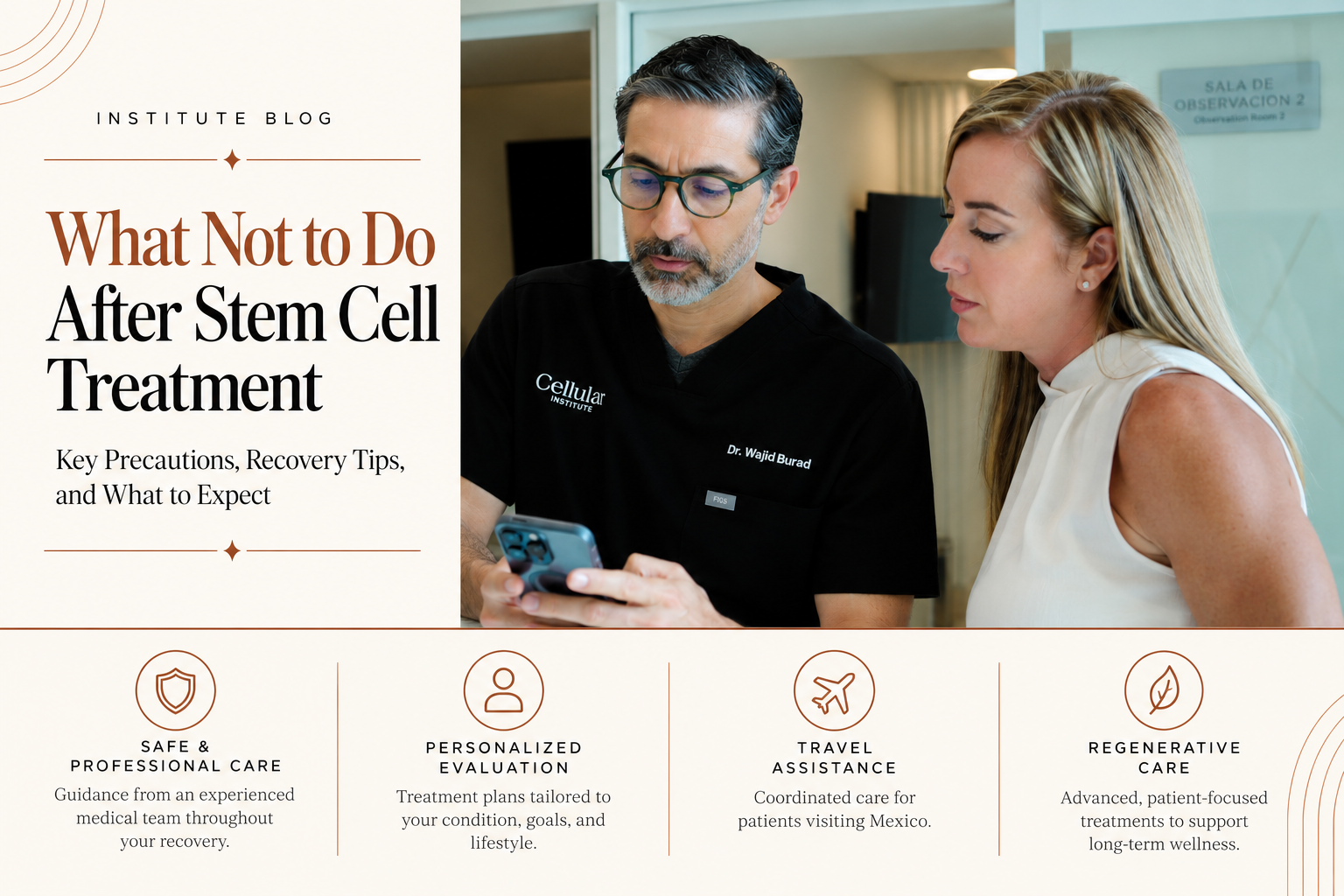
The days and weeks after stem cell treatment matter as much as the treatment itself.
Taking NSAIDs, drinking alcohol, smoking, pushing through intense exercise, flying home too soon, or skipping follow-up visits can all interfere with how well your cells settle into damaged tissue.
This guide covers the biggest mistakes patients make after stem cell therapy and what to do instead.
Knowing what not to do after stem cell treatment is just as important as choosing the right clinic in the first place.
Stem cells need a specific environment to survive, migrate to damaged tissue, and start repairing it.
A handful of common habits, some of them things patients do without a second thought, can get in the way of that process before it even gets started.
Here’s what to avoid in the days and weeks after your procedure, and why each one matters more than it might seem.
What Should You Avoid After Stem Cell Treatment?
The biggest mistakes after stem cell treatment are taking NSAIDs like ibuprofen, drinking alcohol, smoking, jumping back into intense exercise, flying home before your body is ready, and skipping follow-up appointments.
Each of these can interfere with how your cells settle into damaged tissue and slow down the results you’re paying for.
A few other habits round out the list: ignoring your provider’s activity restrictions, treating the injection site roughly, and not paying attention to your nutrition and hydration during recovery.
None of these are complicated to avoid once you know they matter.
Every one of these gets its own explanation below, along with what your care team actually wants you to do instead.
Why the First Few Weeks Decide How Well Your Cells Take Hold
Stem cells don’t work like a pill that kicks in and then wears off.
They need time to migrate to the area of injury, survive in that environment, and signal your body to start repairing tissue.
That process unfolds gradually.
Some patients notice small changes within a few weeks, while more noticeable improvement often takes two to three months, and results can continue to develop for up to six months or longer depending on the condition being treated and how well the early recovery period is managed.
Because so much of that early window is biological, not just physical, the choices you make in the first few weeks carry more weight than they would after a routine injury.
This is exactly why the mistakes below are worth taking seriously, even the ones that seem minor.
Why Can’t You Take NSAIDs After Stem Cell Therapy?
NSAIDs like ibuprofen, naproxen, and diclofenac block the same inflammatory signals your stem cells rely on to travel to damaged tissue and multiply once they get there.
Taking them in the days and weeks after treatment can measurably reduce how well the cells engraft, which is why most providers ask patients to avoid them until cleared.
This isn’t just caution for caution’s sake.
A study on mesenchymal stromal cell therapy found that NSAID use after cell injection reduced the treatment’s therapeutic effect in a model of joint injury, while NSAID use before treatment had far less impact.
Separate lab research found that ibuprofen and diclofenac significantly reduced the viability of stem cells exposed to the drugs directly.
Inflammation right after an injection or infusion isn’t a sign something went wrong.
It’s part of how your cells communicate with the surrounding tissue.
Dampening that response with anti-inflammatory medication can blunt the very mechanism you’re trying to activate.
Which Pain Relievers Are Safe Instead
Acetaminophen is generally considered a safer option for pain during early recovery, since it doesn’t work through the same anti-inflammatory pathway as NSAIDs.
Always confirm your specific pain management plan with your provider, since it can vary based on the type of treatment and area addressed.
Is It Safe to Drink Alcohol After Stem Cell Treatment?
Alcohol interferes with the same tissue repair processes your body needs after stem cell treatment, so most providers recommend avoiding it for at least a few weeks.
Even a single instance of heavy drinking can reduce collagen production and slow the formation of new blood vessels at the site your body is trying to heal.
Research on wound healing found that ethanol exposure reduced collagen content in healing tissue by up to 37 percent compared to tissue that wasn’t exposed to alcohol.
Collagen is one of the main building blocks your body uses to rebuild damaged tissue, so anything that suppresses it works against what stem cell therapy is trying to accomplish.
Alcohol also disrupts sleep quality and hydration, both of which play a supporting role in recovery.
Skipping it for a few weeks is a small trade-off against the results you’re hoping for.
Does Smoking or Vaping Affect Stem Cell Therapy Results?
Smoking and vaping introduce nicotine and other compounds that reduce blood flow and impair how well stem cells survive and multiply once they’re in your body.
Patients who smoke during recovery tend to see slower, less complete results than those who avoid it.
A review of the research on this topic concluded that cigarette smoking and nicotine use have measurable negative effects on mesenchymal stem cell function, including reduced proliferation and impaired ability to differentiate into the specialized cells needed for tissue repair.
Nicotine narrows blood vessels, which limits the oxygen and nutrients that reach the treated area at exactly the time your cells need them most.
If quitting entirely isn’t realistic, cutting back as much as possible in the weeks surrounding treatment still helps.
Every reduction in nicotine exposure gives your cells a better environment to work in.
How Much Physical Activity Is Too Much, Too Soon
It’s tempting to test out a joint or muscle as soon as it feels a little better, especially if you came in dealing with pain that limited you for months or years.
That instinct is understandable, but it’s one of the most common ways patients undermine their own results.
High-Impact Exercise and Heavy Lifting
Running, jumping, heavy lifting, and contact sports put mechanical stress on tissue that’s still in an early, fragile stage of repair.
Most providers ask patients to avoid high-impact activity and heavy lifting for four to six weeks, with a gradual return guided by how the treated area is responding, not by how good it feels on a given day.
Why “No Pain, No Gain” Backfires Here
Stem cell recovery doesn’t reward pushing through discomfort the way athletic training sometimes does.
Overloading a joint or muscle before it’s ready can cause the kind of stress that interrupts the repair process, sometimes setting back progress that took weeks to build.
Gentle, guided movement is usually encouraged early on.
Aggressive movement is not the same thing.
What Happens If You Fly Home Too Soon After Treatment?
Flying home too soon after stem cell treatment can add unnecessary strain right when your body needs rest and stability.
Long flights involve prolonged sitting, cabin pressure changes, and dehydration, all of which can aggravate the treated area and slow early recovery, especially after joint or spine injections.
This is one of the most overlooked parts of aftercare for patients who travel for treatment, since it’s easy to focus on the procedure itself and forget that the trip home is part of recovery too.
Most patients are cleared to travel within a day or two, but the specific timeline depends on the treatment received and how the body responds in the first 24 to 48 hours.
Staying an extra day in Cancun to rest before a long flight, requesting an aisle seat to move periodically, staying hydrated in the air, and avoiding heavy luggage lifting at the airport all reduce the strain of the trip home.
Patients who plan their full stem cell therapy journey around a short recovery window before flying, rather than booking the earliest flight out, tend to feel noticeably better once they land.
If you’re weighing when to book your trip, it also helps to check current travel conditions for Cancun so your travel days line up with your recovery days, not against them.
Other Everyday Habits That Quietly Slow Your Recovery
A few smaller habits add up more than most patients expect.
Dehydration reduces blood volume and makes it harder for nutrients to reach the treated area, so drinking enough water in the weeks after treatment matters more than usual.
Diet plays a similar supporting role.
A diet heavy in processed foods, fried foods, and excess sugar promotes the kind of low-grade inflammation that works against the targeted, short-term inflammatory response your cells actually need.
Leaning toward whole foods, lean protein, and vegetables gives your body the raw materials it needs to rebuild tissue.
Sleep is the last piece that’s easy to overlook.
Most tissue repair and cellular activity ramps up during deep sleep, so cutting sleep short during recovery removes one of the body’s main windows for doing the work stem cell therapy is meant to support.
Why Skipping Follow-Up Appointments Is a Costly Mistake
Follow-up appointments let your provider catch small issues before they become bigger ones, track whether your recovery is on the expected timeline, and adjust your activity plan based on how you’re actually responding.
Skipping them means flying blind during the exact window when adjustments matter most.
This is also where working with a clinic that takes quality control seriously makes a real difference.
Providers who document cell quality and sourcing thoroughly are also the ones most likely to have structured follow-up protocols in place, rather than sending you home with a generic aftercare sheet and no plan to check back in.
If you’re still researching clinics or comparing options, it’s worth looking at what separates a legitimate stem cell provider from one that isn’t before you commit, since aftercare quality tends to track closely with how seriously a clinic treats the rest of the process.
Normal Recovery vs. a Problem Worth Calling About
Mild soreness, slight swelling, and short-lived fatigue are common after stem cell treatment and usually resolve within a few days.
These are signs your body is responding, not signs that something has gone wrong.
Fever, spreading redness, worsening pain instead of gradual improvement, or swelling that keeps increasing after the first few days are different.
Those are the kinds of symptoms worth calling your provider about right away, rather than waiting to mention at your next scheduled visit.
Patients being treated by an experienced, licensed team have a much lower chance of running into anything beyond mild, temporary discomfort.
How Cellular Hope Institute Supports You After You Leave Cancun
Aftercare doesn’t stop when you leave the clinic, and it shouldn’t feel like guesswork once you’re back home.
At Cellular Hope Institute, every patient leaves with a specific recovery plan built around their treatment, not a generic printout.
Because the cells used in treatment are manufactured and quality-tested in-house rather than sourced through third parties, the team can speak directly to what was administered and what to expect from it during recovery.
That level of detail carries into the recovery and performance support patients receive, including guidance on activity progression, nutrition, and when it’s appropriate to introduce more demanding movement again.
Patients also stay connected to their care team after returning home, so questions about symptoms, activity levels, or timeline don’t go unanswered just because the trip is over.
FAQs: What Not to Do After Stem Cell Treatment
How long should I avoid the gym after stem cell treatment?
Most providers recommend avoiding high-impact exercise and heavy lifting for four to six weeks, with a gradual, guided return based on how the treated area responds rather than a fixed calendar date.
Can I take Tylenol instead of ibuprofen after stem cell therapy?
Acetaminophen is generally considered a safer choice than NSAIDs during early recovery, since it doesn’t interfere with the inflammatory signaling your cells rely on. Confirm the specifics with your provider before taking any medication.
When is it safe to fly home after stem cell treatment in Cancun?
Most patients are cleared to travel within a day or two of treatment, though the exact timeline depends on the procedure performed and how your body responds in the first 24 to 48 hours. Planning an extra rest day before a long flight often makes the trip home more comfortable.
How soon can I drink coffee or caffeine after treatment?
Moderate caffeine intake is generally fine for most patients, but it can contribute to dehydration if you’re not also increasing your water intake. Staying well hydrated matters more than cutting caffeine entirely for most people.
What warning signs mean I should call my provider right away?
Fever, spreading redness around the injection site, pain that worsens instead of gradually improving, or swelling that keeps increasing after the first few days are all reasons to contact your provider immediately rather than waiting for a scheduled follow-up.
How long until I actually see results from stem cell therapy?
Some patients notice early changes within a few weeks, but more noticeable improvement typically develops over two to three months, and results can continue to build for up to six months depending on the condition being treated.