

Written by: Cellular Institute Editorial Team
Medical reviewer: Dr. Matilde Rodríguez – CP 12651081
Laboratory reviewer: Biotecnóloga Diana Navarrete – CP 15029468
Quick Answer
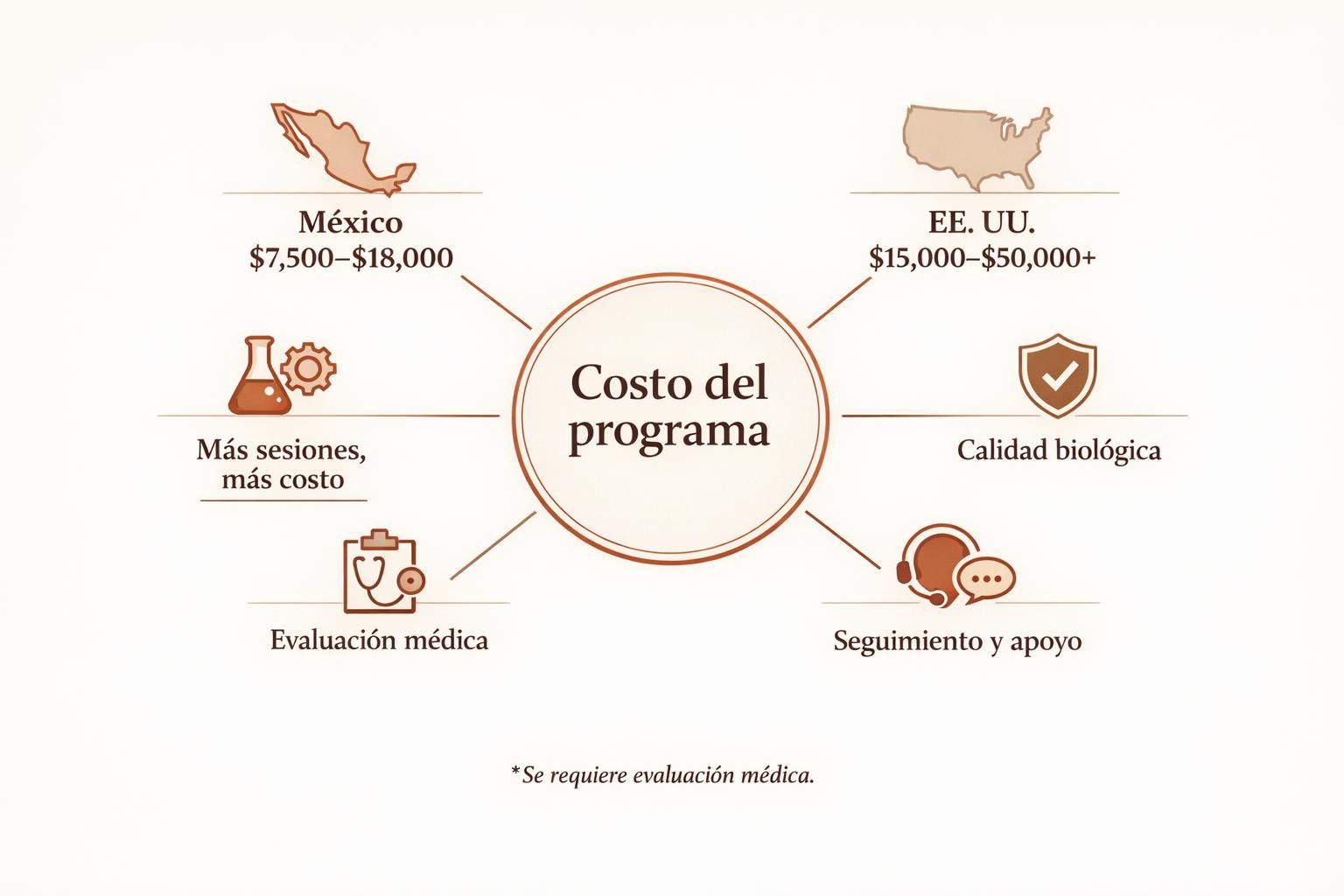
Stem cell therapy cost for heart disease typically ranges from $8,000 to $25,000 USD or more, depending on the country, clinic, protocol complexity, and biologic product quality. In Mexico, physician-guided programs at qualified regenerative medicine clinics often range between $7,500 and $18,000 USD for a complete protocol. However, price alone does not reflect value. Physician evaluation, biologic quality, protocol design, and follow-up support all affect the overall experience and potential benefit. Candidate evaluation is always required before any protocol can be recommended.
Why Patients with Heart Disease Are Exploring Regenerative Medicine
Patients living with conditions such as heart failure, coronary artery disease, cardiomyopathy, or ischemic heart disease often face limitations with conventional therapies alone. Some patients have exhausted standard options. Others are looking for supportive strategies to complement their existing care.
Regenerative medicine has emerged as an area of serious clinical interest. Mesenchymal stem cells, in particular, carry properties that researchers believe may support inflammation modulation, tissue repair signaling, and cellular communication in the cardiovascular environment. This does not mean stem cell therapy cures heart disease. It means that, for appropriately selected candidates, it may support the body’s own repair processes as part of a personalized protocol.
Before exploring cost, patients should understand that regenerative medicine in this context requires physician oversight, honest candidate evaluation, and realistic expectations.
Stem Cell Therapy Cost for Heart Disease: A Transparent Breakdown
Pricing in regenerative medicine is rarely straightforward. Many clinics advertise a number without explaining what it includes. Here is a breakdown of what typically affects the final cost.
Country and Location
In the United States, stem cell therapy programs for cardiac conditions can range from $15,000 to $50,000 USD or more per protocol. In Canada, access through clinical trials is limited, and private options carry similar price ranges to the US. In Mexico, qualified medical clinics offer comparable biologic products and physician-guided protocols at significantly lower costs, often between $7,500 and $18,000 USD for a structured program.
This cost difference reflects lower overhead, not lower quality. Many patients exploring medical tourism in Mexico find that Cancún offers a premium medical environment at a fraction of US pricing.
Protocol Complexity and Number of Sessions
A single stem cell infusion costs less than a multi-session protocol. For cardiovascular conditions, clinicians often recommend more than one session, combined with complementary therapies. A complete program may include intravenous stem cell infusions, exosome therapy, EBOO blood filtration, hyperbaric oxygen therapy, and peptide therapy. Each addition affects the total investment.
Biologic Product Quality
The source, processing method, cell viability, sterility testing, and passage number of the stem cells all affect both quality and cost. Clinics using higher-quality biologics with proper documentation, such as a certificate of analysis, tend to charge more. This is not a reason to avoid them. It is a reason to ask questions.
Patients should always ask where the cells come from, how they are processed, and whether the clinic provides traceability documentation. At Cellular Institute, biologic products are supported through the Cellgenic lab ecosystem, which prioritizes viability, sterility, and quality control. You can learn more about this through our lab quality and transparency page.
What Is Typically Included in a Complete Program
A transparent regenerative medicine clinic will clearly outline what is included in the quoted price. A well-structured cardiac regenerative program may include:
- Initial medical evaluation and candidate review
- Laboratory and diagnostic workup
- Stem cell infusion sessions, typically intravenous
- Complementary therapies such as exosomes, EBOO, or HBOT
- Physician consultations throughout the protocol
- Nursing care and clinical monitoring
- Patient coordinator support and logistics assistance
- Follow-up recommendations after treatment
Clinics that quote only the injection and exclude the surrounding care often add costs later. Always ask for a full program breakdown before comparing prices across clinics.
What Affects Quality and Safety in Cardiac Regenerative Protocols
For patients with cardiovascular conditions, safety is not optional. It is the foundation of any responsible regenerative program. Several factors distinguish a high-quality program from a risky one.
Physician Leadership
Cardiovascular patients require physician oversight, not just a wellness coordinator. The physician should review your cardiac history, current medications, ejection fraction, and overall clinical picture before recommending any protocol. At Cellular Institute, medical programs for cardiovascular patients are led by Dr. Rafael Moguel, Medical Director and cardiologist, who brings specialized cardiovascular expertise to the regenerative medicine setting.
Biologic Traceability and Certification
Not all stem cells arrive at the clinic with equal documentation. Patients should ask whether the clinic uses certified stem cells with documented viability, sterility testing, and clear sourcing information. This matters especially for patients with compromised cardiac function, where product quality directly affects safety.
Regulatory Context
In Mexico, COFEPRIS governs medical procedures and biologic product handling. Clinics operating within a COFEPRIS-recognized structure offer an important layer of accountability. Patients should ask about licensing and regulatory documentation before booking any program abroad.
For a broader look at safety, read our article on stem cell therapy safety in Mexico.
Who May Be a Candidate
Regenerative medicine for heart disease is not appropriate for every patient. Candidates who may benefit from physician evaluation include:
- Patients with stable heart failure or reduced ejection fraction seeking supportive therapy
- Patients with ischemic heart disease who have completed conventional interventions
- Patients seeking to support recovery after a cardiac event, under physician guidance
- Patients interested in inflammation modulation as part of a broader cardiac wellness strategy
Candidacy depends entirely on individual medical history, current treatment status, and physician assessment. A discovery call with our patient team is the first step toward understanding whether regenerative medicine may be appropriate for your situation.
Who May Not Be a Candidate
Patients in acute cardiac distress, those with active infections, uncontrolled arrhythmias, or recent major cardiac surgery may not qualify for regenerative protocols at this time. A full medical review will clarify eligibility. Regenerative medicine should always complement, never replace, conventional cardiac care.
How Cellular Institute Approaches Cardiac Regenerative Programs
Cellular Institute does not offer a single injection and send patients home. The medical team designs personalized protocols around the patient’s cardiovascular history, inflammatory status, current medications, and recovery goals.
Depending on physician evaluation, a cardiac-focused program may integrate stem cell therapy with complementary support tools. EBOO therapy, for example, may support inflammation reduction and oxidative stress management. Hyperbaric oxygen therapy and recovery technologies may support cellular oxygenation and recovery capacity. Peptide therapy may be included to support systemic optimization when clinically appropriate.
Every protocol begins with an honest evaluation. The team reviews whether the patient is a genuine candidate before any commitment is made. This is what responsible regenerative medicine looks like.
If you want to understand how stem cell therapy costs compare across conditions and clinics in Mexico, visit our detailed guide on stem cell therapy cost in Mexico.
Questions to Ask Before Choosing a Clinic
Before committing to any regenerative program for heart disease, ask these questions:
- Does a licensed physician with cardiovascular knowledge lead the program?
- Where do the stem cells come from, and how are they processed?
- Does the clinic provide a certificate of analysis or viability documentation?
- Is the protocol personalized, or is the same package offered to every patient?
- What is included in the quoted price, and what costs extra?
- Does the clinic require a medical evaluation before accepting a patient?
- What follow-up support does the clinic provide after treatment?
For more guidance on evaluating clinics, read our article on how to choose a stem cell clinic in Mexico.

Frequently Asked Questions
How much does stem cell therapy for heart disease cost in Mexico?
At qualified regenerative medicine clinics in Mexico, a physician-guided cardiac stem cell program typically ranges from $7,500 to $18,000 USD. The final cost depends on protocol complexity, number of sessions, biologic product quality, and complementary therapies included. A complete program costs more than a single infusion and generally offers a more structured approach to care.
Is stem cell therapy for heart disease covered by insurance?
In most cases, regenerative stem cell therapy for cardiac conditions is not covered by US or Canadian insurance. It remains outside standard insurance coverage in North America. Patients typically pay out of pocket. Some clinics offer financing options or payment plans, so it is worth asking during your initial consultation.
Why is stem cell therapy cheaper in Mexico than in the United States?
Lower overhead costs, different regulatory frameworks, and a more competitive private medical market allow Mexican clinics to offer lower pricing. This does not mean the quality is lower. Many clinics in Mexico use comparable or equivalent biologic products and physician-led protocols. The key is evaluating the clinic carefully, not assuming that lower price means lower standard of care.
How do I know if I am a candidate for stem cell therapy for heart disease?
Candidacy depends on your specific cardiac diagnosis, disease stage, current treatment plan, medications, and overall medical history. A physician evaluation is required before any recommendation can be made. The best first step is to schedule a discovery call with a clinic’s medical team so they can review your case and provide an honest assessment.
Final Thoughts
Stem cell therapy cost for heart disease is a real and valid concern for patients exploring regenerative medicine. The investment is significant. But the question is not only how much it costs. The question is what you are getting for that investment.
A program that includes a certified biologic product, physician-led evaluation, a personalized protocol, complementary recovery support, and structured follow-up is a very different investment from a single injection with no medical context around it.
At Cellular Institute, the goal is never to sell a treatment. It is to guide patients through a complete, medically responsible regenerative experience. If you are exploring whether stem cell therapy may be appropriate for your cardiac situation, the right first step is a conversation with our medical team.
Schedule a discovery call to speak with our patient coordinator and begin your medical evaluation process. There is no pressure and no commitment. Just an honest conversation about your health goals and whether regenerative medicine may be a fit for your case.
Medical Disclaimer
This article is for educational purposes only and does not replace medical advice, diagnosis, or treatment. Regenerative therapies are not appropriate for every patient, and outcomes vary. A licensed physician must evaluate your medical history, goals, and candidacy before any treatment can be recommended.