
Written by: Cellular Institute Editorial Team
Medical reviewer: Dr. Matilde Rodríguez – CP 12651081
Laboratory reviewer: Biotecnóloga Diana Navarrete – CP 15029468
Quick Answer
Yes, some MS patients from the United States and Canada do travel to Cancun to explore stem cell therapy as part of a broader regenerative medicine protocol. Cancun offers access to physician-guided programs that may support immune modulation and nervous system recovery. However, stem cell therapy is not appropriate for every MS patient. A thorough medical evaluation is required before any protocol can be considered. Results vary significantly by patient, disease stage, and overall health status.
Why MS Patients Are Looking Beyond Conventional Options
Multiple sclerosis is a complex autoimmune condition that affects the central nervous system. Conventional treatments focus primarily on slowing disease progression and managing symptoms. For many patients, those treatments leave significant gaps.
Some MS patients experience continued decline despite medication. Others struggle with side effects, limited mobility, fatigue, or a sense that their current care plan is not addressing the root of their immune dysregulation. This reality drives many patients to research alternatives, including regenerative medicine.
Stem cell therapy is one of the most researched areas in MS treatment. While it is not a cure and outcomes are not guaranteed, some evidence suggests that mesenchymal stem cells may support immune regulation and neuroprotection in selected patients. Research in this space continues to evolve, and serious clinics approach it with appropriate caution and individualized clinical reasoning.
What Stem Cell Therapy for MS May Involve
At a physician-guided clinic, stem cell therapy for MS typically involves the use of mesenchymal stem cells, often derived from umbilical cord tissue. These cells may support the modulation of immune responses and help reduce the inflammatory burden associated with MS progression.
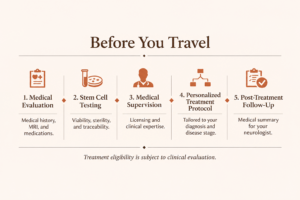
A responsible protocol usually includes several key components. The physician reviews the patient’s medical history, MRI findings, current medications, and disease stage. The team then determines whether the patient is a suitable candidate. If so, the protocol is designed around that patient’s specific profile, not a standardized package.
Delivery methods may vary. Intravenous administration is the most common route. Some protocols may include intrathecal delivery, which involves administration near the spinal cord. This decision depends on clinical judgment, patient history, and the physician’s assessment of risk and benefit.
At Cellular Institute, regenerative medicine in Cancún is not a single-injection experience. It is a medically guided process that combines physician evaluation, personalized protocol design, biologic quality standards, and structured follow-up support.
What Affects Quality and Safety in Stem Cell Therapy for MS
Not all stem cell therapy programs operate at the same standard. This matters deeply when the condition being addressed is as serious as MS.
Several factors directly affect the quality and safety of a regenerative medicine protocol for MS patients.
- Cell source and processing: Where do the cells come from? How are they processed, stored, and tested? What documentation supports their viability, sterility, and safety?
- Physician oversight: Is a licensed physician conducting the evaluation and supervising the treatment? Or is the process handled primarily by coordinators?
- Regulatory structure: Does the clinic operate within Mexico’s regulatory framework under COFEPRIS? Are the biologics sourced and handled in accordance with applicable standards?
- Protocol personalization: Does the clinic offer a one-size-fits-all package, or does the team design a protocol based on your specific diagnosis, staging, and health history?
- Follow-up support: What happens after treatment? A credible clinic provides structured follow-up, not just a discharge summary.
Cellular Institute works with certified stem cells backed by quality documentation including viability, sterility, and traceability records. The clinic’s in-house lab ecosystem through Cellgenic supports greater control over biologic quality from processing through clinical application.
How MS Protocols May Be Structured at a Serious Clinic
A well-designed MS protocol does more than deliver stem cells. The medical team may layer in additional therapies to support the patient’s immune environment, reduce systemic inflammation, and optimize recovery capacity.
For MS patients, inflammation management is particularly important. High systemic inflammation can limit how effectively regenerative therapies work. Some clinics incorporate EBOO therapy in Cancún, an advanced ozone-based blood filtration therapy, as part of a protocol designed to reduce inflammatory burden before and during treatment.
Recovery technologies such as hyperbaric oxygen therapy, red light therapy, and PEMF may also support the treatment process by promoting oxygenation, tissue recovery, and cellular signaling.
Immune health oversight matters enormously for MS patients. At Cellular Institute, Dr. Roni Moya, Immunologist, contributes to the clinical team’s capacity to evaluate and support patients with autoimmune-related conditions. Physician-led care at this level is a meaningful differentiator from clinics that do not include immune specialists in their protocols.
Who May Be a Candidate
Stem cell therapy for MS requires careful candidate evaluation. Patients who may be considered for a regenerative medicine protocol often share some common characteristics.
- A confirmed MS diagnosis with documented medical records and recent imaging
- Relapsing-remitting or secondary progressive MS in earlier or moderate stages
- Stable enough health status to tolerate travel and treatment
- Realistic expectations about outcomes and a commitment to follow-up care
- No active infections, uncontrolled autoimmune flares, or contraindicated conditions
This list is not exhaustive. The medical team makes the final determination after a full clinical review. Candidacy is never assumed based on a website inquiry alone.
Who May Not Be a Candidate
Some patients are not suitable candidates for stem cell therapy at this time. This may include patients with advanced primary progressive MS, active systemic infections, certain hematological conditions, recent cancer history, or other contraindicated health factors.
A medically responsible clinic will tell you honestly if you are not a candidate. If a clinic guarantees results or accepts all patients without evaluation, that is a red flag. You can learn more about what to watch for by reviewing guidance on safe stem cell clinics in Mexico.
What the Travel Experience Looks Like
Cancun is one of Mexico’s most accessible cities for international patients. It has a major international airport with direct flights from dozens of US and Canadian cities. The Hotel Zone and surrounding areas offer comfortable accommodations, and the city’s medical infrastructure has grown significantly in recent years.
Patients traveling to Cellular Institute receive coordinated support from arrival to departure. This includes airport transportation, bilingual patient coordination, treatment scheduling, and guidance on accommodations near the clinic. The goal is to remove logistical friction so patients can focus entirely on their health.
For a broader overview of what traveling to Cancun for treatment involves, our guide to medical tourism in Mexico covers costs, logistics, and patient expectations in detail.
How Cost Compares to North American Options
In the United States and Canada, access to stem cell therapy for MS is extremely limited outside of clinical trials. The few available programs carry significant cost and strict eligibility requirements. Most insurance plans do not cover regenerative medicine protocols.
In Cancun, stem cell therapy programs for MS typically cost a fraction of what comparable private-pay options would cost in North America. The savings reflect the difference in operating costs, not a difference in biologic quality at a serious clinic.
It is important to evaluate cost in context. A lower-priced program that uses unverified biologics or lacks physician oversight is not a bargain. Understanding what is included in a program helps patients make genuinely informed comparisons. Our breakdown of stem cell therapy cost in Mexico explains what should be included and what questions to ask.
Questions to Ask Before Choosing a Clinic
Before committing to any clinic offering stem cell therapy for MS in Cancun, ask these questions directly.
- Who performs the medical evaluation, and what are their credentials?
- Where do the stem cells come from, and how are they processed and tested?
- Is quality documentation such as viability, sterility, and traceability available?
- Does the clinic operate within Mexico’s COFEPRIS regulatory framework?
- Is the protocol personalized to my specific diagnosis and disease stage?
- What additional therapies are included, and why?
- What does follow-up look like after I return home?
- Are there any conditions that would make me a poor candidate?
A trustworthy clinic answers these questions clearly and without pressure. Patients who want broader guidance on evaluating their options can explore our article on how to choose a stem cell clinic in Mexico.

Frequently Asked Questions
Is stem cell therapy for MS legal in Mexico?
Yes. Mexico allows regenerative medicine applications under a structured medical and regulatory framework overseen by COFEPRIS. Serious clinics operate within this framework with appropriate licensing for tissue handling, biologic preparation, and clinical application. Patients should verify that any clinic they consider operates within this recognized structure.
How long do MS patients typically stay in Cancun for treatment?
Treatment stays vary depending on the protocol. Many patients plan for five to ten days to allow for pre-treatment evaluation, the core therapy sessions, recovery support, and a clinical debrief before returning home. Your patient coordinator can outline a specific timeline based on your protocol.
Will my neurologist at home be kept informed?
A responsible clinic encourages collaboration with your existing care team. Cellular Institute can provide documentation of your protocol and treatment summary so your neurologist at home stays informed. Regenerative medicine should complement, not replace, your ongoing neurological care.
How long might it take to notice any changes after treatment?
Results vary significantly by patient, disease stage, overall health, and protocol design. Some patients report gradual changes over weeks to months. Others notice more modest shifts. There are no guaranteed timelines. Understanding how long stem cell therapy results may last can help set responsible expectations before you travel.
Final Thoughts
Stem cell therapy for MS in Cancun is a real and increasingly researched option for patients who are looking beyond conventional medicine. The right program, at the right clinic, with the right medical team, can offer a thoughtful and personalized approach to immune modulation and nervous system support.
The key is knowing what to evaluate. Not all clinics operate at the same standard. Not all biologics carry the same quality documentation. And not all programs are built around the individual patient.
Cellular Institute approaches MS patients the same way it approaches every patient: with a full clinical evaluation, personalized protocol design, physician oversight, high-quality biologics, and coordinated support throughout the journey. If you are exploring whether this approach may be right for you, the next step is a conversation with our medical team.
Schedule a discovery call to speak with our patient coordinators and begin your medical evaluation. There is no pressure and no commitment. Just clarity about whether you may be a candidate.
Medical Disclaimer
This article is for educational purposes only and does not replace medical advice, diagnosis, or treatment. Regenerative therapies are not appropriate for every patient, and outcomes vary. A licensed physician must evaluate your medical history, goals, and candidacy before any treatment can be recommended.