

Written by: Cellular Institute Editorial Team
Medical reviewer: Dr. Matilde Rodríguez – CP 12651081
Laboratory reviewer: Biotecnóloga Diana Navarrete – CP 15029468
Quick Answer
Stem cell therapy for Parkinson’s disease does not offer a cure. However, emerging research suggests that certain stem cell applications may support neuroprotection, reduce systemic inflammation, and help modulate the immune environment associated with neurodegeneration. Responses vary significantly from patient to patient. A thorough physician evaluation is always required to determine whether a candidate may benefit from a regenerative medicine protocol.
What Patients with Parkinson’s Disease Are Looking For
Parkinson’s disease is a progressive neurological condition. It affects movement, balance, sleep, mood, and overall quality of life. Most patients already work with neurologists and take medications such as levodopa or dopamine agonists.
But over time, conventional medications often become less effective. Side effects increase. Patients and caregivers begin exploring what else may be possible.
Stem cell therapy has entered that conversation. Not as a replacement for conventional care, but as a potential complementary approach that some patients are investigating as part of a broader strategy to support neurological health.
What Does the Current Science Suggest?
Research into stem cell therapy for Parkinson’s disease is still evolving. Most studies remain in early clinical or preclinical stages. However, several mechanisms are actively being studied.
- Neuroprotection: Mesenchymal stem cells may release growth factors that help protect existing neurons from further damage.
- Inflammation modulation: Neuroinflammation plays a significant role in Parkinson’s progression. Stem cells may help regulate inflammatory signaling in the brain environment.
- Paracrine signaling: Stem cells communicate with surrounding tissue through signaling molecules. This indirect effect may support cellular repair and immune balance without requiring the cells to replace dopamine neurons directly.
- Immune system support: Some research points to immune dysregulation as a contributing factor in neurodegeneration. Stem cell therapy may help recalibrate immune activity in certain patients.
It is important to be clear: stem cell therapy does not regenerate dopamine neurons in a clinically proven way at this time. The goal of a responsible protocol is to support the biological environment around the disease, not to claim it reverses the condition.
What a Regenerative Protocol May Include
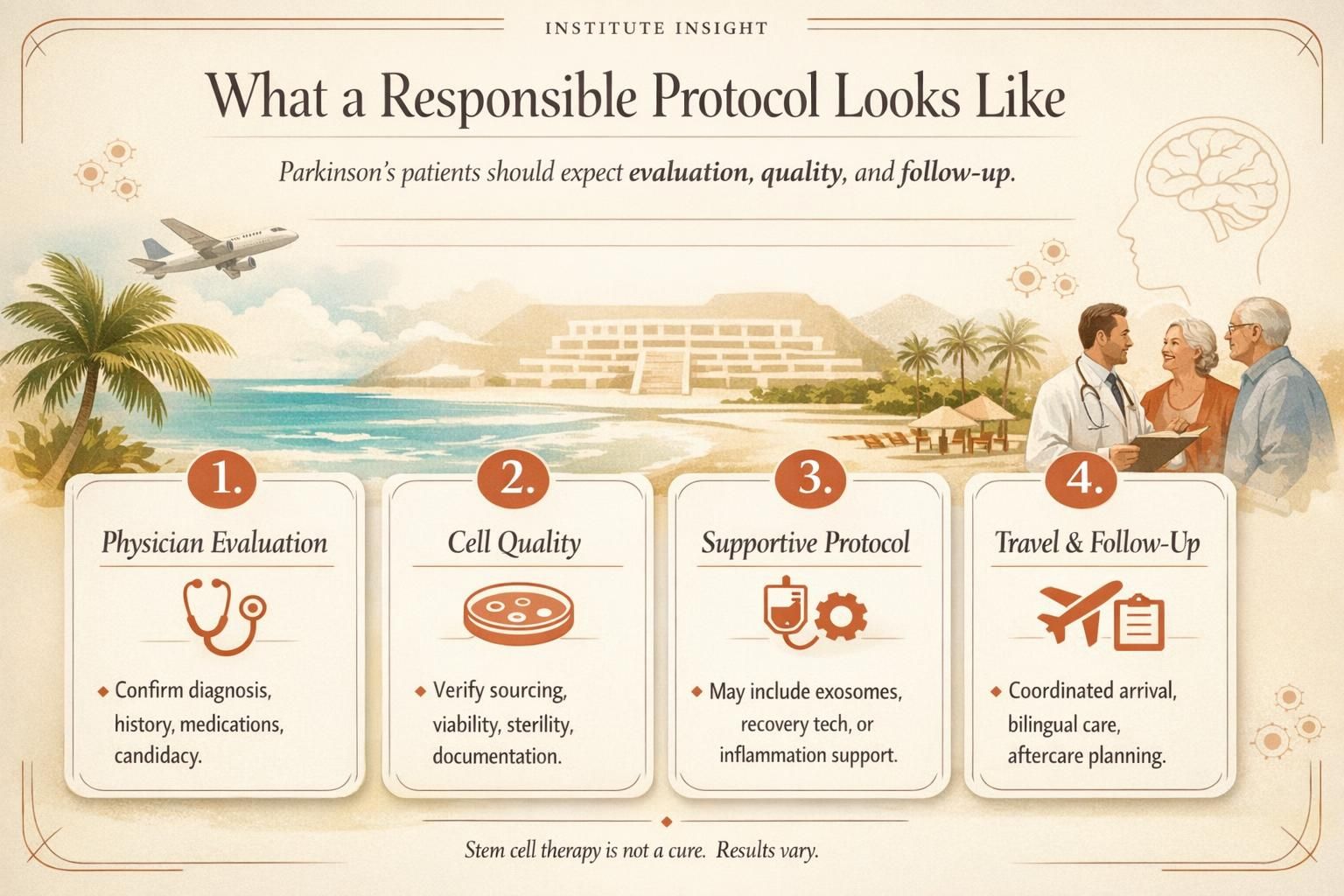
At Cellular Institute, stem cell therapy for neurological conditions is never a standalone injection. The medical team designs a personalized protocol based on the patient’s history, current medications, inflammation markers, and treatment goals.
A comprehensive protocol may include:
- Stem cell administration: Typically mesenchymal stem cells derived from ethically sourced tissue, processed under strict quality standards through the Cellgenic lab ecosystem.
- Exosome therapy: Exosome therapy may complement stem cell administration by delivering concentrated signaling molecules that support cellular communication and may enhance the therapeutic environment.
- EBOO therapy: Systemic inflammation is a major concern in neurological conditions. EBOO therapy in Cancún may help reduce oxidative stress and inflammatory burden before or alongside stem cell treatment.
- Recovery technologies: Hyperbaric oxygen therapy, red light therapy, and PEMF are among the recovery technologies that may support neurological recovery and optimize the post-treatment environment.
- Peptide therapy: In some cases, peptide therapy may be incorporated to support neuroprotective pathways, inflammation regulation, and overall systemic optimization.
The protocol around the therapy matters as much as the therapy itself. Cellular Institute does not sell a single injection. The team builds a complete regenerative experience around each patient’s clinical picture.
Why Stem Cell Quality Matters Especially for Neurological Cases
Not all stem cell products are equal. For complex neurological conditions like Parkinson’s disease, the quality, viability, and traceability of the biologic product are critical.
Cellular Institute works through Cellgenic, its affiliated lab ecosystem, to ensure that stem cell products meet strict standards before any patient receives them. This includes viability testing, sterility verification, and documentation of cell origin and processing.
Patients can learn more about certified stem cells and what the quality standards involve before making any decision. The lab team at Cellular Institute, including Biotechnologist Diana Navarrete, reviews product documentation as part of the clinical preparation process.
Many clinics outsource their biologics and provide little visibility into product quality. Cellular Institute’s vertically integrated approach offers greater transparency for patients who want to understand what they are actually receiving.
Who May Be a Candidate?
Candidacy for stem cell therapy in Parkinson’s disease depends on many individual factors. A physician evaluation is always the first step. Generally, patients who may benefit from further evaluation include those who:
- Have a confirmed Parkinson’s diagnosis in early to moderate stages
- Experience ongoing inflammation or immune dysregulation
- Seek to complement conventional neurological care with supportive regenerative options
- Are medically stable enough to travel and participate in a multi-day protocol
- Have realistic expectations and understand that results vary significantly
Who May Not Be a Good Candidate?
Stem cell therapy is not appropriate for every patient. Candidates with active infections, certain cancers, advanced systemic disease, or specific immune conditions may not qualify. The physician team at Cellular Institute evaluates each case individually before any protocol recommendation.
Patients should also understand that regenerative protocols support the body’s healing environment. They do not replace the role of a neurologist or halt disease progression in a guaranteed way.
Traveling to Cancún for Regenerative Medicine
Many patients from the United States and Canada are now considering medical tourism in Mexico as a serious option. Cancún offers a combination of advanced medical infrastructure, significantly more accessible treatment costs, and a coordinated international patient experience.
Cellular Institute supports international patients with bilingual coordination, airport logistics, treatment scheduling, and structured follow-up. Patients with Parkinson’s disease often travel with a caregiver or family member. The team plans around that reality.
Before choosing any clinic abroad, patients should research carefully. Understanding how to choose a stem cell clinic in Mexico can help patients avoid common mistakes and identify programs with genuine medical oversight, quality standards, and transparent protocols.

Frequently Asked Questions
Can stem cell therapy cure Parkinson’s disease?
No. Stem cell therapy does not cure Parkinson’s disease. The research to date suggests it may support neuroprotection, inflammation modulation, and immune balance in some patients. A physician must evaluate whether any potential benefit applies to your specific case.
Will stem cell therapy reduce my tremors?
Some patients report improvements in certain symptoms after regenerative protocols, but results vary significantly. Tremor reduction is not a guaranteed outcome. Realistic expectations and honest physician guidance are essential before any decision.
How long do results from stem cell therapy last?
The duration of any benefit varies widely between patients. Factors such as disease stage, overall health, inflammation levels, and protocol design all influence outcomes. You can explore more about how long stem cell therapy results may last in our patient education resources.
Is stem cell therapy in Mexico safe for Parkinson’s patients?
Safety depends on the clinic, the biologic product, the physician oversight, and the patient’s medical profile. Patients should always verify a clinic’s regulatory standing, ask about product sourcing and quality documentation, and confirm that a licensed physician oversees all care. You can read more about stem cell therapy safety in Mexico before making any decision.
Final Thoughts
Parkinson’s disease is a serious condition. Patients and caregivers deserve honest, medically responsible information when evaluating regenerative options. Stem cell therapy may offer supportive benefits for some patients as part of a physician-guided, personalized protocol. It does not replace conventional neurological care.
At Cellular Institute, every patient’s journey begins with a medical evaluation. The team reviews your history, your goals, and your candidacy before any protocol recommendation. The goal is to build a complete, evidence-informed regenerative experience around you, not to sell a procedure.
If you are exploring whether stem cell therapy may support your Parkinson’s disease management, the next step is a conversation with our team. Schedule a discovery call to speak with a patient coordinator and begin your evaluation.
Medical Disclaimer
This article is for educational purposes only and does not replace medical advice, diagnosis, or treatment. Regenerative therapies are not appropriate for every patient, and outcomes vary. A licensed physician must evaluate your medical history, goals, and candidacy before any treatment can be recommended.