

Written by: Cellular Institute Editorial Team
Medical reviewer: Dr. Matilde Rodríguez – CP 12651081
Laboratory reviewer: Biotecnóloga Diana Navarrete – CP 15029468
Quick Answer
Stem cell therapy for Crohn’s disease is an active area of clinical research. Early evidence suggests that mesenchymal stem cells may help modulate immune activity and support gut tissue repair in some patients. However, this approach remains investigational for most presentations of Crohn’s disease. Physician evaluation is required to determine whether a patient may be an appropriate candidate. Results vary, and stem cell therapy should not replace conventional medical care without physician guidance.
What Patients With Crohn’s Disease Are Looking For
Crohn’s disease is a chronic inflammatory bowel condition that affects the digestive tract. Many patients manage it for years with aminosalicylates, corticosteroids, immunomodulators, or biologics. For some, these treatments work well. For others, they lose effectiveness over time, cause significant side effects, or simply fail to maintain lasting remission.
It is understandable that patients in this situation search for alternatives. Stem cell therapy has gained attention as a potential option that may support immune regulation and tissue repair. Before making any decisions, patients deserve a clear, honest picture of what the science currently suggests and what responsible evaluation looks like.
What the Research Suggests
The most studied application of stem cell therapy in Crohn’s disease involves perianal fistulas. These are tunnels that form between the intestine and the skin near the anus. They are notoriously difficult to treat. Clinical trials using mesenchymal stem cells have shown promising results in fistula closure rates, with one approved therapy available in certain markets.
For luminal Crohn’s disease, which affects the inner lining of the bowel more broadly, research is less advanced. Some studies suggest that intravenous mesenchymal stem cells may help modulate the overactive immune response that drives inflammation. However, larger controlled trials are still ongoing, and this application should be considered investigational.
Patients should approach this area with realistic expectations. The science is promising, but it is still developing. No reputable clinic should promise remission or claim that stem cell therapy eliminates Crohn’s disease. What responsible protocols aim to do is support immune balance, reduce inflammatory burden, and potentially improve quality of life in carefully selected patients.
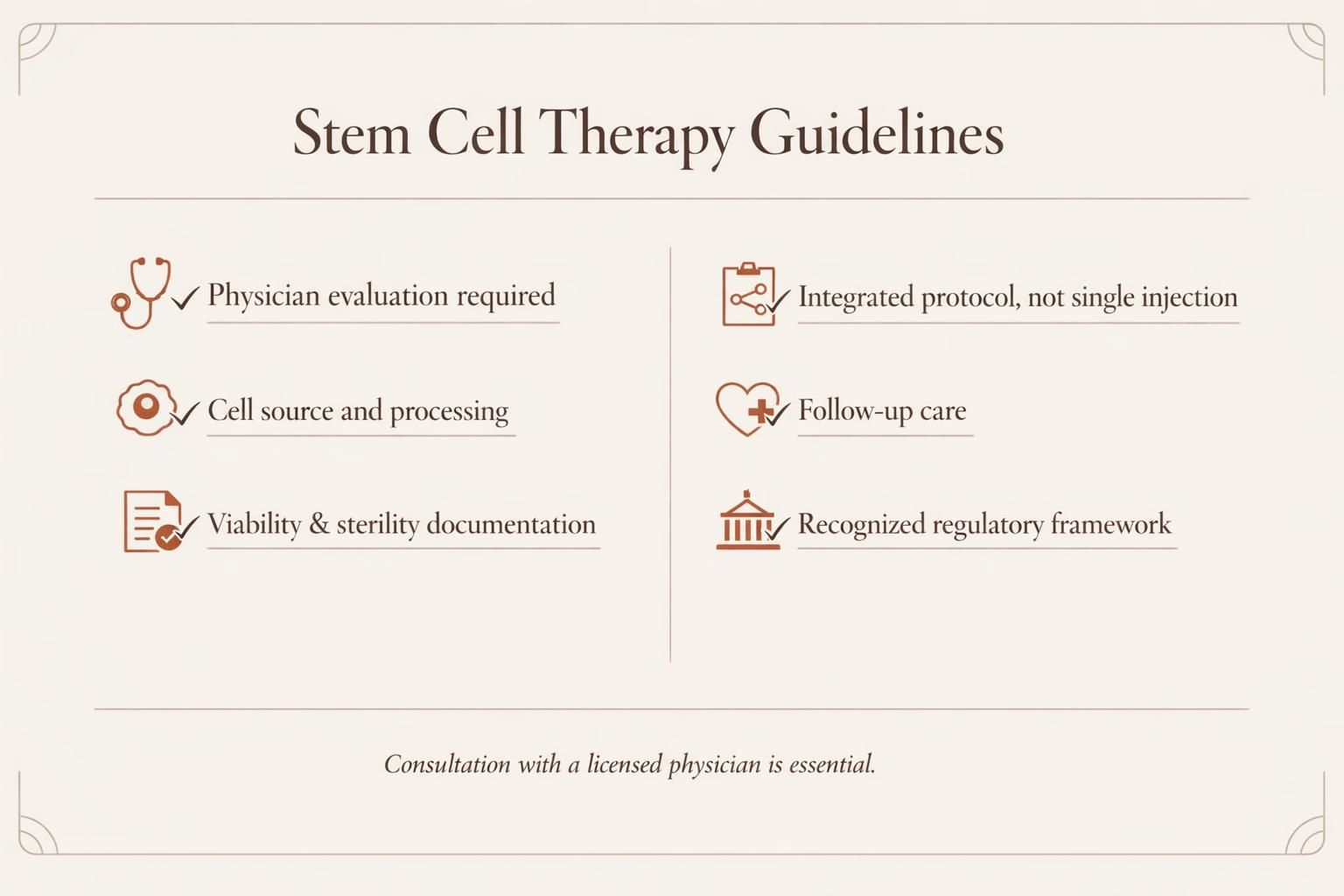
What Affects Quality and Safety in Stem Cell Therapy
Not all stem cell therapy is the same. The outcome of any regenerative medicine protocol depends heavily on the quality of the biologic product, the delivery method, the clinical evaluation behind it, and the follow-up care provided.
Patients should ask where the cells come from, how they are processed, and what quality documentation the clinic provides. At Cellular Institute, biologics go through Cellgenic, the clinic’s affiliated laboratory ecosystem. This means greater traceability, viability testing, sterility documentation, and xeno-free processing standards. Our team includes Biotechnologist Diana Navarrete, who reviews laboratory quality and product documentation before any biologic reaches a patient.
Patients can learn more about our approach to lab quality and transparency before making any decisions.
For patients considering treatment at any clinic, our guide on how to choose a stem cell clinic in Mexico outlines the most important questions to ask and what red flags to watch for.
The Role of an Integrated Protocol
At Cellular Institute, stem cell therapy for immune-related or inflammatory conditions is never a standalone injection. The medical team designs a complete protocol around the patient’s history, labs, current medications, inflammatory burden, and recovery capacity.
Complementary therapies may play an important supporting role. For example, EBOO therapy in Cancún is an advanced blood filtration approach that may help reduce systemic inflammation and oxidative stress. This can be particularly relevant for patients with chronic inflammatory conditions like Crohn’s disease. You can read more about how EBOO therapy supports systemic inflammation reduction as part of a broader protocol.
Recovery support technologies, including hyperbaric oxygen therapy, red light therapy, and PEMF, may also be included as part of a personalized plan to support the body’s response after treatment.
Peptide therapy may be considered in select cases to support immune modulation, gut integrity, or overall recovery capacity, depending on the patient’s clinical picture.
Who May Be a Candidate
Stem cell therapy for Crohn’s disease may be worth exploring for patients who meet certain criteria. These may include:
- Patients who have not achieved stable remission with standard medications or biologics
- Patients experiencing significant side effects from long-term immunosuppression
- Patients with perianal fistulas that have not responded to conventional treatment
- Patients in a medically stable state who are willing to follow a structured protocol
- Patients who understand the investigational nature of this approach and have realistic expectations
Candidacy always requires a thorough medical evaluation. The physician reviews the patient’s diagnosis, disease history, current medications, and overall health before recommending any protocol. Dr. Roni Moya, Immunologist, provides specialist evaluation for patients with inflammatory and autoimmune-related conditions at Cellular Institute.
Who May Not Be a Candidate
Stem cell therapy is not appropriate for every patient with Crohn’s disease. Patients who may not be candidates include those with active infections, recent malignancy, severely compromised organ function, or those who are not medically stable. Patients currently on certain immunosuppressive regimens may require protocol adjustments before any regenerative therapy.
This is why physician evaluation is non-negotiable. A responsible clinic never offers stem cell therapy without first understanding the patient’s complete medical context.
How Cellular Institute Approaches This
Cellular Institute offers regenerative medicine in Cancún through a physician-guided, protocol-based approach. Every patient starts with a thorough medical evaluation. The clinical team reviews labs, imaging if available, current treatment history, and the patient’s specific goals before designing any protocol.
The clinic operates within Mexico’s medical regulatory framework, with a COFEPRIS-recognized structure for regenerative therapies. Cellular Institute is connected to the Global Stem Cells Group ecosystem, which brings over 15 years of regenerative medicine experience, physician education through ISSCA, and international clinical standards to every patient encounter.
International patients from the United States and Canada receive full coordination support, including patient coordinators, bilingual communication, logistics guidance, and structured follow-up after treatment. The goal is not to sell an injection. It is to guide the patient through a complete, responsible regenerative medicine experience.
If you are considering traveling for care, our guide to medical tourism in Mexico covers what patients should know before making that decision.
Questions to Ask Before Choosing a Clinic
Before booking any stem cell therapy for Crohn’s disease, patients should ask these questions:
- Does the clinic require a physician evaluation before recommending treatment?
- Where do the stem cells come from, and how are they processed?
- What quality documentation, such as viability and sterility reports, can the clinic provide?
- Does the protocol include more than one therapy, or is it a single injection?
- What follow-up care does the clinic offer after treatment?
- Is the clinic operating within a recognized regulatory framework?
- Does the team include specialists in immunology or inflammatory conditions?

Frequently Asked Questions
Is stem cell therapy a cure for Crohn’s disease?
No. Stem cell therapy for Crohn’s disease is not a cure and should not be presented as one. It is an investigational approach that may help support immune modulation and tissue repair in appropriately selected patients. Results vary, and physician evaluation is required.
What type of stem cells are used in Crohn’s disease protocols?
Mesenchymal stem cells, often sourced from umbilical cord tissue or adipose tissue, are the most commonly studied cell type for inflammatory bowel conditions. At Cellular Institute, the type of cells and delivery method depend on the physician’s evaluation of each individual patient’s case.
Will I need to stop my current Crohn’s medications before treatment?
This decision must be made by your physician. Patients should never stop or adjust medications without medical guidance. The clinical team at Cellular Institute reviews current medications as part of the evaluation process and provides guidance on how to prepare safely for any protocol.
How long might results last after stem cell therapy for Crohn’s disease?
The duration of any response varies significantly by patient, disease severity, protocol design, and overall health status. There is no standard timeline that applies to every patient. For a broader discussion of what to expect, you can explore information on how long stem cell therapy results may last.
Final Thoughts
Living with Crohn’s disease when standard treatments stop working is exhausting. It makes sense to explore every responsible option available. Stem cell therapy is a legitimate area of research that may offer meaningful support for certain patients, particularly those with treatment-resistant fistulas or persistent inflammation despite conventional care.
The key word is responsible. The quality of the cells, the expertise of the medical team, the depth of the evaluation, and the design of the protocol all determine whether the experience is worthwhile. A serious clinic will never overpromise. It will educate you, evaluate you, and guide you through a process built around your specific situation.
If you are ready to explore whether you may be a candidate, we invite you to schedule a discovery call with the Cellular Institute team. Our patient coordinators will answer your questions, review your situation, and help you understand what next steps may look like for your case.
Medical Disclaimer
This article is for educational purposes only and does not replace medical advice, diagnosis, or treatment. Regenerative therapies are not appropriate for every patient, and outcomes vary. A licensed physician must evaluate your medical history, goals, and candidacy before any treatment can be recommended.