

Written by: Cellular Institute Editorial Team
Medical reviewer: Dr. Matilde Rodríguez – CP 12651081
Laboratory reviewer: Biotecnóloga Diana Navarrete – CP 15029468
Quick Answer
Stem cell therapy for Crohn’s disease is an active and evolving area of regenerative medicine. Current evidence suggests that mesenchymal stem cells (MSCs) may help modulate immune activity, reduce intestinal inflammation, and support mucosal healing in selected patients. This approach does not replace conventional gastroenterological care. A physician must evaluate each patient individually to determine whether a regenerative protocol may be appropriate for their condition, history, and goals.
What Patients With Crohn’s Disease Should Know
Crohn’s disease is a chronic inflammatory bowel condition. It causes recurring flare-ups, intestinal damage, fistulas, and significant quality-of-life disruption. Many patients cycle through biologics, immunosuppressants, and corticosteroids for years. Some respond well. Others do not.
When conventional treatments stop working or produce unacceptable side effects, patients begin looking for alternatives. Stem cell therapy has emerged as one of the more clinically studied options in this space. It is not a cure. But for appropriately selected candidates, it may offer a meaningful way to support immune regulation and intestinal tissue health.
Understanding what stem cell therapy may or may not support is the first step toward making an informed decision.
How Stem Cells May Support Crohn’s Disease Management
The most studied cell type for inflammatory bowel conditions is the mesenchymal stem cell (MSC). Researchers derive MSCs from umbilical cord tissue, Wharton’s jelly, bone marrow, or adipose tissue. Each source has different characteristics, and the quality of the preparation matters significantly.
In the context of Crohn’s disease, MSCs may work through several mechanisms:
- Immune modulation: MSCs may help calm overactive immune responses that drive intestinal inflammation.
- Anti-inflammatory signaling: MSCs release cytokines and growth factors that may reduce local and systemic inflammation.
- Mucosal support: Some research suggests that MSCs may promote tissue repair in the intestinal lining.
- Fistula support: Clinical trials, including the ADMIRE-CD study, have explored MSC-based therapies for perianal fistulas associated with Crohn’s disease, with encouraging findings in specific patient populations.
These mechanisms are promising. However, the field is still developing. Results vary by patient, by disease severity, and by the quality of the biologic product used. A physician with experience in autoimmune and inflammatory conditions must guide any protocol.
At Cellular Institute, patients with inflammatory conditions work closely with Dr. Roni Moya, Immunologist, who evaluates immune health, systemic inflammation, and the appropriateness of regenerative medicine as part of the patient’s broader care plan.
What Affects Quality and Safety in Stem Cell Therapy for Crohn’s Disease
Not all stem cell therapies carry the same quality, safety profile, or clinical rationale. Patients researching this option should understand that the biologic product itself matters enormously.
Key factors that affect quality include:
- Cell source and origin: Where do the cells come from, and how are they collected?
- Processing standards: Are cells processed in a controlled environment with documented sterility and viability?
- Traceability: Can the clinic show documentation of the product’s origin and quality?
- Cell viability: Are the cells verified as viable before administration?
- Regulatory framework: Does the clinic operate within a recognized medical regulatory structure?
Cellular Institute works through its affiliated lab ecosystem, Cellgenic, to support quality control, traceability, and xeno-free processing standards. Patients receive certified stem cells with documentation that supports safety and transparency. This is a meaningful distinction in a space where many clinics offer limited visibility into their biologic products.
For patients concerned about safety when traveling abroad for treatment, our guide on stem cell therapy safety in Mexico offers a detailed breakdown of what to evaluate before booking.
What a Regenerative Protocol for Crohn’s Disease May Include
Cellular Institute does not approach Crohn’s disease or any inflammatory condition with a single injection. A complete regenerative protocol may combine several evidence-informed tools depending on the patient’s clinical picture.
In addition to stem cell therapy, a personalized protocol may include:
- Exosome therapy: Extracellular vesicles that carry cell signaling molecules may complement stem cell therapy by amplifying anti-inflammatory communication at the tissue level.
- EBOO therapy: Extracorporeal blood ozonation and oxygenation may help reduce systemic inflammatory burden. Learn more about how EBOO therapy and systemic inflammation relate in patients with chronic inflammatory conditions.
- Peptide therapy: Certain peptides may support gut lining integrity, immune balance, and tissue recovery as part of a broader protocol.
- Recovery technologies: Hyperbaric oxygen therapy, red light therapy, and PEMF may support the body’s recovery environment after treatment.
The goal is not to sell more treatments. The goal is to design a protocol that addresses the patient’s inflammatory burden, immune dysregulation, and recovery capacity in a coordinated and clinically reasoned way.
Who May Be a Candidate
Patients who may benefit most from a physician-guided evaluation include those who:
- Have moderate-to-severe Crohn’s disease with recurring flare-ups
- Have had an inadequate response to one or more biologic therapies
- Are managing active or recurrent perianal fistulas
- Want to reduce long-term reliance on immunosuppressants
- Are exploring alternatives to surgical intervention
- Are medically stable enough to travel for treatment
Who May Not Be a Candidate
Regenerative medicine is not appropriate for every patient. A physician will need to review several factors before recommending any protocol.
Patients who may not be appropriate candidates include those with:
- Active infections or uncontrolled systemic illness
- Certain immune conditions that may interact with cell-based therapies
- Recent or ongoing malignancy
- Medical instability that makes travel unsafe
- Unrealistic expectations about outcomes or timelines
This is why a thorough medical evaluation comes before any treatment recommendation. Results vary by patient, and responsible expectations are essential.
How Cellular Institute Approaches This
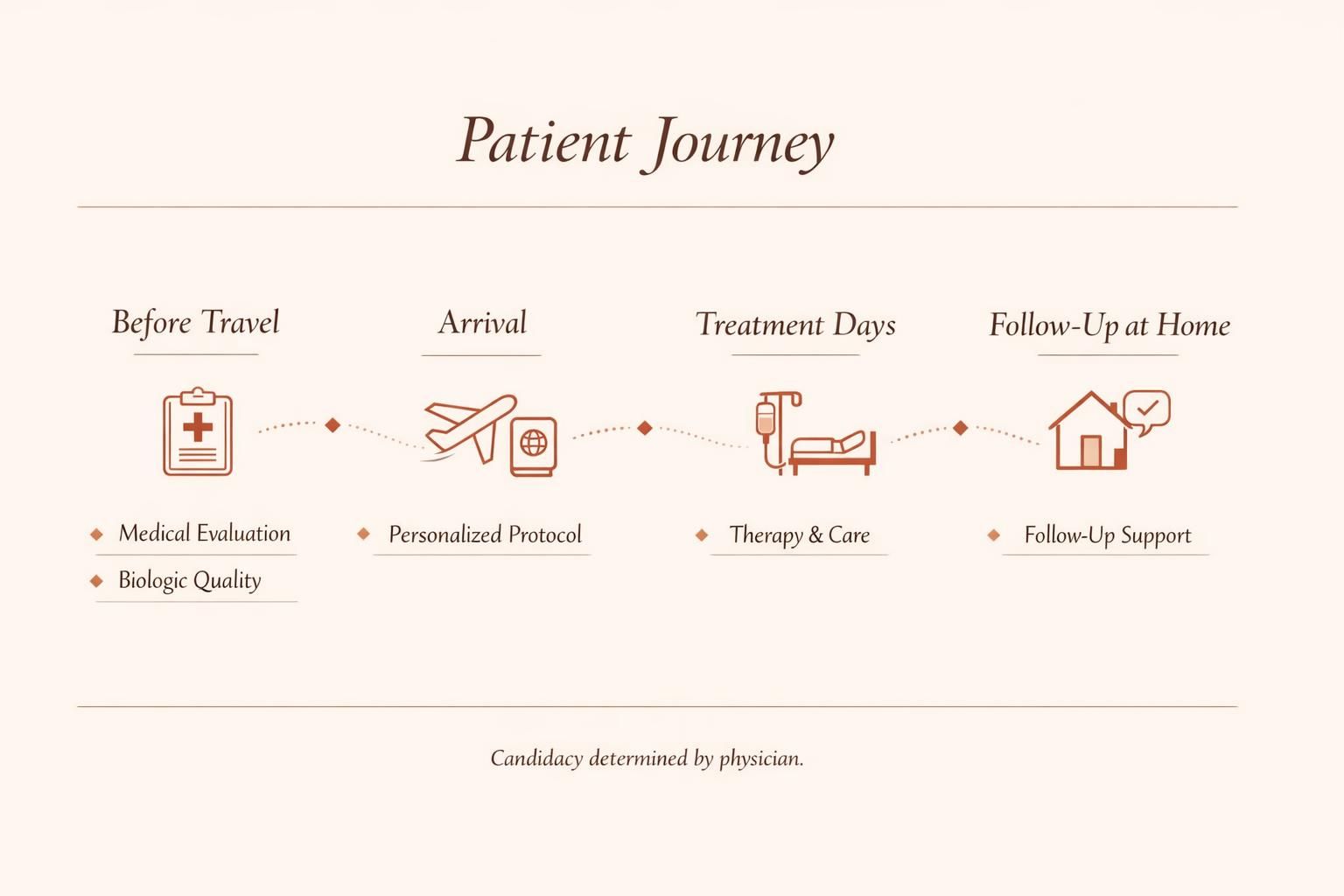
Cellular Institute offers regenerative medicine in Cancún through a physician-guided, protocol-driven model. Every patient begins with a clinical evaluation. The medical team reviews health history, current medications, inflammation markers, and treatment goals before designing any protocol.
The clinic is part of a broader regenerative medicine ecosystem that includes Cellgenic for biologic quality and ISSCA for physician education and scientific authority. This infrastructure supports a more transparent and medically grounded approach than many standalone injection clinics can offer.
Patients traveling from the United States or Canada benefit from bilingual patient coordinators, structured logistics support, and a recovery environment designed around the full treatment journey. If you want to understand how the patient experience is structured, the guide on regenerative medicine in Cancún walks through what to expect before, during, and after your visit.
Questions to Ask Before Choosing a Clinic
Patients comparing clinics for stem cell therapy should ask direct questions before committing to any provider.
- Where do the stem cells come from, and what documentation supports their quality?
- What is the cell viability at the time of administration?
- Does the clinic operate under a recognized regulatory framework?
- Who is the physician overseeing the protocol, and what is their background?
- Is the protocol personalized to my specific condition and history?
- What complementary therapies are included, and why?
- What follow-up support does the clinic provide after treatment?
For a deeper guide on evaluating clinics, read our article on how to choose a stem cell clinic in Mexico.

Frequently Asked Questions
Is stem cell therapy approved for Crohn’s disease?
One MSC-based product has received regulatory approval in Europe specifically for perianal fistulas in Crohn’s disease. In other regions, including Mexico, stem cell therapy for Crohn’s disease falls within an evolving regulatory and clinical framework. Patients should always ask their provider about the regulatory status of the specific therapy and biologic product being used.
How long might it take to notice a response?
Response timelines vary significantly by patient, disease severity, and protocol design. Some patients report subjective improvements within weeks. Others experience gradual changes over several months. A physician must set responsible expectations based on the individual’s clinical profile. For general context, our article on how long stem cell therapy results may last discusses timelines and patient expectations in more detail.
Will stem cell therapy replace my current Crohn’s medications?
No. Regenerative medicine is not intended to replace your gastroenterologist’s treatment plan or prescribed medications. Patients should always consult their treating physician before making any changes to their current medication regimen. Stem cell therapy may be considered as a complementary and supportive approach under physician supervision.
How much does stem cell therapy cost in Mexico for Crohn’s disease?
Costs vary depending on the protocol design, biologic products used, number of sessions, and complementary therapies included. A single-injection approach will differ significantly in cost from a comprehensive regenerative protocol. Our detailed guide on stem cell therapy cost in Mexico provides a broader breakdown of what patients can expect.
Final Thoughts
Stem cell therapy for Crohn’s disease is not a cure. It is not appropriate for every patient. But for those who have not found sufficient relief through conventional treatments, a physician-guided regenerative protocol may offer a meaningful way to support immune modulation, reduce inflammatory burden, and promote intestinal tissue health.
The quality of the therapy, the rigor of the clinical evaluation, and the design of the protocol all matter. Patients deserve transparency, physician oversight, and a complete medical experience — not simply an injection and a departure flight.
If you are researching whether stem cell therapy may be appropriate for your Crohn’s disease, the best first step is a thorough medical evaluation with a team that understands both the science and the patient journey.
Schedule a discovery call with the Cellular Institute team to begin the conversation and learn whether you may be a candidate for a personalized regenerative protocol.
Medical Disclaimer
This article is for educational purposes only and does not replace medical advice, diagnosis, or treatment. Regenerative therapies are not appropriate for every patient, and outcomes vary. A licensed physician must evaluate your medical history, goals, and candidacy before any treatment can be recommended.