
Written by: Cellular Institute Editorial Team
Medical reviewer: Dr. Matilde Rodríguez – CP 12651081
Laboratory reviewer: Biotecnóloga Diana Navarrete – CP 15029468
Quick Answer
Stem cell therapy for fibromyalgia is an emerging area of regenerative medicine research. It is not a cure, and it does not work for every patient. However, some evidence suggests that mesenchymal stem cells may support immune modulation, reduce systemic inflammation, and influence abnormal pain signaling pathways associated with fibromyalgia. A physician must evaluate your full medical history, symptom profile, and treatment background before determining whether you may be a candidate. Results vary significantly by patient.
What Patients With Fibromyalgia Are Actually Asking
Most patients who reach out to regenerative medicine clinics with fibromyalgia are not asking for a miracle. They are asking something far more specific: Is there anything that may help when nothing else has worked?
Fibromyalgia is a complex, chronic condition characterized by widespread musculoskeletal pain, fatigue, cognitive difficulty, and disrupted sleep. Many patients have already tried antidepressants, anticonvulsants, physical therapy, and pain management protocols. Some experience partial relief. Others feel stuck.
This is the point where patients begin researching stem cell therapy. They want to understand whether it could address some of the underlying biology driving their symptoms, not just mask the pain.
What the Science Suggests So Far
Fibromyalgia involves dysregulated pain processing in the central nervous system. Researchers describe this as central sensitization, where the brain and spinal cord amplify pain signals abnormally. Systemic inflammation, immune dysregulation, and oxidative stress may all contribute to this pattern.
Mesenchymal stem cells (MSCs) are among the most studied cell types in regenerative medicine. Early-stage research suggests they may support the body through several mechanisms relevant to fibromyalgia:
- Immune modulation: MSCs may help regulate overactive immune responses associated with chronic inflammation.
- Anti-inflammatory signaling: They release bioactive molecules that may reduce inflammatory markers in the body.
- Neuroprotective support: Some research suggests MSCs may influence the environment around nerve tissue, potentially supporting more balanced pain signaling over time.
- Oxidative stress reduction: MSCs may help modulate cellular stress responses linked to fatigue and tissue sensitivity.
It is important to note that large-scale clinical trials specific to fibromyalgia and stem cell therapy remain limited. The evidence base is still developing. Any clinic that presents stem cell therapy as a proven fibromyalgia treatment is overstating the current science.
Responsible clinics present this as an evidence-informed option worth evaluating, not a guaranteed solution.
What Affects Quality and Safety in Stem Cell Therapy
Not all stem cell therapy is the same. The quality of the biologic product matters enormously. Patients researching this option should ask detailed questions about where the cells come from, how they are processed, and what documentation the clinic provides.
Key quality factors include:
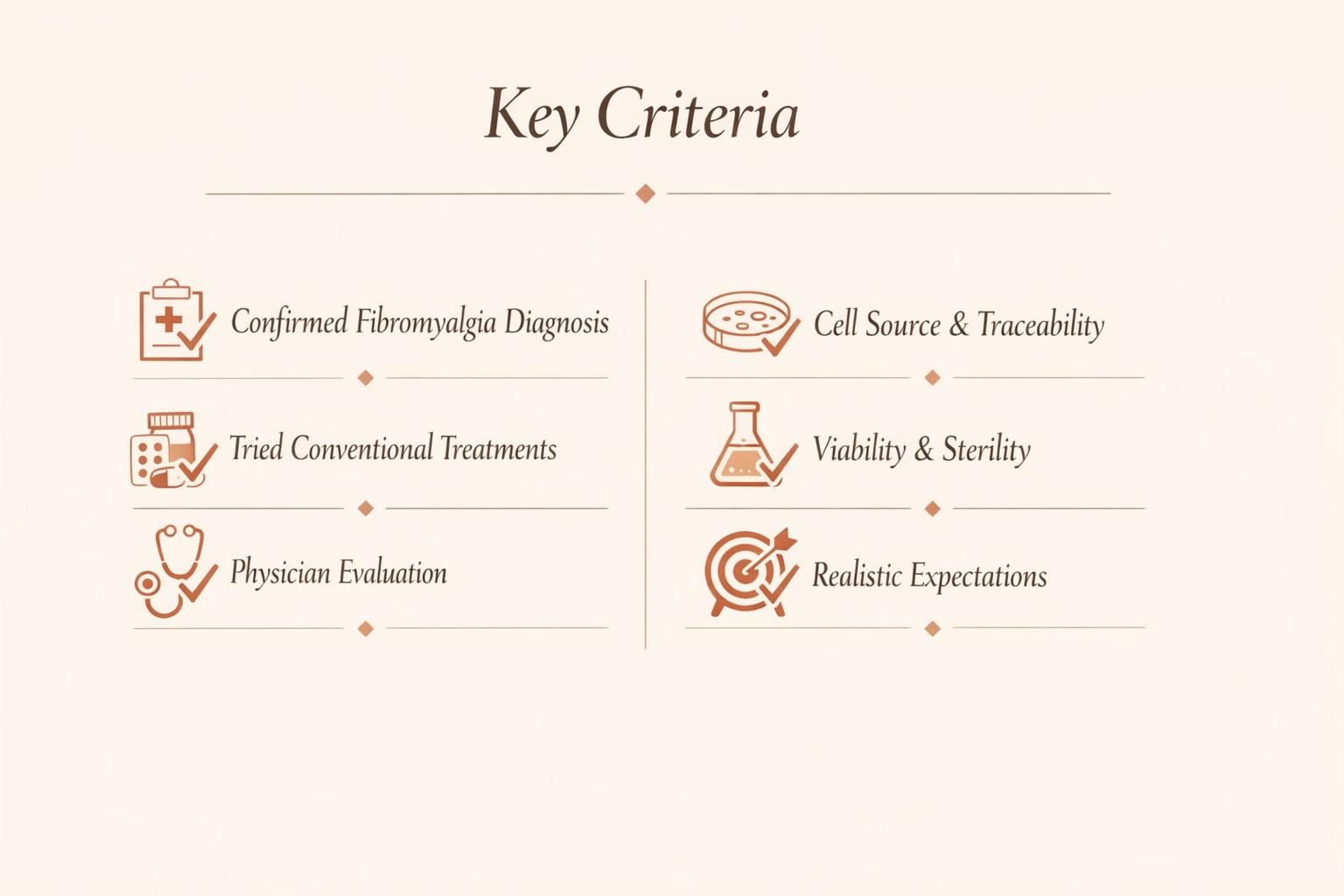
- Cell source and traceability: Where do the cells originate, and can the clinic document the sourcing chain?
- Viability and sterility: Have the cells been tested to confirm they are viable and free of contamination?
- Processing standards: Does the clinic use xeno-free processing, or are animal-derived products involved in preparation?
- Certificate of Analysis (COA): Can the clinic provide documentation that confirms the product meets quality standards before administration?
- Regulatory structure: Does the clinic operate within a recognized regulatory framework?
At Cellular Institute, biologic products are prepared through Cellgenic, the clinic’s affiliated in-house lab ecosystem. This structure supports greater traceability, viability testing, sterility documentation, and xeno-free processing standards. Patients can learn more about this approach by reviewing the clinic’s lab quality and transparency page.
The clinic also works with certified stem cells that meet quality standards aligned with Mexico’s COFEPRIS-recognized regulatory structure. This matters for patients traveling internationally for care.
How Stem Cell Therapy May Fit Into a Personalized Protocol for Fibromyalgia
At Cellular Institute, stem cell therapy is not offered as a standalone injection. The medical team builds a protocol around the patient’s full clinical picture. For fibromyalgia patients, this often means combining multiple evidence-informed modalities.
A personalized protocol may include:
- Stem cell therapy: To support immune modulation and systemic inflammation reduction.
- Exosome therapy: Extracellular vesicles that carry cell-signaling molecules may complement stem cell therapy by supporting tissue communication and recovery. Learn more about exosome therapy and how it works.
- EBOO therapy: This advanced blood filtration and ozone-based therapy may help reduce oxidative stress and systemic inflammation. Research suggests it may be particularly relevant for patients with high inflammatory burden. Read about EBOO therapy and systemic inflammation for more context.
- Peptide therapy: Specific peptides may support recovery, cellular repair, and immune regulation as part of a broader longevity protocol.
- Recovery technologies: Hyperbaric oxygen therapy, PEMF, and red light therapy may support cellular oxygenation and recovery during the treatment period.
The goal is not to combine everything available. The physician evaluates each patient individually and recommends only what is clinically appropriate for their case.
Dr. Roni Moya, Immunologist, plays a key role in evaluating patients with chronic inflammatory and immune-related conditions. His clinical input helps shape protocols that address the immune and inflammatory dimensions of complex conditions like fibromyalgia.
Who May Be a Candidate
Fibromyalgia patients who may be appropriate candidates for a regenerative medicine evaluation generally share several characteristics:
- They have received a confirmed fibromyalgia diagnosis from a licensed physician.
- They have tried conventional treatments without satisfactory or lasting relief.
- They do not have active infections, uncontrolled autoimmune flares, or contraindicated medical conditions.
- They have realistic expectations and understand that results vary by patient.
- They are prepared to participate in a full medical evaluation before any protocol begins.
Who May Not Be a Candidate
Stem cell therapy is not appropriate for every fibromyalgia patient. Some factors that may affect candidacy include active malignancy, pregnancy, certain autoimmune conditions in active flare, uncontrolled systemic illness, or medications that require careful medical review. Only a physician can assess these factors properly.
How Cellular Institute Approaches This
Cellular Institute does not treat fibromyalgia with a single injection and send patients home. The approach begins with a thorough medical evaluation, continues with a personalized protocol, and includes structured follow-up after treatment.
The clinic operates as part of a broader regenerative medicine ecosystem connected to ISSCA and Global Stem Cells Group. This connection supports physician education, protocol development, and clinical standards that go beyond what many standalone clinics offer.
International patients from the United States and Canada travel to Cancún for this care. The clinic provides bilingual coordination, airport transportation support, and a guided patient experience from arrival through recovery. For patients considering this path, understanding medical tourism in Mexico is a helpful first step.
Patients also frequently ask about cost. You can review a detailed breakdown of stem cell therapy cost in Mexico to understand what a protocol investment typically includes.
Questions to Ask Before Choosing a Clinic
If you are evaluating stem cell therapy for fibromyalgia, these questions will help you make a more informed decision:
- Where do the stem cells come from, and what documentation can the clinic provide?
- Does the clinic conduct a full medical evaluation before building a protocol?
- Is the treatment supervised by a licensed physician throughout?
- What complementary therapies are included, and why?
- What follow-up support does the clinic provide after treatment?
- Does the clinic operate within a recognized regulatory structure?
- What realistic outcomes should I expect, and over what timeframe?
A thoughtful clinic will welcome these questions. One that avoids them or over-promises results warrants caution. For a deeper look at this topic, review the guide on how to choose a stem cell clinic in Mexico.
Frequently Asked Questions
Is stem cell therapy approved as a fibromyalgia treatment?
No. Stem cell therapy for fibromyalgia is not approved by regulatory bodies as a standard treatment. It falls within the category of emerging regenerative medicine, and research is still ongoing. Clinics that present it as an approved or guaranteed treatment are not being accurate. Responsible clinics offer it as an evidence-informed option that requires physician evaluation and informed patient consent.
How long might it take to notice any changes after treatment?
Every patient is different. Some patients report gradual changes in energy, pain sensitivity, or sleep quality over weeks to months following treatment. Others notice little change. There is no fixed timeline, and results vary significantly depending on the patient’s health history, protocol design, and overall condition. For more context, review information on how long stem cell therapy results may last.
Is it safe to travel to Cancún for this type of treatment?
Many international patients travel to Cancún specifically for regenerative medicine care. The city is a well-established medical tourism destination with modern clinic infrastructure and experienced international patient coordinators. Cellular Institute supports patients through the full logistics of their treatment trip. You can also review safety and travel context in the guide on stem cell therapy safety in Mexico before making your decision.
Will stem cell therapy replace my current fibromyalgia medications?
No. Cellular Institute does not advise patients to stop or replace their current medications. Any decisions about existing prescriptions must involve your primary care physician. Regenerative medicine protocols are designed to complement your overall care plan, not replace it. Always inform your treating physicians about any therapies you are considering.
Final Thoughts
Living with fibromyalgia is exhausting. The daily reality of widespread pain, disrupted sleep, and fatigue takes a serious toll. If you have tried conventional options without the relief you were hoping for, it is natural to look further.
Stem cell therapy may offer a meaningful direction worth exploring. The science is still developing, and no clinic can promise specific outcomes. But for appropriately selected patients, a personalized regenerative medicine protocol may support inflammation reduction, immune modulation, and improved quality of life over time.
The most important next step is a thorough medical evaluation with a physician who understands both regenerative medicine and your specific condition. If you are curious about whether you may be a candidate, schedule a discovery call with the Cellular Institute team. The conversation is educational, pressure-free, and a good place to start.
Medical Disclaimer
This article is for educational purposes only and does not replace medical advice, diagnosis, or treatment. Regenerative therapies are not appropriate for every patient, and outcomes vary. A licensed physician must evaluate your medical history, goals, and candidacy before any treatment can be recommended.