
Written by: Cellular Institute Editorial Team
Medical reviewer: Dr. Matilde Rodríguez – CP 12651081
Laboratory reviewer: Biotecnóloga Diana Navarrete – CP 15029468
Quick Answer
Stem cell therapy for COPD does not cure the disease. However, early clinical research and patient experience suggest that mesenchymal stem cell protocols may support lung inflammation modulation, tissue repair signaling, and immune regulation in appropriately selected patients. This approach does not replace bronchodilators, corticosteroids, or pulmonary rehabilitation. Instead, it may complement existing treatment when conventional care has reached a plateau. Physician evaluation is required to determine whether you are a candidate.
When Conventional Treatment Is No Longer Enough
Chronic Obstructive Pulmonary Disease is a progressive condition. Most patients rely on bronchodilators, inhaled corticosteroids, and supplemental oxygen to manage daily symptoms. These therapies help manage airflow and reduce flares. They do not address the underlying lung tissue damage or the chronic inflammatory cycle driving disease progression.
Many patients reach a point where their medications still work, but the disease continues to advance. Exacerbations become more frequent. Breathing capacity continues to decline. Daily activities that once felt manageable become more difficult.
This is the point where many patients begin researching regenerative options. They are not looking to abandon conventional care. They are looking for something that addresses the root problem rather than only the symptoms.
What Patients with COPD Should Understand First
COPD involves two overlapping processes. The first is structural lung damage, including the destruction of alveolar walls in emphysema and narrowing of airways in chronic bronchitis. The second is chronic systemic and local inflammation that accelerates tissue breakdown and impairs healing.
Conventional medications manage symptoms well. They do not rebuild damaged lung tissue or significantly quiet the inflammatory environment driving ongoing damage.
Stem cell therapy, specifically mesenchymal stem cell therapy, works through a different mechanism. Rather than acting as a replacement cell that rebuilds tissue directly, mesenchymal stem cells function primarily as signaling agents. They release compounds that may support the body’s own repair processes, modulate immune activity, and reduce inflammatory burden in the lungs and surrounding tissue.
This distinction matters. Stem cell therapy for COPD is not a structural fix. It is a biological support strategy. Realistic expectations and physician-guided protocols are essential.
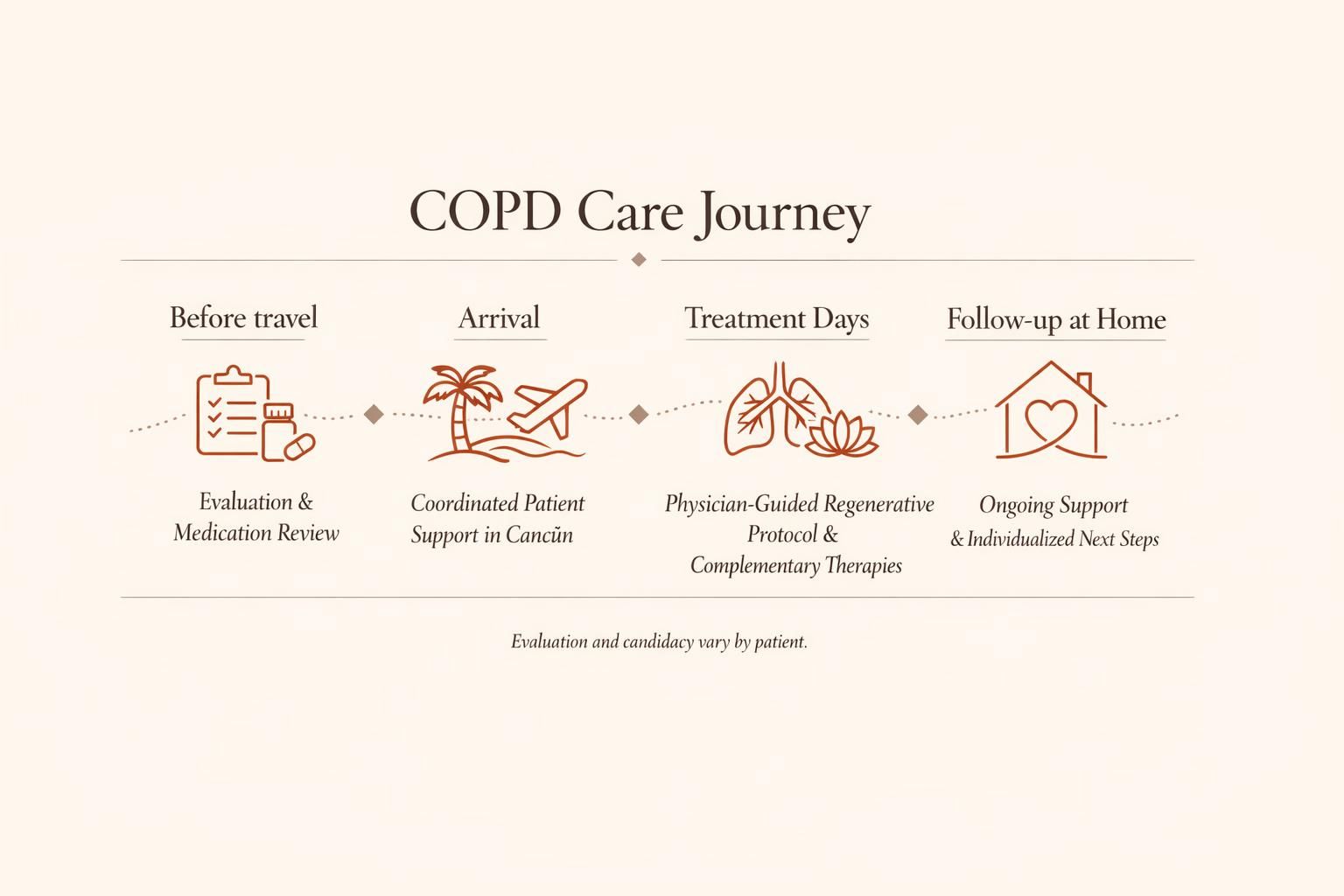
How Stem Cell Therapy May Fit Into a COPD Protocol
At Cellular Institute, regenerative medicine is never a single injection. The medical team builds a personalized protocol around the patient’s history, current medications, disease stage, inflammatory markers, and overall health status.
For COPD patients, a protocol may include several integrated components.
Mesenchymal Stem Cells
Mesenchymal stem cells derived from umbilical cord tissue carry a strong immunomodulatory profile. Research suggests these cells may help quiet overactive inflammatory signaling in the lungs. They may also support tissue repair environments that allow healthier cellular activity. Delivery method, cell quality, and protocol design significantly affect outcomes.
Exosome Therapy
Exosomes are small extracellular vesicles released by stem cells. They carry growth factors, anti-inflammatory signals, and cellular communication molecules. Some protocols incorporate exosome therapy alongside stem cells to enhance the signaling environment, particularly in patients with significant systemic inflammation.
EBOO Therapy
Systemic oxidative stress and chronic inflammation burden the lungs in COPD. EBOO therapy in Cancún uses extracorporeal blood ozonation and oxygenation to support blood quality, reduce oxidative burden, and create a cleaner inflammatory baseline. This therapy may support the effectiveness of regenerative protocols by reducing the systemic noise that makes cellular repair more difficult.
Recovery Technologies
Hyperbaric oxygen therapy and other supportive modalities available through the clinic’s recovery technologies program may support oxygenation, cellular energy, and post-treatment recovery in appropriate candidates.
Peptide Therapy
Certain peptides carry anti-inflammatory and recovery-supportive properties. The medical team may incorporate peptide therapy into a longer-term optimization plan depending on the patient’s goals and clinical profile.
Why Cell Quality Matters Especially for Lung Conditions
COPD patients often carry significant systemic inflammation and oxidative stress. Introducing low-quality biologics into that environment carries unnecessary risk. Cell viability, sterility, early-passage sourcing, and xeno-free processing standards are not optional details. They directly affect both safety and therapeutic potential.
Cellular Institute sources its biologics through certified stem cells processed under rigorous quality control standards. The laboratory ecosystem connected to the clinic supports traceability, sterility testing, viability documentation, and certificate of analysis for biologic products. Patients should always ask clinics where their cells come from and what documentation exists to verify quality. If a clinic cannot answer those questions clearly, that is a significant concern.
You can explore the science behind the clinic’s lab standards and lab quality and transparency practices before making any decisions.
Who May Be a Candidate for This Approach
Not every COPD patient is a candidate for stem cell therapy. The medical team at Cellular Institute evaluates each patient individually before recommending any protocol. Patients who may be worth evaluating include those who meet criteria such as the following.
- Moderate-to-severe COPD with stable respiratory status at the time of treatment
- Patients currently managed with bronchodilators or corticosteroids who have reached a functional plateau
- Non-smokers or patients who have quit smoking for a significant period
- Patients without active infection or significant cardiac instability
- Patients with realistic expectations and physician support for an integrative approach
Who May Not Be a Good Candidate
Some patients may not be appropriate candidates at this time. This includes individuals with active respiratory infections, those on full mechanical ventilation, patients with uncontrolled cardiovascular disease, or those with late-stage disease where the inflammatory burden may limit the body’s capacity to respond to regenerative signals. The physician team makes this determination after a thorough evaluation of labs, imaging, history, and current medications.
How Cellular Institute Approaches COPD Patients
The medical team at Cellular Institute, led by Dr. Rafael Moguel, Medical Director, approaches COPD with both cardiological and systemic awareness. COPD rarely exists in isolation. Many patients also carry cardiovascular burden, metabolic stress, and systemic inflammation. The protocol accounts for these overlapping factors.
The clinic also involves Dr. Roni Moya, Immunologist, whose expertise in immune modulation and chronic inflammation is especially relevant for respiratory conditions where the immune system plays a central role in disease behavior.
This is not a one-size-fits-all injection program. It is a medically reasoned protocol built around a specific patient at a specific stage of their condition.
Questions to Ask Before Choosing a Clinic
If you are researching stem cell therapy for COPD, the clinic you choose matters as much as the therapy itself. Before committing to any provider, ask the following questions.
- Where do the stem cells come from, and what quality documentation exists?
- Who oversees the protocol medically, and what is their clinical background?
- Does the clinic offer a full protocol or only a single injection?
- What complementary therapies support the regenerative approach?
- How does the clinic handle patients who are on multiple medications?
- What follow-up support does the clinic provide after treatment?
Reading more about how to choose a stem cell clinic in Mexico can help you identify what separates responsible providers from those making unsupported claims.

Frequently Asked Questions
Can stem cell therapy cure COPD?
No. Stem cell therapy does not cure COPD. Current research suggests it may support inflammation modulation, lung repair signaling, and immune regulation in appropriate candidates. It is designed to complement conventional care, not replace it. Patients should maintain all physician-prescribed medications unless a licensed physician specifically advises otherwise.
How many sessions might a COPD patient need?
This depends on the individual patient. Some protocols involve a single treatment with follow-up optimization. Others involve a series of sessions over time. The physician evaluates disease stage, inflammatory burden, overall health, and treatment response to guide protocol design. Results vary significantly by patient.
Is it safe to travel to Cancún for this type of treatment?
Cancún is a well-established medical tourism destination with direct international flights from major U.S. and Canadian cities. Cellular Institute provides coordinated patient support including pre-arrival communication, airport logistics, and treatment-day guidance. You can review more about medical tourism in Mexico to understand what the patient journey typically involves.
How long might the effects of stem cell therapy last for COPD?
This varies by patient and protocol design. Some patients report improvements in energy, exercise tolerance, and exacerbation frequency that persist for months. Others require follow-up treatments. Understanding how long stem cell therapy results may last depends on the quality of the biologic product, the patient’s baseline health, and the comprehensiveness of the protocol.
Final Thoughts
COPD is a serious, progressive condition. Conventional medicine provides essential support, but it does not address the chronic inflammation and tissue-level damage that drive long-term decline. For patients who have reached a plateau with standard care, stem cell therapy may offer a meaningful complementary approach when delivered through a medically responsible, physician-guided protocol.
The key word is may. Outcomes are not guaranteed. Candidacy requires evaluation. Quality matters at every step, from how the cells are processed to how the protocol is designed around your specific medical history.
If you are ready to learn whether this approach may be appropriate for your situation, the team at Cellular Institute is available to guide that conversation. Schedule a discovery call to speak with a patient coordinator and begin your evaluation.
Medical Disclaimer
This article is for educational purposes only and does not replace medical advice, diagnosis, or treatment. Regenerative therapies are not appropriate for every patient, and outcomes vary. A licensed physician must evaluate your medical history, goals, and candidacy before any treatment can be recommended.