
Written by: Cellular Institute Editorial Team
Medical reviewer: Dr. Matilde Rodríguez – CP 12651081
Laboratory reviewer: Biotecnóloga Diana Navarrete – CP 15029468
Quick Answer
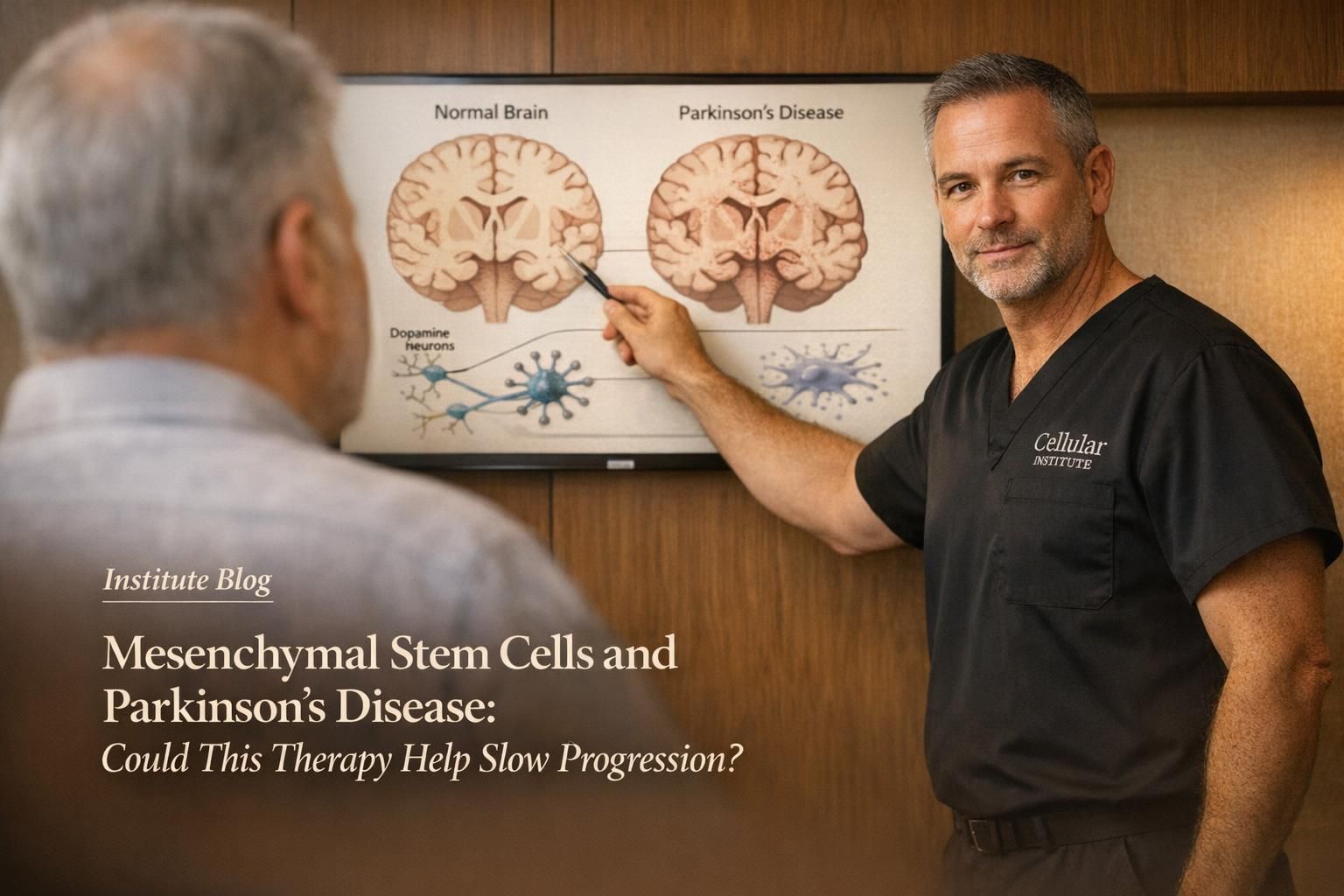
Mesenchymal stem cells and Parkinson’s disease is an area of growing scientific interest. Early research suggests that MSC therapy may help support neuroprotection, reduce neuroinflammation, and modulate the immune environment in the brain. This does not mean stem cells cure Parkinson’s disease or reverse neurodegeneration. However, for appropriately selected candidates, a physician-guided MSC protocol may support quality of life, complement existing care, and help slow certain aspects of progression. A thorough medical evaluation is always required before any treatment can be considered.
What Parkinson’s Patients Are Really Asking
Most people researching this topic already understand the basics. They know Parkinson’s disease involves the progressive loss of dopamine-producing neurons in the brain. They have tried levodopa or other dopamine-based medications. And they have noticed something concerning: over time, those medications become less predictable.
What they want to know is whether anything else may help. Not a miracle. Not a cure. Just a genuine, evidence-informed option that may slow the decline and preserve independence for longer.
That is a fair and important question. Here is what we know.
How Mesenchymal Stem Cells May Support Neurological Health
Mesenchymal stem cells are multipotent cells found in bone marrow, adipose tissue, and umbilical cord tissue. Researchers study them extensively because of their immunomodulatory and neuroprotective properties.
In the context of Parkinson’s disease, scientists believe MSCs may work through several mechanisms:
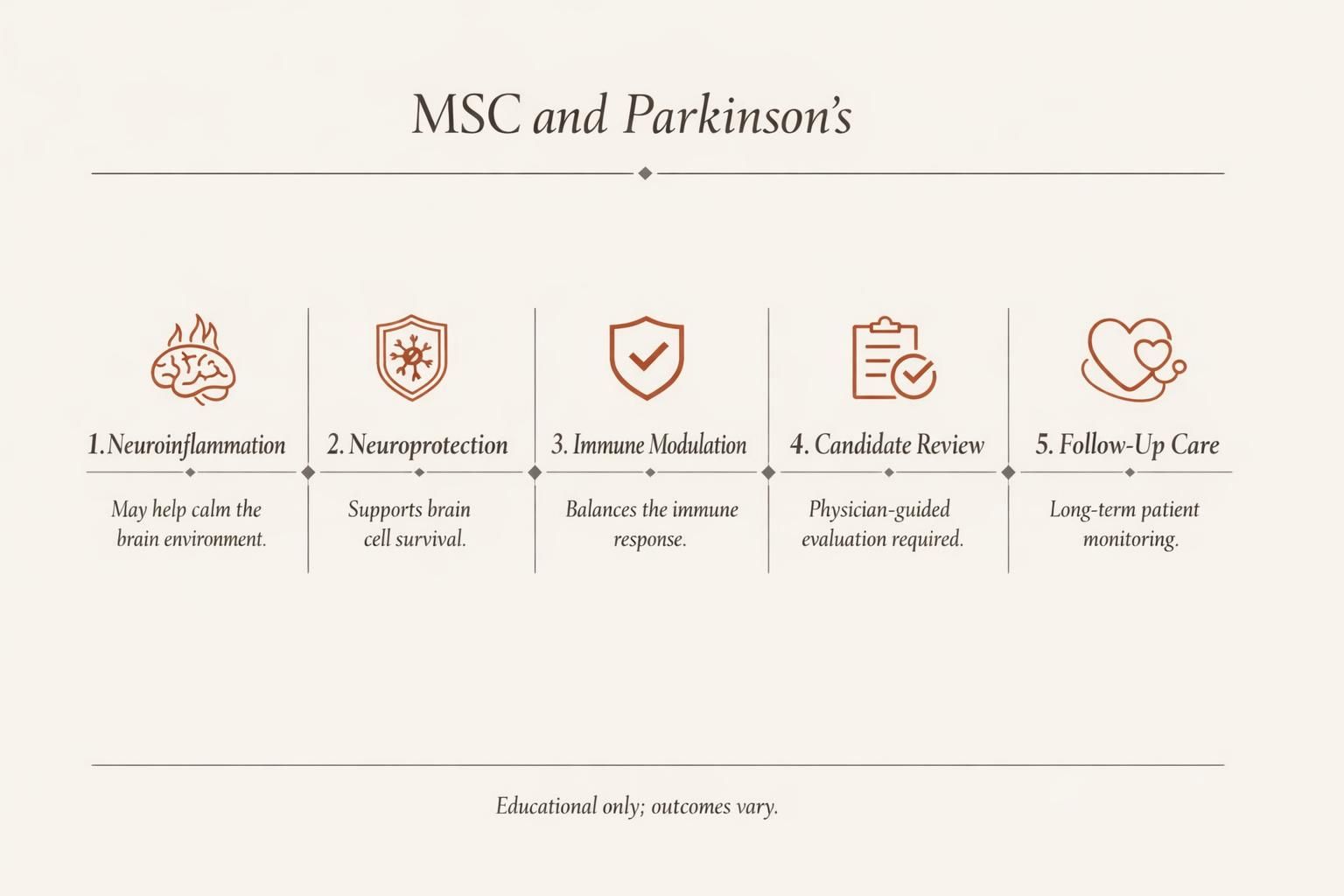
- Reducing neuroinflammation: Chronic inflammation in the brain accelerates neuronal damage. MSCs release anti-inflammatory signaling molecules that may help calm this environment.
- Supporting neuroprotection: MSCs secrete growth factors such as BDNF and GDNF, which may help protect surviving neurons and support cellular repair processes.
- Modulating immune activity: Parkinson’s disease involves immune dysregulation. MSCs may help rebalance immune responses in ways that reduce ongoing damage.
- Paracrine signaling: Much of the benefit may come from what MSCs release rather than what they become. These secreted signals can influence the surrounding tissue environment significantly.
It is important to be clear: this is not a replacement for dopamine therapy. It is a different approach with a different mechanism. The goal is not to replace what dopamine medications do. The goal is to address some of the underlying biological processes that medications do not fully reach.
What the Research Currently Shows
MSC therapy for Parkinson’s disease remains an evolving field. Preclinical studies in animal models have shown promising results. Some early-phase human trials and observational studies report improvements in motor function, rigidity, and quality of life in certain patients.
However, large-scale randomized controlled trials are still limited. Researchers are actively studying delivery methods, cell dosing, timing, and patient selection. This is why responsible expectations matter. The science is encouraging, but it does not yet support broad clinical claims about what MSC therapy will do for any individual patient.
At Cellular Institute, we communicate this honestly. We do not promise outcomes. We help patients understand what the evidence supports, what their individual profile suggests, and whether they may be a reasonable candidate for a physician-guided protocol.
Why Quality and Protocol Design Matter
Not all mesenchymal stem cell products are equal. The source of the cells, how they are processed, their viability at the time of administration, sterility standards, and passage number all influence what a patient receives. A clinic that cannot explain these details is a clinic worth questioning.
Cellular Institute works with Cellgenic, its affiliated biologics and laboratory ecosystem, to support traceability, quality control, and product documentation. Patients can learn more about the standards behind the therapy by reviewing certified stem cells and the clinic’s commitment to lab quality and transparency.
Protocol design is equally important. A single infusion without clinical context is not a strategy. For neurodegenerative conditions like Parkinson’s disease, a physician-guided protocol may combine MSC therapy with complementary tools such as exosome therapy for enhanced cell signaling, recovery technologies such as hyperbaric oxygen or PEMF to support neurological recovery, and targeted anti-inflammatory support. The medical team builds this protocol around each patient’s history, goals, and current medications.
Who May Be a Candidate
Patients who tend to ask about MSC therapy for Parkinson’s disease often share certain characteristics. They may be in early to mid-stage Parkinson’s disease. Their current medications may be working but losing effectiveness. They are motivated to act while they still have significant neurological reserve. And they are looking for a complementary, not replacement, strategy.
General factors that physicians consider during evaluation include:
- Disease stage and rate of progression
- Current medications and response over time
- Overall systemic health and inflammatory burden
- Cardiovascular health and organ function
- Immune status and any concurrent conditions
- Patient goals and realistic expectations
Every candidate evaluation at Cellular Institute begins with a thorough medical review. Dr. Rafael Moguel, Medical Director, leads clinical oversight at the clinic, ensuring that protocols reflect the patient’s full medical picture before any treatment recommendation is made.
Who May Not Be a Candidate
Regenerative medicine is not appropriate for every patient. Individuals with active infections, certain cancers, advanced organ dysfunction, or other contraindications may not qualify. This is another reason why physician evaluation is essential. A clinic that accepts every patient without proper screening is not practicing responsible medicine.
Patients should also understand that MSC therapy does not replace medications. Anyone considering this therapy should continue working with their neurologist. Cellular Institute does not advise patients to discontinue or alter their existing treatment plans without physician guidance.
How Cellular Institute Approaches This
Cellular Institute offers regenerative medicine in Cancún as a complete, physician-guided experience. For patients traveling internationally, this means more than just an infusion. It means a structured patient journey that includes pre-treatment evaluation, personalized protocol design, in-clinic treatment with physician supervision, recovery support, and structured follow-up.
Many patients from the United States and Canada choose Cellular Institute because they want access to advanced regenerative tools in a serious medical environment. Cancún offers a premium destination combined with the clinic’s integrated ecosystem through Cellgenic, ISSCA, and Global Stem Cells Group. Patients can also explore what medical tourism in Mexico looks like in practice before booking a visit.
For those wondering what to expect from a financial perspective, our guide on stem cell therapy cost in Mexico outlines what is typically included and what to ask before comparing prices across clinics.
Questions to Ask Before Choosing a Clinic
If you are comparing clinics that offer MSC therapy for Parkinson’s disease, these questions can help you evaluate quality and safety responsibly:
- Where do the stem cells come from, and how are they processed?
- What quality documentation is available, such as viability and sterility testing?
- Does a licensed physician evaluate every patient before treatment?
- Is the protocol personalized, or does every patient receive the same approach?
- What complementary therapies are included in the protocol?
- What does follow-up support look like after treatment?
- Does the clinic operate within a recognized regulatory framework?
Our article on how to choose a stem cell clinic in Mexico covers these questions in more depth and helps patients identify red flags before booking.

Frequently Asked Questions
Can mesenchymal stem cells cure Parkinson’s disease?
No. MSC therapy does not cure Parkinson’s disease. The goal of a physician-guided protocol is to support neuroprotection, reduce neuroinflammation, and complement existing care. Results vary by patient, and no outcome can be guaranteed. A thorough medical evaluation is required to determine whether a candidate may benefit.
Will stem cell therapy replace my Parkinson’s medications?
No. MSC therapy is intended to complement, not replace, your current neurological treatment plan. You should continue working with your neurologist throughout the process. Cellular Institute never advises patients to discontinue medications without direct physician guidance.
How do I know if I am a candidate for MSC therapy?
Candidacy depends on many individual factors, including disease stage, systemic health, current medications, inflammatory burden, and personal goals. The first step is a medical evaluation with a qualified physician who can review your full history and determine whether a regenerative protocol may be appropriate for your situation.
What makes Cellular Institute different from other clinics offering stem cells for Parkinson’s?
Cellular Institute designs personalized, physician-guided protocols rather than standardized single-injection packages. The clinic works with Cellgenic for in-house biologics support, traceability, and quality documentation. It also integrates complementary recovery technologies, structured follow-up, and full international patient coordination for those traveling from the United States and Canada.
Final Thoughts
Mesenchymal stem cell therapy for Parkinson’s disease is not a guaranteed solution. But for the right candidate, it represents a serious, evidence-informed option that may support neurological function, reduce inflammation, and help preserve quality of life when conventional options are becoming less effective.
The key is not just access to stem cells. It is access to a responsible, physician-guided protocol built around your specific medical picture. That is what Cellular Institute is designed to provide.
If you or a loved one is living with Parkinson’s disease and exploring regenerative options, we invite you to schedule a discovery call with our team. We will help you understand whether you may be a candidate, what a personalized protocol could look like, and what questions to ask as you evaluate your options.
Medical Disclaimer
This article is for educational purposes only and does not replace medical advice, diagnosis, or treatment. Regenerative therapies are not appropriate for every patient, and outcomes vary. A licensed physician must evaluate your medical history, goals, and candidacy before any treatment can be recommended.