

Written by: Cellular Institute Editorial Team
Medical reviewer: Dr. Matilde Rodríguez – CP 12651081
Laboratory reviewer: Biotecnóloga Diana Navarrete – CP 15029468
Quick Answer
Stem cell therapy for multiple sclerosis in Mexico is a treatment option that a growing number of American and Canadian patients are researching. Some MS patients—particularly those in earlier, more active phases of the disease—may be appropriate candidates for regenerative medicine protocols designed to support immune modulation and neurological function. However, not every MS patient qualifies. Physician evaluation is required before any protocol can be considered. Results vary significantly by patient, disease type, disease stage, and overall health status.
Why MS Patients Are Looking Beyond Conventional Therapies
Disease-modifying therapies have improved outcomes for many people living with multiple sclerosis. Yet a meaningful number of patients still experience disease progression, side effects, or a quality of life that falls short of their goals.
This reality drives many patients to explore complementary or alternative options. Stem cell therapy in Mexico has attracted attention because it offers access to regenerative approaches that remain limited or unavailable in the United States and Canada, often at a significantly lower cost.
Understanding what this option actually involves—and what separates a responsible clinic from an irresponsible one—is essential before making any decision.
Which Types of MS May Respond Better to Regenerative Approaches
Not all forms of MS behave the same way, and candidacy for stem cell therapy depends heavily on disease type and stage.
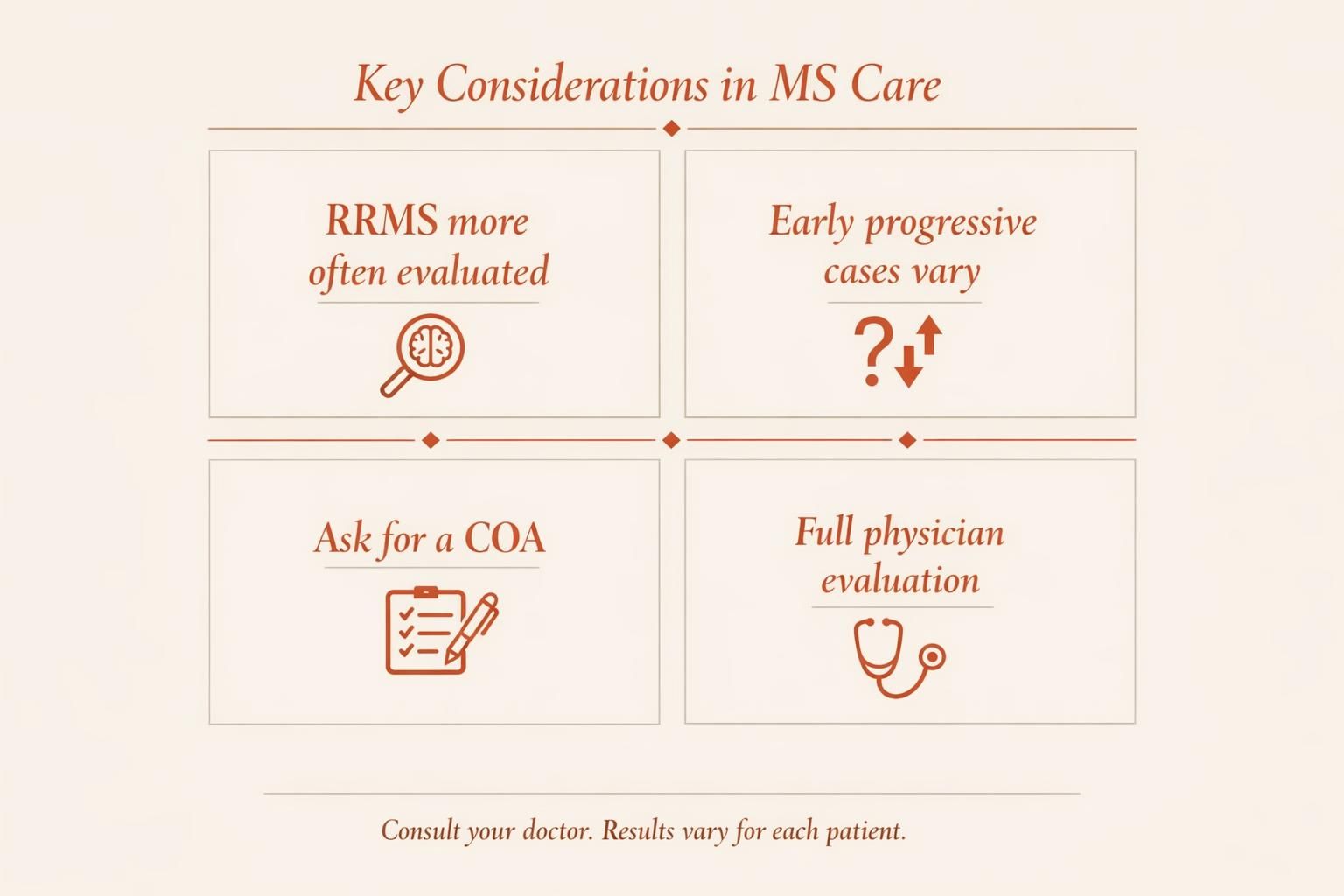
- Relapsing-remitting MS (RRMS): Patients in active relapsing phases with measurable inflammation tend to be more frequently evaluated as potential candidates. The immune-modulating properties of mesenchymal stem cells may be more relevant during periods of active inflammatory activity.
- Secondary progressive MS (SPMS): Some patients in early secondary progressive stages may be evaluated, though outcomes are generally more variable and harder to predict.
- Primary progressive MS (PPMS): This form presents the most complex candidacy picture. Some physicians consider early PPMS patients with specific inflammatory markers, but the evidence base here is more limited.
A thorough medical evaluation—including MRI findings, inflammatory markers, neurological history, and current medications—guides candidacy decisions. No responsible clinic should offer treatment without this baseline assessment.
What Stem Cell Therapy for MS May Support
Mesenchymal stem cells (MSCs), often sourced from umbilical cord tissue or Wharton’s jelly, have attracted significant research interest for their immune-modulating and neuroprotective properties. In MS specifically, researchers have explored how MSCs may help shift the inflammatory environment in ways that could support neurological stability.
Key areas of scientific interest include immune system modulation, reduction of neuroinflammation, neuroprotective signaling, and potential support for remyelination processes. These mechanisms are still under active study, and regenerative therapy does not reverse established neurological damage or cure MS.
Patients should approach this with responsible expectations. The goal of a well-designed protocol is to support the body’s capacity for regulation and recovery—not to promise outcomes that science has not yet established.
Learn more about how long stem cell therapy results may last and what factors influence the duration of benefit.
What Quality and Safety Standards Matter Most
One of the most important decisions MS patients make is not whether to pursue stem cell therapy—it is where and from whom.
The quality of the biologic product matters enormously. Many clinics source cells from third-party suppliers with limited transparency about cell origin, viability, sterility, or processing standards. Patients rarely think to ask these questions, but they should.
At Cellular Institute, biologic product oversight connects to the Cellgenic lab ecosystem. This relationship supports greater traceability, viability documentation, and xeno-free processing standards. Patients can ask for a certificate of analysis (COA) and receive meaningful answers about where their cells come from and how they were prepared.
Our certified stem cells reflect a commitment to quality standards that many clinics simply do not match. Clinic selection for a complex neurological condition like MS should never be based on price alone.
For a detailed checklist, read our guide on how to choose a stem cell clinic in Mexico before booking anything.
Who May Be a Candidate
Patients who may be appropriate candidates for evaluation typically share several characteristics:
- Diagnosed with relapsing-remitting or early progressive MS
- Experiencing active inflammatory activity or recent relapse history
- Medically stable enough to travel for treatment
- No active infections, uncontrolled autoimmune flares, or malignancy history
- Realistic expectations and a willingness to engage in a complete protocol
- Open to pre-treatment preparation and post-treatment follow-up
Who May Not Be a Candidate
Candidacy evaluation also identifies patients for whom stem cell therapy may not be appropriate at a given time:
- Advanced progressive MS with significant established neurological damage
- Active systemic infection or immunocompromised states
- History of certain malignancies
- Pregnancy or active major organ dysfunction
- Patients unwilling or unable to disclose full medical history
A physician-guided evaluation protects the patient—not just the clinic. This step should never be skipped or minimized.
How Cellular Institute Approaches MS Protocols
Cellular Institute does not offer a single stem cell injection and send patients home. The medical team designs a personalized protocol that considers the patient’s full clinical picture.
For MS patients, this may include mesenchymal stem cell therapy as a central component, combined with complementary tools depending on the individual’s inflammation burden, recovery status, and goals. EBOO therapy in Cancún may support systemic inflammation reduction before or alongside cell therapy. Recovery technologies such as hyperbaric oxygen and PEMF may support the post-treatment environment. Peptide therapy may also play a supporting role in select protocols.
Medical oversight at Cellular Institute includes physician evaluation and immunological consideration. Our team includes Dr. Roni Moya, Immunologist, whose background directly informs how we approach immune-related and autoimmune-adjacent conditions like MS. The broader team, led by Dr. Rafael Moguel, Medical Director, ensures that clinical reasoning guides every step of the patient journey.
Cellular Institute operates within Mexico’s medical regulatory framework, with COFEPRIS-recognized structure for regenerative medicine. Patients traveling from the US and Canada receive bilingual coordination, airport logistics support, and structured follow-up after returning home.
Explore our full approach to regenerative medicine in Cancún to understand what a complete protocol looks like.
Stem Cell Therapy Cost in Mexico vs. Domestic Options
In the United States and Canada, experimental stem cell protocols for MS are rarely covered by insurance and may cost anywhere from $20,000 to $100,000 or more when available at all. Access to advanced regenerative protocols through clinical trial participation is limited and geographically restricted.
Mexico offers access to physician-guided regenerative protocols at a fraction of the domestic cost. However, patients should understand that cost reflects more than the cell product itself. A responsibly priced protocol accounts for physician evaluation, biologic quality, delivery method, complementary therapies, patient coordination, and follow-up support.
Read our detailed breakdown of stem cell therapy cost in Mexico to understand what should and should not be included in a competitive quote.
Questions to Ask Before Choosing a Clinic
MS patients deserve more than a brochure and a price quote. Before committing to any clinic, ask the following:
- Where do the stem cells come from, and what documentation supports their quality?
- What are the cell viability, sterility, and processing standards?
- Does a physician evaluate my specific MS type and history before recommending treatment?
- What does the full protocol include beyond the cell administration?
- How does the clinic handle post-treatment follow-up for international patients?
- What are the realistic expectations for someone at my disease stage?
- What regulatory framework does the clinic operate under?
Clinics that cannot answer these questions clearly and specifically may not meet the standard you deserve.

Frequently Asked Questions
Is stem cell therapy for MS approved in Mexico?
Mexico’s regulatory framework through COFEPRIS governs regenerative medicine practices, and clinics operating within this structure can legally offer stem cell therapies under specific conditions. This differs from the FDA regulatory environment in the United States. Patients should confirm that any clinic they consider operates within a recognized regulatory structure and can provide documentation to support this.
How long does a treatment trip for MS typically take?
Most international patients plan for a visit of five to ten days, depending on the complexity of their protocol. This allows time for initial evaluation, preparation, cell administration, complementary therapies, recovery support, and pre-departure follow-up. Patients receive detailed scheduling guidance before arrival.
Will stem cell therapy stop my MS from progressing?
No responsible clinic can promise disease stabilization or progression arrest. Some patients report functional improvements or periods of greater stability following treatment, but outcomes vary significantly. The goal of a well-designed protocol is to support immune modulation, reduce inflammatory burden, and create a better internal environment—not to guarantee neurological outcomes that science has not established.
Should I stop my disease-modifying therapy before traveling for stem cell treatment?
You should never stop any prescribed medication without guidance from your neurologist and the medical team at the clinic you plan to visit. Some immunosuppressive medications require a washout period before certain regenerative therapies. This must be managed carefully under physician supervision. Do not make medication changes independently based on marketing materials from any clinic.
Final Thoughts
Stem cell therapy for multiple sclerosis in Mexico represents a serious option for carefully selected patients who have not achieved the outcomes they hoped for with conventional disease-modifying therapies. However, the quality of the experience depends entirely on the quality of the clinic, the medical team, the biologic product, and the protocol design.
Cellular Institute approaches MS patients as individuals with complex medical histories—not as candidates for a standardized injection. The combination of physician-led evaluation, in-house biologic quality through Cellgenic, immunological expertise, and a complete patient journey framework sets a higher standard for what regenerative medicine in Mexico can look like.
If you are living with MS and want to understand whether you may be a candidate for a personalized regenerative protocol, the right first step is a conversation with our team. Schedule a discovery call to speak with a patient coordinator and begin your evaluation process.
Medical Disclaimer
This article is for educational purposes only and does not replace medical advice, diagnosis, or treatment. Regenerative therapies are not appropriate for every patient, and outcomes vary. A licensed physician must evaluate your medical history, goals, and candidacy before any treatment can be recommended.