

Written by: Cellular Institute Editorial Team
Medical reviewer: Dr. Matilde Rodríguez – CP 12651081
Laboratory reviewer: Biotecnóloga Diana Navarrete – CP 15029468
Quick Answer
Stem cell therapy results vary because every patient brings a different biological environment, health history, and clinical profile to treatment. Factors such as age, inflammation levels, cell quality, protocol design, and post-treatment lifestyle all influence how well the body responds. No two patients are identical, and regenerative medicine works best when a physician evaluates each individual case and builds a personalized protocol around it. Candidate evaluation is always required before any treatment recommendation.
Why Does This Question Matter?
If you have been researching regenerative medicine, you have probably seen a wide range of patient experiences. Some patients report meaningful improvements. Others feel the response was modest or slower than expected. This range of outcomes is not a marketing problem. It reflects the complexity of human biology.
Understanding why results differ can help you set responsible expectations. It can also help you ask better questions when evaluating clinics, protocols, and biologic quality. This knowledge puts you in a stronger position as a patient.
Key Factors That Influence How Patients Respond
1. Age and Biological Age
Chronological age matters, but biological age matters even more. A patient who is 55 with low inflammation and strong cellular health may respond differently than a patient who is 40 with significant oxidative stress and metabolic dysfunction. Younger biological age often correlates with a more receptive cellular environment. However, age alone does not determine outcomes.
2. Inflammation and Immune Status
Systemic inflammation is one of the most important variables in regenerative medicine. High levels of chronic inflammation can reduce the body’s ability to benefit from regenerative therapies. When the immune system operates in an overactivated or imbalanced state, it may interfere with cellular signaling and repair processes.
This is why Dr. Roni Moya, Immunologist, plays an important role in evaluating patients at Cellular Institute. Understanding a patient’s immune status before treatment helps the medical team design a protocol that supports the best possible environment for response.
3. The Quality of the Biologic Product
Not all stem cell products are equal. Cell viability, sterility, passage number, sourcing standards, and processing methods all affect what the patient actually receives. A higher-quality biologic product that meets strict quality control standards is more likely to support a meaningful clinical response than a product with lower viability or unclear origin.
Cellular Institute works with its affiliated lab ecosystem through Cellgenic to prioritize traceability, xeno-free processing, and documented quality standards. Patients can learn more about this on the certified stem cells page. Biotechnologist Diana Navarrete oversees laboratory quality review as part of this process.
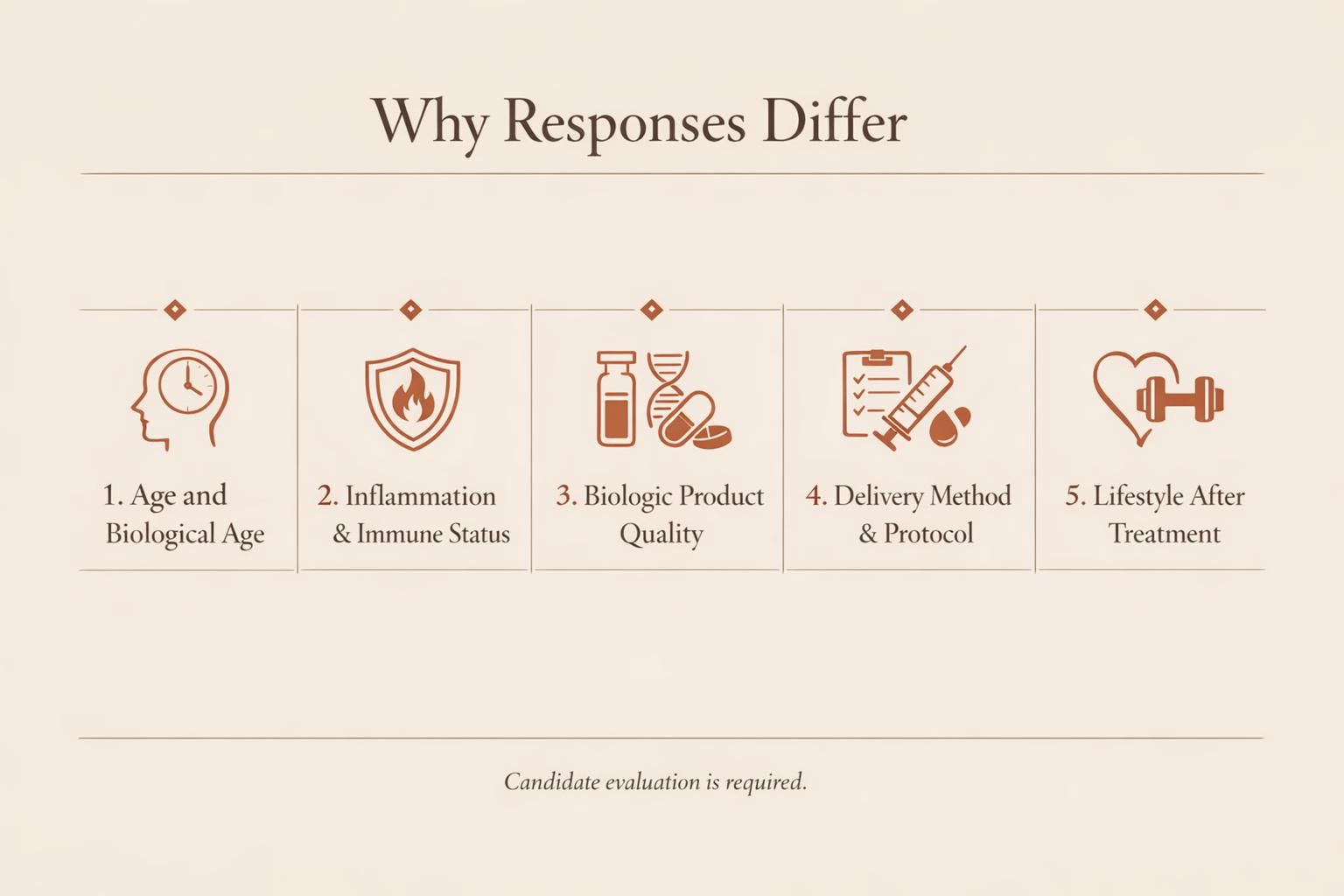
4. The Delivery Method and Protocol Design
How cells are delivered matters. Intravenous delivery, targeted injections, and combination protocols each serve different clinical purposes. A well-designed protocol considers the patient’s primary goals, existing conditions, inflammation status, recovery capacity, and relevant lab values.
Regenerative medicine works best as a system, not a single event. At Cellular Institute, the medical team builds each protocol around the individual patient. This may include stem cell therapy alongside complementary tools such as exosome therapy, recovery technologies like hyperbaric oxygen and red light, or peptide support. Each layer of the protocol may help optimize the environment for cellular response.
5. Underlying Health Conditions and Severity
A patient seeking regenerative support for early-stage joint discomfort may respond differently than a patient with a long-standing complex condition. Severity, duration, and the degree of tissue involvement all influence how the body responds. Earlier intervention, when clinically appropriate, may support a more favorable response in some cases.
6. Lifestyle and Post-Treatment Habits
What a patient does after treatment significantly shapes outcomes. Sleep, nutrition, physical activity, stress management, and the avoidance of substances that increase inflammation all play a role. Regenerative protocols are not passive. The body needs an environment that supports repair, and that environment is partly created by daily habits.
7. Pre-Treatment Preparation
Some patients arrive for treatment already optimized. Others arrive in a state of high physiological stress. Managing inflammation before treatment, supporting detoxification pathways, and addressing nutritional deficiencies may help create a more receptive internal environment. This is part of why physician-guided preparation matters before any regenerative therapy begins.
What This Means for Choosing a Clinic
If stem cell therapy results vary this much between patients, then the quality of the clinical team and the protocol design matter enormously. A clinic that offers one standardized approach regardless of patient history is less likely to support optimal outcomes than one that evaluates each patient individually.
Patients should ask: Does this clinic conduct a thorough medical evaluation? Does the protocol change based on my specific profile? Can the team explain where the cells come from, how they are processed, and what quality documentation exists?
You can explore more about what separates quality clinics from the rest by reading our guide on how to choose a stem cell clinic in Mexico.
How Cellular Institute Approaches Individualized Protocols
Cellular Institute approaches every patient as a unique clinical case. Before any treatment begins, the medical team conducts a thorough evaluation to understand the patient’s health history, inflammation status, goals, and any factors that could influence response. Dr. Rafael Moguel, Medical Director, leads clinical oversight and ensures that every protocol reflects sound medical reasoning rather than a one-size-fits-all approach.
The clinic’s broader ecosystem includes in-house lab support through Cellgenic, access to complementary recovery technologies, and international patient coordination for those traveling from the United States or Canada. This integrated structure allows the team to build a regenerative experience that extends well beyond the therapy itself.
Patients curious about how long stem cell therapy results may last will find that longevity of response is also tied to these same factors: biologic quality, protocol design, and post-treatment lifestyle.

Frequently Asked Questions
Why do some patients see faster results than others?
Response timelines depend on many variables, including the patient’s baseline inflammation levels, biological age, the quality of the biologic product, and how well the protocol matches their individual needs. Some patients notice changes within weeks. Others experience a more gradual response over several months. Responsible expectations require physician guidance and a realistic understanding of individual biology.
Does cell quality really affect outcomes?
Yes. Cell viability, sterility, and processing standards directly influence what the patient receives. A biologic product that meets strict quality control criteria is more likely to support a meaningful clinical response. Patients should always ask clinics about their sourcing, processing standards, and whether documented quality controls exist.
Can I improve my chances of a better response?
Physician-guided preparation before treatment, along with supportive lifestyle habits after treatment, may help create a more favorable environment for cellular response. Managing inflammation, supporting nutrition, prioritizing sleep, and following post-treatment recommendations from your care team all matter. Your medical team can help you prepare appropriately for your specific case.
Is stem cell therapy right for everyone?
No. Stem cell therapy requires a thorough candidate evaluation by a licensed physician. Not every patient is an appropriate candidate. Contraindications, underlying conditions, immune status, and other clinical factors must be assessed before any treatment recommendation. The goal of evaluation is to determine whether regenerative medicine may support your specific goals safely and responsibly.
Final Thoughts
Stem cell therapy results vary because patients vary. Biology, inflammation, cell quality, protocol design, and lifestyle all interact to shape each individual’s response. This is not a limitation of regenerative medicine. It is simply how human physiology works.
The clinics that produce the most thoughtful outcomes are not the ones offering the lowest price or the boldest promises. They are the ones that take the time to evaluate, prepare, personalize, and follow up. If you are exploring regenerative medicine in Cancún, start by asking the right questions and choosing a team that answers them with clarity and transparency.
If you are ready to understand whether you may be a candidate, we invite you to schedule a discovery call with our patient coordination team. We will help you understand your options, ask the right questions, and determine whether a personalized regenerative protocol may be appropriate for your goals.
Medical Disclaimer
This article is for educational purposes only and does not replace medical advice, diagnosis, or treatment. Regenerative therapies are not appropriate for every patient, and outcomes vary. A licensed physician must evaluate your medical history, goals, and candidacy before any treatment can be recommended.