
Written by: Cellular Institute Editorial Team
Medical reviewer: Dr. Matilde Rodríguez – CP 12651081
Laboratory reviewer: Biotecnóloga Diana Navarrete – CP 15029468
Quick Answer
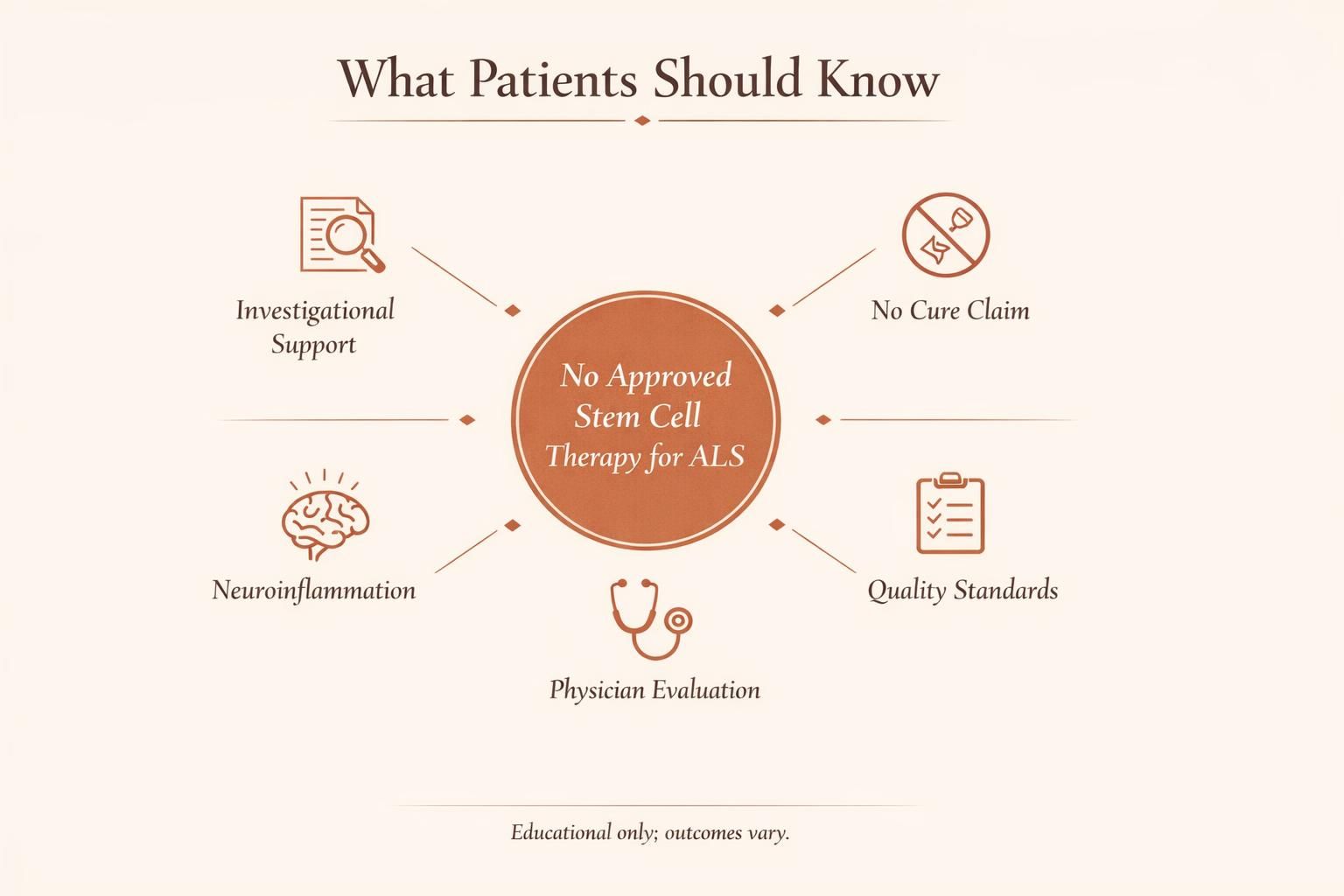
Stem cell therapy for ALS is an emerging area of regenerative medicine research. It does not offer a cure, and no therapy currently stops ALS progression. However, some patients pursue regenerative protocols as a supportive approach that may help modulate neuroinflammation, support cellular signaling, and promote quality of life during disease management. Physician evaluation is required before any protocol can be considered appropriate for an individual patient.
What Patients and Families Should Know First
ALS, or amyotrophic lateral sclerosis, is a progressive neurological condition that affects motor neurons. It leads to the gradual loss of voluntary muscle control. Families facing an ALS diagnosis often feel urgency to explore every available option, including emerging therapies outside the United States.
Stem cell therapy is one option that generates significant interest. The research is real and ongoing. But patients deserve honest, grounded information about what current science supports and what it does not.
Here is what the evidence suggests at this stage:
- No stem cell therapy has received regulatory approval as a disease-modifying treatment for ALS anywhere in the world.
- Early-phase clinical research suggests that certain stem cell approaches may support neuroprotection and reduce neuroinflammation.
- Some patients report perceived improvements in energy, comfort, or stability after treatment, though individual outcomes vary widely.
- Stem cell therapy for ALS should be understood as a supportive and investigational approach, not a curative one.
Approaching this topic with realistic expectations protects patients and helps families make more informed decisions.
How Stem Cell Therapy May Support ALS Patients
Researchers are exploring several mechanisms by which stem cells, particularly mesenchymal stem cells (MSCs), may offer supportive benefit in neurological conditions like ALS.
Neuroinflammation Modulation
Chronic neuroinflammation plays a significant role in motor neuron degeneration. MSCs carry immunomodulatory properties that may help calm inflammatory signaling in the central nervous system. This is one of the most studied areas of stem cell research in neurodegenerative disease.
Neuroprotective Signaling
Stem cells release bioactive molecules, including growth factors and cytokines, that may support the survival of existing neurons. They do not replace lost motor neurons, but they may help create a more supportive environment for those that remain.
Exosome-Based Cell Signaling
Exosomes are extracellular vesicles that carry signaling molecules between cells. In regenerative medicine, exosome therapy has emerged as a complementary tool that may enhance cell communication and support tissue response. Some protocols incorporate exosomes alongside stem cells for added signaling support.
Systemic Inflammation Reduction
ALS patients often carry high systemic inflammatory burden. Some regenerative protocols include tools like EBOO therapy, a form of advanced blood filtration, to help reduce oxidative stress before or alongside cellular therapies. Reducing the inflammatory environment may help the body respond more effectively to regenerative support.
What Affects Quality and Safety in Stem Cell Therapy
Not all stem cell therapies are equal. The quality of the biologic product, how it is sourced and processed, the delivery method, and the clinical oversight surrounding it all matter enormously. This is especially true for complex conditions like ALS.
Patients should ask the following before choosing any clinic:
- Where do the stem cells or exosomes come from, and how are they processed?
- What quality documentation, such as a certificate of analysis, is available?
- Does the clinic verify cell viability, sterility, and traceability?
- Does a licensed physician evaluate each patient before designing a protocol?
- Does the clinic operate within a recognized regulatory framework?
Cellular Institute works with certified stem cells that meet documented quality standards. The clinic’s in-house biologics process through Cellgenic supports traceability, viability confirmation, sterility testing, and quality control at each stage. This level of transparency is not universal across clinics, and it matters when patients are making high-stakes medical decisions.
Our lab quality and transparency standards reflect a deeper commitment to the science behind every protocol, not just the therapy name on the brochure.
Who May Be a Candidate for a Supportive Regenerative Protocol
Candidacy for any regenerative medicine protocol requires individual physician evaluation. In general, patients who may be considered for a supportive ALS-related protocol include those who:
- Have received a confirmed ALS diagnosis from a neurologist
- Are in earlier or mid-stages of disease progression
- Maintain sufficient respiratory function to travel and undergo treatment safely
- Have realistic expectations about supportive, not curative, outcomes
- Are not currently enrolled in a clinical trial that prohibits concurrent therapies
Who May Not Be a Candidate
Some patients may not be appropriate candidates for regenerative protocols at a given stage. This may include those with:
- Advanced respiratory compromise requiring ventilator support
- Active systemic infection or serious comorbidities that create unacceptable procedural risk
- Medical contraindications identified during physician evaluation
An honest medical evaluation protects the patient. Cellular Institute does not accept every inquiry as a confirmed candidate. The evaluation process exists to determine whether a protocol makes sense for each individual case.
How Cellular Institute Approaches ALS-Related Regenerative Protocols
Cellular Institute offers regenerative medicine in Cancún through a physician-guided, protocol-based approach. For neurological conditions like ALS, the clinical team designs each plan around the patient’s current health status, goals, medical history, and inflammatory profile.
A supportive protocol may include a combination of:
- Mesenchymal stem cell therapy through certified biologics
- Exosome therapy to support cellular signaling
- EBOO or advanced blood filtration to reduce systemic inflammatory burden
- Hyperbaric oxygen therapy and other recovery technologies to support oxygenation and cellular response
- Peptide support when clinically appropriate
The protocol is not a single injection. It is a coordinated clinical experience built around what may genuinely support the patient at this stage of their health journey.
The clinic is connected to a broader regenerative medicine ecosystem through ISSCA and Global Stem Cells Group, representing more than 15 years of experience in physician education, protocol development, and international regenerative medicine. This background informs how the clinical team approaches complex cases with scientific seriousness and responsible expectations.
For families researching how to choose a stem cell clinic in Mexico, understanding this ecosystem is an important part of evaluating clinic credibility.

Frequently Asked Questions
Can stem cell therapy stop ALS progression?
No therapy currently stops ALS progression. Stem cell therapy is investigational and supportive in nature. Some research suggests it may help modulate neuroinflammation and support neuroprotective signaling, but patients should maintain realistic expectations. Individual outcomes vary and physician evaluation is required.
Is it safe to travel to Cancún for regenerative therapy with ALS?
Travel safety depends on the individual patient’s current health status, respiratory function, and mobility. Physician evaluation and close coordination with the treating neurologist are essential before planning any medical travel. Cellular Institute provides bilingual patient coordination and support throughout the journey. You can also review general guidance on stem cell therapy safety in Mexico as part of your research.
How do I know if a stem cell clinic is legitimate?
Look for physician-led evaluation, documented biologic quality standards, regulatory compliance, transparent sourcing, and realistic communication about outcomes. Clinics that make cure claims or guarantee results without a medical evaluation are significant red flags. A useful starting point is understanding what to look for in safe stem cell clinics in Mexico.
What does a regenerative protocol for ALS typically involve at Cellular Institute?
Each protocol differs based on individual evaluation. A typical supportive program may include certified stem cell therapy, exosome therapy, EBOO blood filtration, hyperbaric oxygen, and complementary recovery technologies. The medical team designs the full protocol around the patient’s health profile, not a standardized package. To explore whether you may be a candidate, the first step is scheduling a discovery call with the patient care team.
Final Thoughts
ALS is one of the most challenging diagnoses a person and their family can face. Patients deserve honest answers, not exaggerated promises. Stem cell therapy for ALS is a real area of scientific inquiry, and supportive regenerative protocols may offer some benefit for appropriately selected candidates. But no clinic should tell you these therapies cure ALS, and no responsible provider skips thorough evaluation.
Cellular Institute approaches these cases with clinical seriousness, documented biologic quality, physician-led protocols, and transparent communication. If you or a family member wants to understand whether a supportive regenerative protocol may be appropriate, the right first step is a medical evaluation.
Schedule a discovery call with the Cellular Institute team to speak with a patient coordinator, share your medical history, and learn what options may be worth exploring for your specific situation.
Medical Disclaimer
This article is for educational purposes only and does not replace medical advice, diagnosis, or treatment. Regenerative therapies are not appropriate for every patient, and outcomes vary. A licensed physician must evaluate your medical history, goals, and candidacy before any treatment can be recommended.