
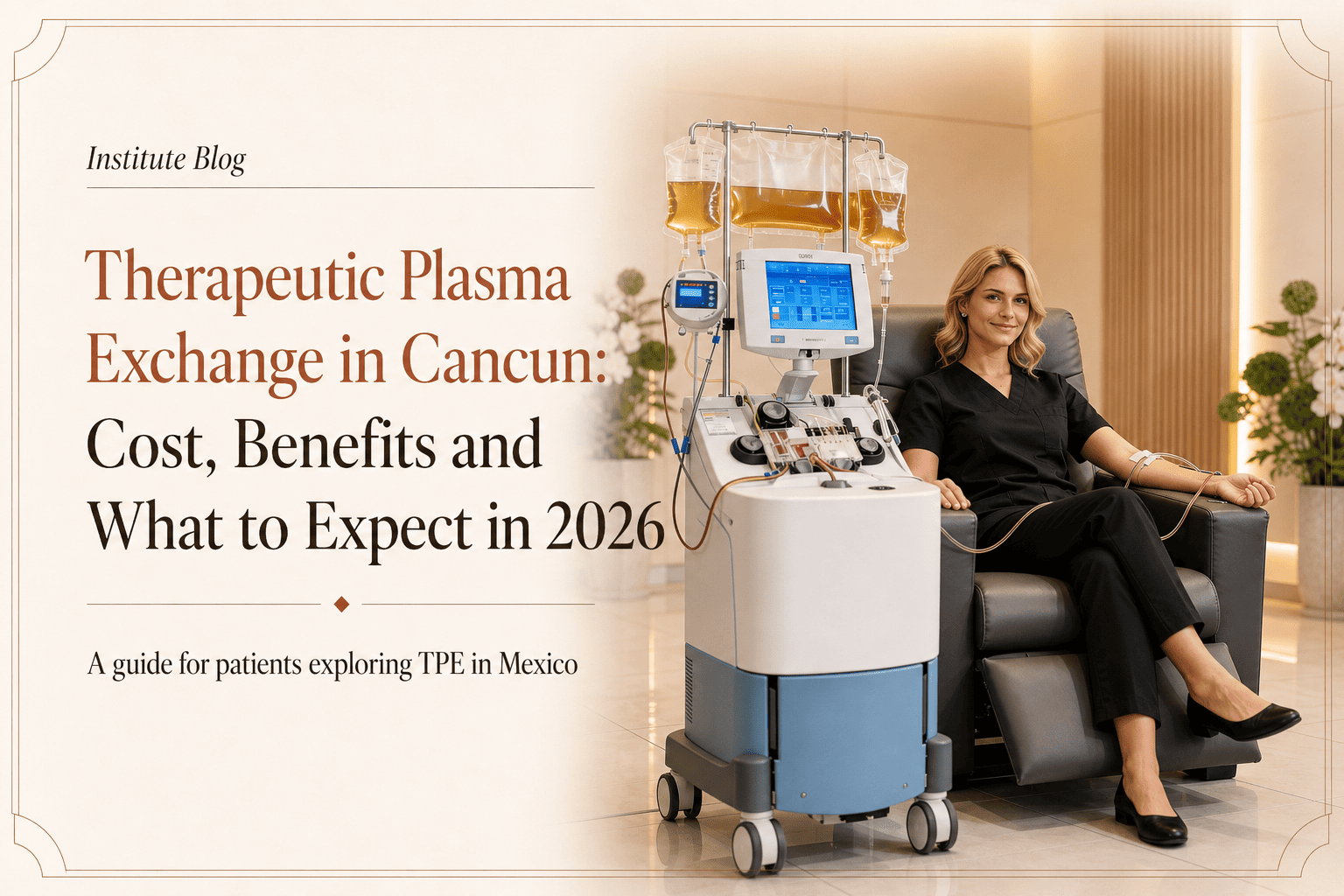
Therapeutic Plasma Exchange in Cancun: Cost, Benefits and What to Expect in 2026
Written by: Cellular Institute Editorial Team
Medical reviewer: Dra. Matilde Rodríguez – CP 12651081
Laboratory reviewer: Biotecnóloga Diana Navarrete – CP 15029468
Quick Answer
Therapeutic Plasma Exchange in Cancun is attracting patients who want access to advanced, physician-guided care in Mexico. Also known as TPE, this treatment may form part of a broader longevity or medical support strategy, depending on the patient’s goals and health profile.
The cost of Therapeutic Plasma Exchange in Cancun depends on several factors. For example, the final price may change based on the number of sessions, pre-treatment testing, replacement fluids, physician supervision, medical supplies, and supportive therapies.
In the United States, some private TPE programs begin at approximately $5,995, while more advanced multi-session programs can range from about $15,995 to $59,995. By comparison, some patients explore Cancun because they may find a more accessible alternative. However, the final treatment plan and cost should always follow a proper medical evaluation.
At Cellular Institute in Cancun, Mexico, the medical team reviews each patient’s health history, medications, lab results, and treatment goals before recommending any protocol. As a result, every plan remains personalized rather than package-based.
Why Patients Are Exploring Therapeutic Plasma Exchange in Cancun
Cancun has grown beyond tourism. Today, it also stands out as a destination for medical travel, personalized healthcare, and advanced longevity services.
Because of that, patients from the United States, Canada, Latin America, and other international markets now travel to Cancun to explore procedures that may be less accessible or more expensive in their home countries.
Many of those patients look into Therapeutic Plasma Exchange in Cancun for reasons such as:
- Personalized longevity support
- Inflammation management
- Immune-system support
- Cardiovascular wellness strategies
- Neurological health support
- Environmental exposure concerns
- Preventive medicine programs
- Advanced health optimization
At the same time, convenience matters too. Cancun offers direct flights, high-quality hospitality, and a familiar environment for medical travelers. Even so, patients should not choose a clinic based on destination alone. Instead, they should review the medical team, safety protocols, equipment, testing process, and follow-up structure before moving forward.
What Is Therapeutic Plasma Exchange?
Therapeutic Plasma Exchange is a medical procedure that separates plasma from the cellular components of blood.
During treatment, the medical team withdraws blood and passes it through specialized apheresis equipment. The machine separates the plasma, removes it, and returns the red blood cells, white blood cells, and platelets to the patient. Then, the team replaces the removed plasma with a medically selected fluid, often an albumin-based solution.
Because plasma carries antibodies, inflammatory mediators, proteins, and other circulating substances, TPE may help reduce the concentration of selected substances in the bloodstream.
Traditionally, physicians use Therapeutic Plasma Exchange for certain neurological, autoimmune, hematological, and transplant-related conditions. More recently, some clinics have also explored its role in broader longevity and wellness settings. Still, patients should understand an important point: TPE is not a cure for aging, chronic disease, or every health concern. Instead, it is a medical procedure that requires proper screening and clinical judgment.
How Much Does Therapeutic Plasma Exchange Cost in Cancun?
The cost of Therapeutic Plasma Exchange in Cancun varies from one patient to another. Unlike a standard wellness service, TPE involves complex medical decision-making, specialized equipment, and close supervision.
For that reason, clinics cannot responsibly offer one universal price for every case.
Several factors influence the total cost, including:
- Number of plasma exchange sessions
- Volume of plasma exchanged per session
- Type and quantity of replacement fluid
- Pre-treatment laboratory testing
- Physician consultation and review
- Nursing care and monitoring
- Vascular-access requirements
- Medications and anticoagulants
- Supportive IV therapy
- Follow-up visits
- Repeat laboratory testing
- Complementary recovery or longevity therapies
In the United States, some private TPE programs start around $5,995, while more comprehensive programs may range from approximately $15,995 to $59,995. By contrast, treatment in Cancun may offer a more accessible option for some patients. However, patients should compare value, not just price.
In other words, the lowest quote does not always offer the safest or most complete level of care.
Why TPE Pricing in Cancun Is Personalized
No two patients arrive with the same goals, medical history, or lab results. Therefore, no responsible clinic should place every patient into the same protocol.
For example, one patient may only need a single session within a broader wellness strategy. Another patient may require several sessions, expanded testing, closer monitoring, and supportive therapies.
In addition, factors such as age, weight, cardiovascular stability, medications, and vascular access can influence both the protocol and the final cost.
At Cellular Institute, the team builds each recommendation around the patient’s medical profile. So rather than pushing a pre-made package, the clinic first determines whether the patient is a candidate and then designs a plan accordingly.
What Affects the Cost of Therapeutic Plasma Exchange in Cancun?
1. Number of TPE Sessions
First, the number of sessions has a major impact on cost.
Some patients may receive one session, while others may require a structured multi-session plan. Naturally, more sessions increase the use of supplies, replacement fluids, machine time, physician oversight, and nursing support.
Even so, more sessions do not automatically mean better results. Instead, the physician should decide the appropriate number based on the patient’s condition, goals, and response to care.
2. Medical Evaluation
Before starting TPE in Cancun, the patient should complete a thorough medical evaluation.
Usually, that evaluation includes:
- Review of medical history
- Review of current symptoms
- Medication and supplement review
- Previous treatment history
- Lab result review
- Cardiovascular assessment
- Kidney and liver function review
- Coagulation assessment
- Evaluation of possible contraindications
This step matters because the physician must confirm that the patient can safely tolerate the procedure.
3. Laboratory Testing
Next, lab testing plays an important role in both safety and personalization.
Depending on the case, the physician may order:
- Complete blood count
- Comprehensive metabolic panel
- Kidney and liver function tests
- Coagulation studies
- Electrolyte testing
- Inflammatory markers
- Cardiovascular biomarkers
- Immune markers
- Nutritional markers
- Environmental exposure testing
- Biological aging biomarkers
- Condition-specific tests
Although expanded testing may raise the upfront cost, it often helps the team make safer and more informed decisions.
4. Replacement Fluids
During TPE, the team removes plasma and replaces it with a medically appropriate fluid.
That fluid may include albumin-based solutions, saline, plasma products, or a combination chosen for the patient’s needs. Because different protocols require different volumes and materials, replacement fluids directly affect the total price.
5. Equipment and Medical Supplies
TPE requires specialized apheresis equipment and medical-grade disposable supplies. These often include sterile tubing, filters, anticoagulants, IV materials, monitoring supplies, and replacement-fluid delivery components.
As expected, high-quality equipment and proper safety protocols contribute to cost. However, they also contribute to patient safety, which matters more.
6. Physician and Nursing Supervision
Therapeutic Plasma Exchange is a medical procedure. It is not a standard spa treatment or a basic infusion.
For that reason, trained professionals must monitor the patient throughout the session. The total cost may include:
- Physician consultation
- Physician supervision
- Registered nursing care
- Vital-sign monitoring
- IV or vascular-access placement
- Medication adjustments
- Management of symptoms during treatment
- Post-procedure observation
- Medical follow-up
Before booking treatment, patients should confirm exactly who supervises the procedure and what level of medical support the clinic provides.
7. Supportive IV Therapy
In some cases, the physician may recommend supportive IV therapy before or after TPE.
For example, the patient may receive:
- IV hydration
- Electrolytes
- Vitamins
- Minerals
- Amino acids
- Antioxidant support
- Nutritional support
These therapies should support the patient’s actual needs, not simply enlarge the package.
8. Complementary Recovery or Longevity Therapies
Finally, some patients explore TPE as part of a broader longevity strategy.
Depending on the evaluation, the medical team may also consider:
- Hyperbaric oxygen therapy
- Red light therapy
- PEMF therapy
- Peptide therapy
- Exosome therapy
- Personalized IV therapy
- Nutrition planning
- Lifestyle support
- Recovery Lounge technologies
Of course, not every patient needs these therapies. Still, when the team includes them for a clinical reason, they will increase the total cost of treatment.
Single-Session TPE vs. Multi-Session Programs in Cancun
Patients often ask whether they should choose one session or a more comprehensive program. The answer depends on the medical context.
Single TPE Session
A single-session protocol may include:
- Medical consultation
- Review of records
- Basic lab testing
- One TPE procedure
- Replacement fluids
- Nursing supervision
- Physician oversight
- Immediate post-treatment monitoring
For some patients, one session may fit their goals. However, one session does not necessarily provide the same scope as a multi-session plan.
Multi-Session TPE Program
A multi-session program may include:
- Expanded diagnostics
- Several plasma exchange sessions
- Physician follow-up visits
- Biomarker tracking
- IV hydration or nutrient support
- Recovery therapies
- Nutritional recommendations
- Personalized supplementation
- Repeat lab testing
- Virtual follow-up after returning home
Because these programs require more planning, supplies, and monitoring, they usually cost more. Even so, the decision should come from medical reasoning, not marketing pressure.
Therapeutic Plasma Exchange in Cancun vs. the United States
Many patients compare Cancun with treatment options in the United States. That makes sense, especially when cost becomes a factor.
Private programs in the U.S. often carry higher prices because of:
- Greater facility overhead
- Higher labor costs
- Administrative expenses
- Insurance-related structures
- Equipment costs
- Regulatory operating costs
By comparison, some clinics in Mexico may offer advanced care at a more accessible price.
Still, cost alone should never guide the decision.
Instead, patients should evaluate:
- Physician credentials
- Clinical experience
- Nursing qualifications
- Apheresis equipment
- Facility standards
- Infection-control practices
- Replacement-fluid quality
- Patient-screening protocols
- Emergency preparedness
- Follow-up structure
- Clarity of the quotation
Ultimately, the best option balances safety, quality, transparency, and value.
Why Cancun Appeals to International TPE Patients
Cancun offers a practical advantage for many international patients. Since the city has direct flight connections to many major markets, travel can feel easier and more manageable.
In addition, patients often appreciate access to:
- International hotels
- Private transportation options
- English-speaking support
- Recovery-friendly accommodations
- Diverse dining options
- Nearby pharmacies and services
- Short-term medical travel convenience
At Cellular Institute, patient coordination may also help with scheduling, record submission, transportation guidance, and follow-up planning. Even so, convenience should support the medical experience, not replace the need for strong clinical care.
How Long Should You Stay in Cancun for TPE?
The recommended stay depends on the treatment plan.
For a single session, the patient may need several days in Cancun to complete consultation, laboratory testing, treatment, observation, and any immediate follow-up.
On the other hand, patients receiving multiple sessions may need a longer stay. In those cases, the physician may schedule rest days between procedures.
Because every protocol differs, patients should confirm travel timing only after the clinic finalizes the treatment plan.
What to Expect During a TPE Session in Cancun
Before treatment begins, the medical team confirms the patient’s identity, treatment plan, medications, lab results, vital signs, and access strategy.
Then the team establishes IV access and starts the procedure.
During the session:
- Blood is withdrawn through the access line.
- The apheresis machine separates the plasma from the blood cells.
- The machine removes the plasma.
- The team administers replacement fluid.
- The machine returns the blood cells to the patient.
- The clinical team monitors vital signs and comfort throughout the procedure.
Some patients may experience:
- Coldness
- Tingling
- Mild nausea
- Fatigue
- Lightheadedness
- Temporary blood-pressure changes
- Discomfort at the IV site
If symptoms appear, the medical team can adjust fluids, calcium, medications, or treatment speed when appropriate.
What Should a TPE Quote in Cancun Include?
Before moving forward, patients should request a written quote that clearly lists what the clinic includes.
That quote may include:
- Initial physician consultation
- Medical-record review
- Pre-treatment laboratory testing
- Number of TPE sessions
- Plasma volume per session
- Replacement fluids
- Medications
- Anticoagulants
- Medical supplies
- Nursing care
- Physician supervision
- IV access
- Post-procedure monitoring
- Supportive IV therapy
- Recovery therapies
- Follow-up visits
- Repeat laboratory testing
- Patient coordination
- Local transportation
Patients should also ask what the quote does not include. For example, flights, hotel stays, meals, medications, and companion expenses may remain separate.
Is Therapeutic Plasma Exchange in Cancun Covered by Insurance?
Insurance coverage depends on the diagnosis, the policy, and the insurer’s criteria.
In some cases, insurers may cover TPE when a patient has a recognized medical indication and meets medical-necessity requirements. However, most elective, preventive, or longevity-focused uses are less likely to qualify.
In addition, many insurance plans do not reimburse international care in Mexico.
Therefore, patients should contact their insurer directly and ask:
- Is TPE covered for my diagnosis?
- Do I need prior authorization?
- Does my plan cover international treatment?
- Will it reimburse laboratory testing?
- Do out-of-network benefits apply?
- What documentation do I need?
Cellular Institute does not guarantee insurance reimbursement.
Who May Be Evaluated for TPE in Cancun?
Therapeutic Plasma Exchange has established clinical applications. At the same time, some patients explore it within physician-guided longevity or supportive-care programs.
Patients may request an evaluation for concerns such as:
- Chronic inflammatory burden
- Immune-related concerns
- Neurological support
- Cardiovascular wellness
- Environmental exposure
- Mold-related concerns
- Fatigue
- Cognitive performance
- Preventive health strategies
- Healthy aging support
Still, interest alone does not make someone a candidate. The physician must review the full medical picture first.
Who May Not Be a Candidate for TPE?
Some patients may not qualify for TPE, or they may need additional specialist clearance before treatment.
Potential concerns may include:
- Severe cardiovascular instability
- Uncontrolled blood pressure
- Active infection
- Significant anemia
- Severe coagulation abnormalities
- Poor vascular access
- Allergy to replacement fluids
- Certain medication-related risks
- Severe electrolyte abnormalities
- Pregnancy
- Unstable kidney or liver function
- Acute medical emergencies
Only a qualified physician can make that decision.
What Are the Possible Risks of TPE?
Like any medical procedure, Therapeutic Plasma Exchange carries risks.
Possible side effects or complications may include:
- Low blood pressure
- Dizziness
- Fatigue
- Nausea
- Chills
- Tingling
- Calcium changes
- Electrolyte abnormalities
- Bruising or bleeding
- Vascular-access issues
- Allergic reactions
- Infection
- Changes in medication levels
- Temporary reduction in beneficial proteins
- Coagulation changes
Although serious complications are less common, they can still occur. Therefore, patients should only pursue treatment in a setting with proper monitoring and emergency readiness.
The Therapeutic Plasma Exchange Journey at Cellular Institute in Cancun
Step 1: Discovery Call
First, the process begins with a discovery call.
During this conversation, the coordinator may ask about:
- Main health concerns
- Treatment goals
- Current diagnosis
- Medications
- Previous treatments
- Travel availability
- Existing lab results
This call helps the team understand the case and identify what information the physician needs.
Step 2: Medical Records Submission
Next, the patient submits relevant medical records, which may include:
- Recent lab results
- Medical reports
- Imaging
- Medication lists
- Specialist evaluations
- Previous procedure records
- Diagnostic studies
The more complete the records, the more accurate the review.
Step 3: Physician Evaluation
Then, a physician reviews the patient’s history, risks, and goals.
If needed, the physician may request additional testing before deciding whether TPE is appropriate.
Step 4: Personalized TPE Plan
If the patient appears to be a candidate, the team creates a personalized treatment proposal.
That plan may include:
- Number of sessions
- Treatment schedule
- Required lab testing
- Replacement-fluid strategy
- Supportive therapies
- Recovery recommendations
- Follow-up structure
- Total price
Step 5: Travel Coordination
After the treatment dates are confirmed, the patient can arrange travel to Cancun.
At that stage, the coordination team may provide guidance on:
- Airport logistics
- Hotel options
- Transportation
- Recommended stay length
- Appointment schedule
- Pre-treatment instructions
- Companion planning
Step 6: In-Person Medical Assessment
Once the patient arrives, the team completes an in-person medical review.
At that time, the staff may re-check vitals, medications, hydration status, and lab results before treatment starts.
Step 7: TPE Procedure
Next, the patient undergoes the procedure under physician and nursing supervision.
Throughout the session, the team monitors comfort, vital signs, and treatment response.
Step 8: Recovery and Follow-Up
Finally, the patient receives post-treatment guidance related to:
- Hydration
- Nutrition
- Activity level
- Medications
- Supplements
- Warning signs
- Follow-up testing
- Return travel
When appropriate, the team can continue follow-up through virtual communication after the patient returns home.
Questions to Ask Before Booking TPE in Cancun
Before choosing a provider, patients should ask clear, practical questions.
Who determines whether I am a candidate?
A licensed physician should review your records and approve the treatment.
Who supervises the procedure?
Ask whether trained nurses and a physician remain involved throughout the process.
What equipment does the clinic use?
The clinic should explain the apheresis system, monitoring protocols, and safety standards.
What replacement fluid will I receive?
Ask which fluid the team will use and why it fits your case.
What testing do I need before treatment?
Confirm what tests are required and whether the clinic includes them in the quote.
How many sessions do you recommend?
The answer should reflect medical reasoning, not sales pressure.
What does the quote include?
Request a written breakdown of everything included and excluded.
What happens if I have a reaction?
The clinic should have trained staff, medications, and emergency protocols in place.
How long should I stay in Cancun?
The clinic should recommend a stay based on your schedule and treatment plan.
What follow-up will I receive after I go home?
Ask whether the team offers virtual follow-up, lab review, or coordination with your local physician.
Frequently Asked Questions About TPE in Cancun
How much does Therapeutic Plasma Exchange cost in Cancun?
The cost depends on the number of sessions, testing, replacement fluids, physician oversight, nursing care, and any supportive therapies. Therefore, the clinic can only provide an exact quote after reviewing your case.
Is TPE cheaper in Cancun than in the United States?
In some cases, yes. However, you should compare the full value of care, not just the advertised price.
Is Cancun a good destination for medical tourism?
Yes, many patients choose Cancun because of its accessibility, hospitality, and international travel convenience. Still, patients should always vet the clinic carefully.
How many days should I stay in Cancun?
That depends on whether you receive one session or multiple sessions. In general, patients should allow enough time for evaluation, treatment, observation, and follow-up.
Can I fly right after TPE?
Not always. The medical team should advise you based on your treatment response and overall condition.
How many TPE sessions will I need?
There is no universal number. The physician should base the recommendation on your goals, lab results, and medical profile.
Is five-session TPE better than one session?
Not necessarily. More sessions may help in some cases, but they also increase complexity and cost. The physician should determine what makes sense clinically.
Can TPE remove toxins from the body?
TPE may reduce the concentration of certain circulating substances. However, it does not remove every toxin from every tissue, nor does it prevent future exposure.
Is TPE the same as donating plasma?
No. Plasma donation serves a donor-collection purpose. By contrast, TPE serves the patient’s own medical treatment plan.
Is TPE the same as dialysis?
No. Dialysis removes waste and fluid when kidney function is impaired, while TPE removes and replaces plasma.
Is TPE painful?
Most patients mainly notice discomfort during IV placement. During treatment, some may feel cold, tired, or lightheaded.
Can TPE be combined with stem cell or exosome therapy in Cancun?
In some cases, yes. However, the physician should determine timing and appropriateness based on the patient’s specific situation.
Is TPE approved for anti-aging or longevity?
TPE has established clinical uses. Meanwhile, its role in anti-aging and longevity remains an area of ongoing research.
How can I get a personalized quote?
You can start by booking a discovery call and submitting your medical information for review.
Why Choose Cellular Institute for TPE in Cancun?
Cellular Institute offers physician-guided regenerative medicine, longevity care, and recovery services in Cancun, Mexico.
The clinic focuses on:
- Personalized medical evaluation
- Individualized treatment planning
- Medical and nursing supervision
- Review of laboratory findings
- Transparent proposals
- Support for international patients
- Coordinated recovery services
- Virtual follow-up when appropriate
Rather than recommending the biggest package, the clinic first determines what the patient truly needs.
Final Thoughts
Therapeutic Plasma Exchange in Cancun may offer patients a practical and potentially more accessible way to explore advanced medical care in Mexico.
However, price should never be the only deciding factor. Instead, patients should look at the medical team, equipment, testing, safety protocols, replacement fluids, emergency readiness, and follow-up structure.
At Cellular Institute in Cancun, every TPE recommendation begins with an individual medical review. Then, if the patient qualifies, the team creates a personalized treatment plan based on medical reasoning and patient goals.
To learn whether you may be a candidate for Therapeutic Plasma Exchange in Cancun, book a discovery call with the Cellular Institute team.
Medical Disclaimer
This article is for educational and informational purposes only. It does not provide medical advice, diagnosis, or treatment.
Therapeutic Plasma Exchange is an established medical procedure for specific clinical indications, but it is not appropriate for every patient. In addition, some preventive, longevity-focused, detoxification, and wellness-related uses remain under investigation.
A licensed physician must evaluate each patient before recommending treatment. Also, treatment outcomes vary from person to person.
Cellular Institute does not guarantee specific results.