

Written by: Cellular Institute Editorial Team
Medical reviewer: Dr. Matilde Rodríguez – CP 12651081
Laboratory reviewer: Biotecnóloga Diana Navarrete – CP 15029468
Quick Answer
Stem cell therapy for peripheral neuropathy is an emerging area of regenerative medicine that may support nerve repair, reduce inflammation, and improve neuropathic symptoms in appropriately selected patients. It does not offer a guaranteed cure, and results vary significantly by patient. A thorough physician evaluation is required to determine whether a candidate may benefit from this type of protocol and which complementary therapies should be included alongside stem cell therapy.
What Patients With Peripheral Neuropathy Should Know
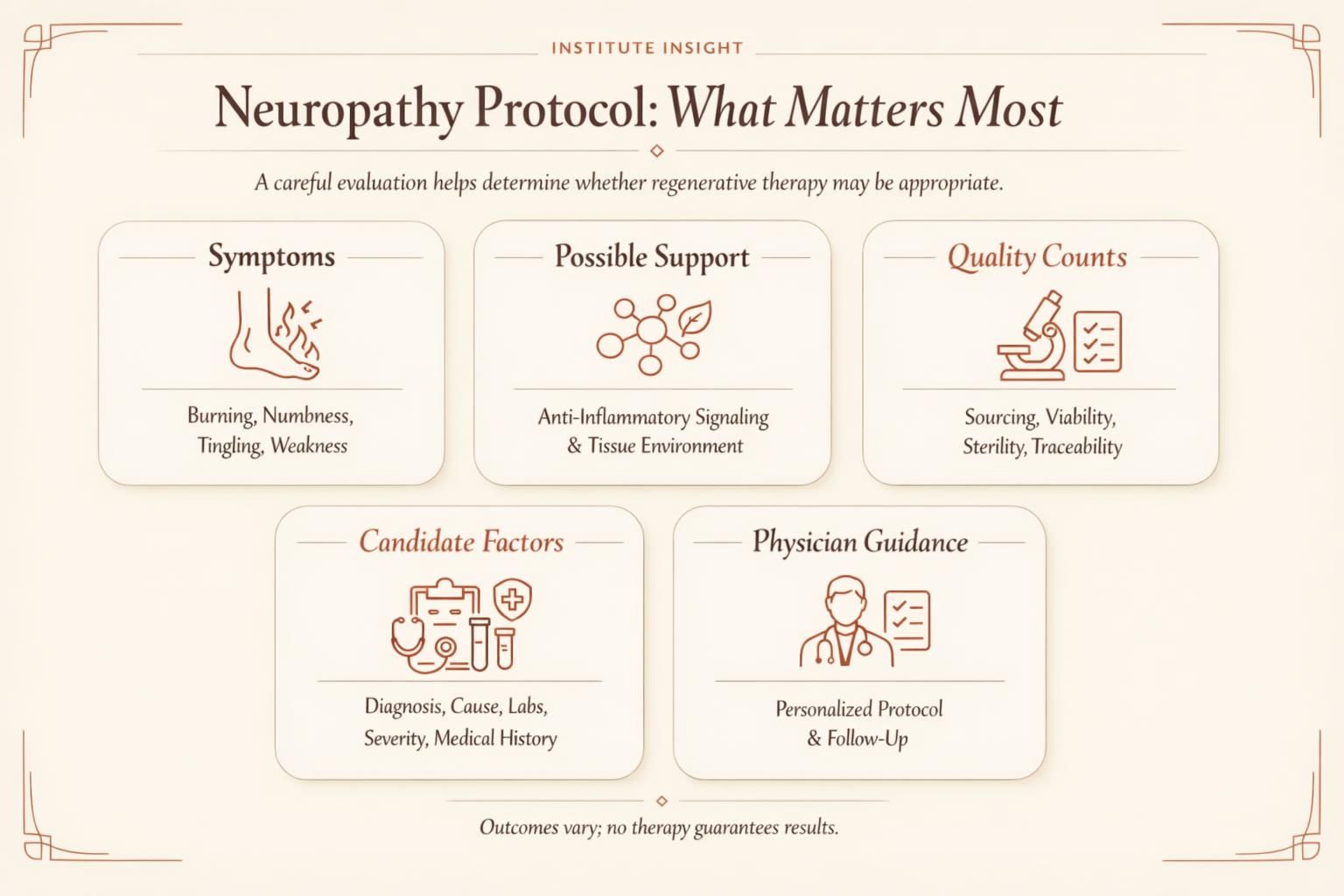
Peripheral neuropathy affects millions of people worldwide. It causes burning sensations, numbness, tingling, and weakness, most often in the hands and feet. Common causes include diabetes, chemotherapy side effects, autoimmune conditions, and chronic inflammation.
Many patients find that standard medications offer limited relief. Gabapentin, duloxetine, and similar drugs may reduce pain signals, but they do not address the underlying nerve damage. This is why many patients start exploring regenerative medicine as a complementary option.
Stem cell therapy approaches neuropathy differently. Rather than masking symptoms, the goal is to support the biological environment around damaged nerves. The aim is to promote conditions that may allow nerves to repair and function more effectively over time.
Patients should understand that regenerative medicine does not replace conventional care. A responsible clinic will never tell you to stop your current medications. Instead, the medical team evaluates whether regenerative therapy may complement your existing treatment plan.
How Stem Cell Therapy May Support Nerve Regeneration
Mesenchymal stem cells, often sourced from umbilical cord tissue, carry signaling properties that researchers believe may support tissue repair and reduce local inflammation. In the context of peripheral neuropathy, these properties are particularly relevant.
Here is what the early research suggests stem cells may do in a neuropathy protocol:
- Reduce neuroinflammation: Stem cells release anti-inflammatory signals that may calm the inflammatory environment surrounding damaged nerves.
- Support myelin repair: The protective myelin sheath around nerves is often damaged in neuropathy. Stem cells may support conditions that help the body rebuild this protective layer.
- Promote local blood flow: Improved microcirculation may enhance nutrient and oxygen delivery to nerve tissue.
- Stimulate growth factors: Stem cells release growth factors such as VEGF and NGF that may support nerve survival and repair processes.
It is important to say clearly that this research is still evolving. No stem cell therapy has received regulatory approval specifically for peripheral neuropathy treatment. However, patients who have not responded to conventional options are increasingly asking about evidence-informed regenerative approaches under physician supervision.
At Cellular Institute, regenerative medicine in Cancún goes beyond a single injection. The medical team evaluates the patient’s full clinical picture before designing a protocol that may include stem cells, supportive biologics, and recovery technologies tailored to the individual.
What Affects Quality and Safety in Stem Cell Therapy
Not all stem cell therapies are equal. The quality of the biologic product, the sourcing process, the lab standards, and the clinical supervision all affect both safety and potential outcomes.
Patients exploring this option should ask specific questions before choosing a clinic:
- Where do the stem cells come from?
- How are the cells processed and stored?
- What viability and sterility documentation does the clinic provide?
- Does the clinic have in-house lab oversight or do they outsource biologics?
- Is the protocol physician-guided with a full medical evaluation?
- Does the clinic operate within a recognized regulatory framework?
Cellular Institute sources its biologics through Cellgenic, its affiliated lab ecosystem. This structure supports greater traceability, xeno-free processing standards, quality documentation, and clearer visibility into where the biologic product comes from. Patients can learn more about lab quality and transparency at Cellular Institute, including how the team maintains viability and sterility standards before any therapy reaches a patient.
The clinic also uses certified stem cells that meet quality standards aligned with Mexico’s COFEPRIS-recognized regulatory framework. This matters especially for international patients who may not be familiar with how regenerative medicine is overseen in Mexico.
Who May Be a Candidate for This Protocol
Stem cell therapy for peripheral neuropathy is not appropriate for every patient. Candidacy depends on many factors that a physician must evaluate individually.
Patients who may be considered as candidates often share some of the following characteristics:
- Confirmed diagnosis of peripheral neuropathy with documented nerve involvement
- Neuropathy caused by diabetes, chemotherapy, autoimmune conditions, or chronic inflammation
- Limited or unsatisfactory response to conventional medications
- No active infections, uncontrolled systemic disease, or contraindicated conditions
- Willingness to undergo a full medical evaluation and follow a physician-guided protocol
- Realistic expectations about timeline and outcomes
Outcomes vary by patient. Some individuals report meaningful improvements in sensation, pain levels, and quality of life. Others experience more modest changes. A physician must assess your individual history, labs, inflammation status, and nerve damage severity before making any protocol recommendation.
If you are curious about how long stem cell therapy results may last, the honest answer is that it depends heavily on the underlying cause of neuropathy, the severity of nerve damage, the quality of the biologic protocol, and how well the patient supports recovery afterward.
Who May Not Be a Candidate
Regenerative therapy is not suitable for everyone. Patients with active malignancies, uncontrolled autoimmune flares, severe organ dysfunction, or certain blood conditions may not be appropriate candidates. Only a physician can make this determination after reviewing your complete medical history.
A responsible clinic will decline to treat patients who are not appropriate candidates. If a clinic guarantees results or skips the evaluation process, that is a significant red flag.
How Cellular Institute Approaches Peripheral Neuropathy Protocols
Cellular Institute does not offer a one-size-fits-all stem cell injection. The medical team designs each protocol around the individual patient’s condition, history, labs, and treatment goals.
For neuropathy patients, a personalized protocol may include:
- Mesenchymal stem cells: Sourced, processed, and quality-verified through Cellgenic, with documentation available.
- Exosome therapy: Exosome therapy may complement stem cells by delivering additional cell-signaling support to damaged tissue.
- EBOO therapy: For patients with high inflammatory burden or oxidative stress, EBOO therapy in Cancún may help reduce systemic inflammation before and after regenerative treatment.
- Peptide therapy: Peptide therapy may support recovery, neurological signaling, and tissue optimization as part of the broader protocol.
- Recovery technologies: Hyperbaric oxygen therapy, red light therapy, and PEMF, available through Cellular Institute’s recovery technologies suite, may support tissue oxygenation and recovery between sessions.
The clinic’s immunologist, Dr. Roni Moya, Immunologist, plays an important role in evaluating patients with autoimmune-related neuropathy or elevated inflammatory markers. Immune health is often central to neuropathy management, and physician oversight in this area matters significantly.
For international patients traveling from the United States or Canada, Cellular Institute also provides full patient coordination, bilingual support, airport logistics, and structured follow-up. Understanding what medical tourism in Mexico looks like as a complete experience helps patients arrive prepared and confident.

Frequently Asked Questions
Is stem cell therapy approved for peripheral neuropathy?
No stem cell therapy currently holds regulatory approval specifically for peripheral neuropathy in the United States or Mexico. However, physician-guided protocols using mesenchymal stem cells are offered at licensed regenerative medicine clinics as an emerging, evidence-informed option. Patients should discuss candidacy and realistic expectations with a qualified physician before proceeding.
How many sessions of stem cell therapy might be needed for neuropathy?
This varies by patient. Some individuals receive a single protocol with follow-up monitoring. Others may benefit from a series of sessions over several months. The medical team determines the appropriate approach based on the severity of nerve damage, the underlying cause of neuropathy, and how the patient responds to initial treatment.
Can stem cell therapy be combined with my current neuropathy medications?
In many cases, yes. Regenerative medicine is generally intended to complement conventional care, not replace it. However, the physician must review your complete medication list, health history, and current treatment plan to confirm there are no contraindications. Never stop medications before speaking with your treating physician.
How do I know if a stem cell clinic is safe and legitimate?
Look for clinics that require a full medical evaluation before recommending treatment, provide documentation on cell sourcing and quality, operate within a recognized regulatory framework, and offer physician-supervised protocols. Reading guides on how to choose a stem cell clinic in Mexico can help you ask the right questions before making a decision.
Final Thoughts
Peripheral neuropathy can significantly reduce quality of life. When conventional medications fall short, it is natural to seek alternatives. Stem cell therapy represents a promising area of regenerative medicine that may support nerve repair, reduce neuroinflammation, and improve symptoms in appropriately selected patients.
The key word is appropriately selected. This therapy is not for everyone, and no responsible clinic should promise guaranteed results. What matters is the quality of the biologic product, the depth of the medical evaluation, the design of the protocol, and the level of physician supervision throughout the process.
If you are considering regenerative medicine for peripheral neuropathy, the first step is a medical evaluation with a qualified physician who can review your history, labs, and candidacy honestly.
Cellular Institute’s team welcomes patients who want to understand their options before making a decision. Schedule a discovery call to speak with a patient coordinator and learn whether you may be a candidate for a personalized regenerative medicine protocol in Cancún.
Medical Disclaimer
This article is for educational purposes only and does not replace medical advice, diagnosis, or treatment. Regenerative therapies are not appropriate for every patient, and outcomes vary. A licensed physician must evaluate your medical history, goals, and candidacy before any treatment can be recommended.