

Written by: Cellular Institute Editorial Team
Medical reviewer: Dr. Matilde Rodríguez – CP 12651081
Laboratory reviewer: Biotecnóloga Diana Navarrete – CP 15029468
Quick Answer
A stem cell certificate of analysis, or COA, is a formal laboratory document that describes the key quality attributes of a cellular product before it is administered to a patient. It typically includes information about cell viability, sterility, cell identity, and product concentration. Not every clinic provides one. When a clinic does offer a COA, it signals a commitment to transparency and quality standards that patients should actively look for. Physician evaluation is still required to determine whether any regenerative therapy may be appropriate for your specific case.
Why This Document Matters More Than Most Patients Realize
When patients research stem cell therapy, they often focus on price, location, and testimonials. Very few ask about the product itself. That is a significant gap in the decision-making process.
A stem cell product is a biological material. Its quality, handling, and documentation directly affect safety and clinical relevance. Two clinics may offer what sounds like the same therapy on paper. But the cellular product behind that therapy can vary enormously in terms of viability, sterility, origin, and processing standards.
A certificate of analysis gives you objective, documented evidence about what is actually in the product. It is one of the clearest ways to evaluate a clinic beyond marketing language.
If you are still learning how to evaluate clinics overall, our guide on how to choose a stem cell clinic in Mexico covers many of the foundational questions patients should ask before booking.
What a Stem Cell COA Should Include
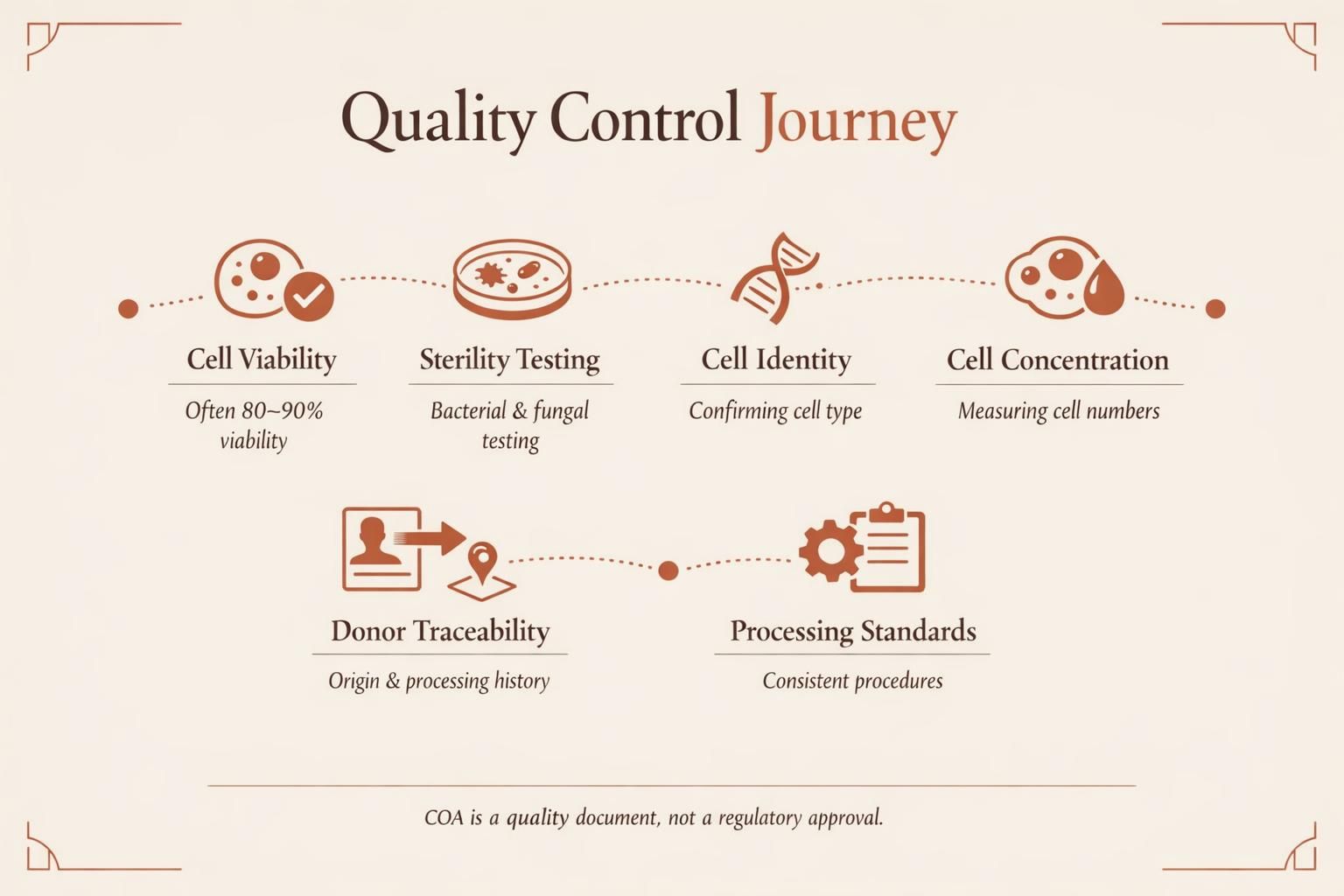
Not all certificates of analysis look the same. However, a thorough and credible COA for a stem cell product should address several key areas.
Cell Viability
Viability refers to the percentage of living cells in the product at the time of testing. Higher viability generally means a healthier, more active cellular product. Many quality-focused labs target viability above 80 to 90 percent. A COA that does not report viability, or reports a very low figure without explanation, is worth questioning.
Sterility Testing
The COA should confirm that the product tested negative for bacterial contamination, fungal contamination, and other microbial agents. Sterility testing is a non-negotiable safety standard. Any clinic that cannot provide sterility documentation for its cellular products represents a meaningful safety concern.
Cell Identity and Phenotype
This section confirms what type of cells are in the product and that they match the intended cell type. For mesenchymal stem cells, for example, the COA may reference surface marker expression to confirm cell identity. This protects patients from receiving products that do not contain what the clinic claims.
Cell Concentration
The COA should state how many cells are present in the dose, typically expressed in millions of cells per milliliter. Concentration matters because it affects the clinical relevance of the product. Some clinics advertise high cell counts in marketing materials but cannot support those numbers with laboratory documentation.
Donor Information and Traceability
A strong COA will also reference donor screening information, including testing for infectious diseases such as HIV, hepatitis B, hepatitis C, and other relevant markers. Traceability means the product can be traced from its origin through processing and delivery. This is a core safety standard in responsible regenerative medicine.
Processing Standards
Some COAs will note whether the product was processed using xeno-free methods, meaning no animal-derived components were used in manufacturing. Xeno-free processing reduces the risk of immune reactions and reflects a higher quality control standard. It is worth asking your clinic specifically about this.
What It Means When a Clinic Cannot Provide a COA
Not every clinic operates with the same level of documentation and transparency. Some clinics source their cellular products from third-party suppliers without maintaining traceability. Others may use products that have not undergone independent quality testing.
When a clinic cannot provide a COA upon request, patients should take that seriously. It does not automatically mean the clinic is operating dishonestly. But it does mean you lack objective evidence about the product being administered.
Transparency is a reasonable expectation. If a clinic cannot or will not provide documentation about cell viability, sterility, and product origin, that is a meaningful signal about its quality standards.
For a broader look at warning signs, our article on safe stem cell clinics in Mexico outlines additional quality markers patients should evaluate before making a decision.
How Cellular Institute Approaches COA and Lab Transparency
At Cellular Institute, lab quality and product documentation are central to our approach to regenerative medicine. Through our affiliated biologics platform Cellgenic, we maintain a more controlled and traceable process for cellular product preparation and quality review.
Our laboratory team includes Biotechnologist Diana Navarrete and Biotechnologist Patricia Cruz Martinez, both of whom are involved in quality control, sterility review, viability assessment, and product documentation processes. Having dedicated biotechnologists as part of the clinical team is not standard across the industry. It reflects a commitment to bridging laboratory science and patient care.
We also prioritize certified stem cells that meet quality standards aligned with responsible clinical application. Our structure operates within Mexico’s medical regulatory framework through COFEPRIS-recognized licensing, which adds an additional layer of institutional accountability.
Patients who want to learn more about our science and lab quality standards can explore our lab quality and transparency page for a deeper look at how we approach cellular product preparation.
Questions to Ask Any Clinic Before Treatment
When evaluating any regenerative medicine provider, consider asking the following questions directly.
- Can you provide a certificate of analysis for the cellular product you plan to administer?
- What is the viability of the product at the time of administration?
- Has the product been tested for sterility and donor-related infectious diseases?
- Where does the product originate, and how is it processed?
- Is xeno-free processing used in manufacturing?
- Who on your team reviews product quality and documentation?
- What is your clinic’s regulatory standing in Mexico?
A clinic that welcomes these questions and provides clear documentation is a clinic that prioritizes patient safety. A clinic that deflects or cannot answer is worth reconsidering.

Frequently Asked Questions
Is a certificate of analysis the same as an FDA approval?
No. A COA is a laboratory quality document specific to a single product batch. It confirms the results of quality testing for that particular preparation. It does not represent regulatory approval from any government agency. Patients should understand the difference and ask clinics clearly about both product documentation and regulatory standing.
Can I request a COA before my treatment?
Yes, and you should. Reputable clinics that prioritize transparency will make product documentation available to patients before treatment. Receiving a COA in advance gives you time to review it, ask questions, and make a fully informed decision.
What cell viability percentage should I look for?
Many quality-focused laboratories target viability above 80 to 90 percent. However, viability standards can vary depending on the cell type and the method of preservation. Rather than focusing on a single number, ask the clinic to explain their viability benchmarks and how they monitor product quality over time.
Does Cellular Institute provide COA documentation for its products?
Yes. Through Cellgenic and our dedicated biotechnology team, we maintain product documentation that includes viability, sterility, and traceability information. Our clinical team can walk you through this documentation during the evaluation process. We encourage patients to ask questions and review this information before proceeding with any protocol.
Final Thoughts
A stem cell certificate of analysis is not a minor administrative detail. It is one of the clearest objective signals of product quality and clinic transparency available to patients today. Asking for one is a reasonable, responsible step in evaluating any regenerative medicine provider.
At Cellular Institute, we believe that the process behind the therapy matters as much as the therapy itself. That means physician-guided protocols, personalized evaluation, in-house lab support through Cellgenic, and clear documentation standards. Regenerative medicine in Cancún should feel medically guided, not just medically available.
If you are comparing clinics or trying to understand whether a regenerative protocol may be appropriate for your situation, we invite you to schedule a discovery call with our team. We will walk you through our process, our product standards, and whether you may be a candidate for a personalized protocol.
You may also find it helpful to review our article on stem cell therapy safety in Mexico to understand the broader safety considerations patients should evaluate when traveling for regenerative medicine.
Medical Disclaimer
This article is for educational purposes only and does not replace medical advice, diagnosis, or treatment. Regenerative therapies are not appropriate for every patient, and outcomes vary. A licensed physician must evaluate your medical history, goals, and candidacy before any treatment can be recommended.