

Written by: Cellular Institute Editorial Team
Medical reviewer: Dr. Matilde Rodríguez – CP 12651081
Laboratory reviewer: Biotecnóloga Diana Navarrete – CP 15029468
Quick Answer
Regenerative medicine for heart failure is an emerging field. It focuses on using advanced biologics such as mesenchymal stem cells and exosomes to support cardiac tissue, reduce inflammation, and improve the body’s natural repair processes. The clinical evidence remains evolving, and these therapies are not yet widely available through the Canadian healthcare system. Some Canadian patients are exploring physician-guided protocols in Mexico, where regulatory frameworks allow broader clinical access. A medical evaluation is always required before any protocol can be considered appropriate for an individual patient.
Why Canadian Heart Failure Patients Are Looking Beyond Medications
Heart failure affects hundreds of thousands of Canadians. Most patients receive medications such as ACE inhibitors, beta-blockers, and diuretics to manage symptoms and slow disease progression. These treatments help. But for many patients, they are not enough.
Over time, patients often ask their physicians whether anything else exists. They want to know if science has moved beyond symptom management toward something that could support the underlying cardiac tissue. That question is driving growing interest in regenerative medicine for heart failure in Canada.
Regenerative medicine does not replace conventional cardiac care. However, it represents a serious and evolving area of medicine that some patients are now exploring as part of a broader health strategy.
What Regenerative Medicine May Offer Heart Failure Patients
Regenerative medicine uses biologically active agents to support the body’s own repair and recovery mechanisms. For cardiac conditions, the most studied approaches involve mesenchymal stem cells (MSCs) and, more recently, exosome therapy.
Mesenchymal Stem Cells and Cardiac Support
MSCs do not typically replace damaged cardiac muscle cells directly. Instead, researchers believe they may work through paracrine signaling. This means the cells release growth factors, anti-inflammatory molecules, and signaling proteins that may help the surrounding tissue respond more effectively.
Published clinical trials have explored MSC therapy in patients with ischemic heart failure and dilated cardiomyopathy. Some studies have reported improvements in ejection fraction, exercise tolerance, and quality of life measures. Results, however, vary across patient populations and study designs. No therapy in this area carries a guarantee of outcome, and the evidence base continues to grow.
Exosome Therapy for Cardiovascular Support
Exosomes are extracellular vesicles released by cells that carry biological signals. Researchers now consider them highly active in cell-to-cell communication and tissue modulation. In cardiovascular research, exosomes derived from MSCs have shown potential in supporting cardiac recovery and reducing inflammatory burden in preclinical and early clinical settings.
Exosome therapy is a newer and rapidly developing tool. It does not require live cell administration and may offer a different delivery mechanism for patients who are not candidates for cell-based protocols. A physician must evaluate each patient individually to determine whether exosome therapy or stem cell therapy may be appropriate.
Supporting the Inflammatory Environment
Chronic inflammation plays a significant role in heart failure progression. Some regenerative protocols include therapies designed to reduce systemic inflammatory burden as part of a broader cardiac support strategy. EBOO therapy, for example, supports blood oxygenation and may help address oxidative stress. Peptide therapy may support cellular recovery and metabolic function. Recovery technologies such as hyperbaric oxygen therapy may complement the overall protocol by supporting oxygenation at the tissue level.
No single modality works in isolation. A well-designed protocol considers the patient’s full clinical picture.
Why Access Is Limited in Canada
Health Canada classifies advanced biologic therapies under strict regulatory oversight. Most stem cell and exosome therapies for cardiac conditions remain investigational within Canada. Outside of approved clinical trials, patients cannot easily access these protocols through the public healthcare system.
This does not mean the therapies are unsafe or ineffective. It means the regulatory pathway requires more evidence before widespread approval. Many Canadian patients who feel they cannot wait for regulatory timelines have begun exploring medical travel as an option.
How Canadian Patients Are Accessing Regenerative Medicine Abroad
Mexico has become a leading destination for Canadian patients seeking regenerative medicine outside of domestic regulatory constraints. Cancún, in particular, has developed a strong infrastructure for international medical tourism, with physician-led clinics operating under Mexico’s federal health authority, COFEPRIS.
Patients traveling from Canada appreciate the direct flight access to Cancún, the bilingual coordination available at established clinics, and the ability to receive a full medical evaluation before any protocol begins. Medical tourism in Mexico has matured significantly. Serious clinics no longer operate as simple injection centers. They design personalized, physician-guided protocols around each patient’s condition, goals, labs, and recovery capacity.
Before traveling, Canadian patients should research clinics carefully. Not all providers offer the same standard of medical oversight, biologic quality, or patient support. Reading resources like how to choose a stem cell clinic in Mexico can help patients ask the right questions before committing to a provider.
How Cellular Institute Approaches Cardiac-Related Regenerative Protocols
Cellular Institute is a physician-led regenerative medicine clinic in Cancún. The medical team includes Dr. Rafael Moguel, Medical Director and practicing cardiologist, who brings specialized cardiovascular expertise to the evaluation and protocol design process. This is a meaningful distinction. Cardiac patients require more than a general approach. They need a physician who understands both cardiovascular physiology and regenerative medicine.
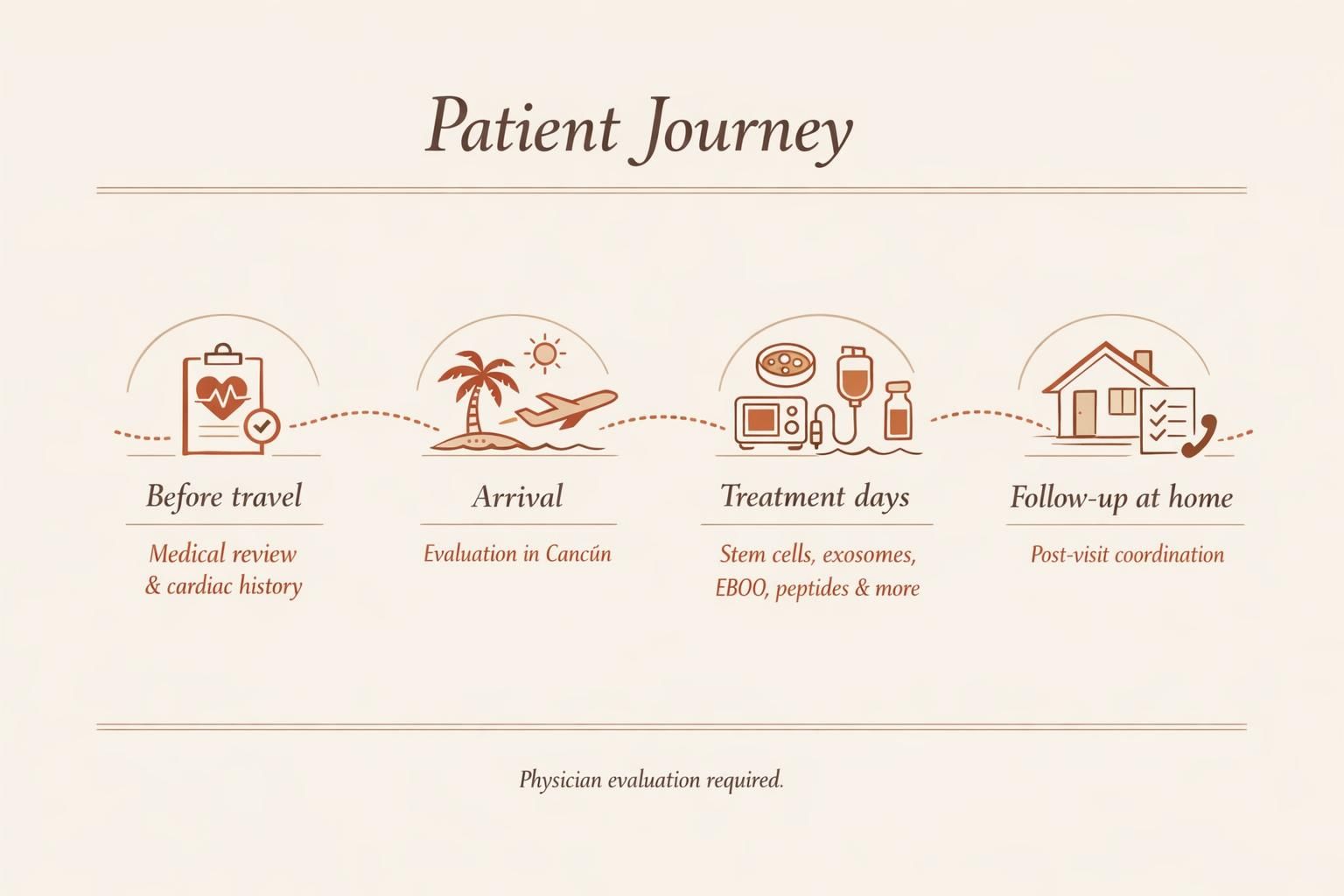
Every patient begins with a thorough medical evaluation. The team reviews cardiac history, current medications, imaging, and laboratory results before designing any protocol. The goal is to identify whether a patient is an appropriate candidate and what combination of therapies may support their specific situation.
Cellular Institute’s biologic products come through Cellgenic, its affiliated in-house lab ecosystem. This means greater traceability, quality control, viability documentation, and sterility standards than what many outsourced biologic suppliers offer. Patients can learn more about this commitment to lab quality and transparency before making any decision.
Protocols at Cellular Institute may combine stem cell therapy, exosome therapy, EBOO for inflammatory support, peptide therapy, and recovery technologies depending on the patient’s needs. The treatment is not a single injection. It is a coordinated, medically supervised experience designed around the whole patient.
What Patients Should Ask Before Choosing a Clinic
Canadian patients researching regenerative medicine for heart failure should ask direct questions before booking any treatment abroad.
- Does the clinic have a physician with cardiovascular or internal medicine expertise?
- Where do the biologic products come from, and what quality documentation is available?
- Does the clinic conduct a full medical evaluation before designing a protocol?
- What combination of therapies does the protocol include, and why?
- What follow-up support does the clinic provide after treatment?
- Is the clinic operating within a recognized regulatory framework?
A clinic that cannot answer these questions clearly deserves more scrutiny. Reviewing resources on safe stem cell clinics in Mexico can help patients identify what responsible care looks like.

Frequently Asked Questions
Can regenerative medicine replace my heart failure medications?
No. Regenerative medicine protocols are not a replacement for prescribed cardiac medications. They may support the body’s own repair processes as part of a broader health strategy, but a physician must evaluate your full medical history before any protocol begins. Never stop or adjust medications without guidance from your cardiologist.
Is stem cell therapy for heart failure supported by clinical evidence?
The evidence base is evolving. Multiple published trials have explored mesenchymal stem cell therapy for ischemic heart disease and heart failure. Some have reported improvements in functional capacity and quality of life. Results vary across patients and study designs. A physician can help you understand what the evidence may or may not support for your specific situation.
Why can’t Canadian patients access these therapies domestically?
Health Canada classifies most advanced biologic therapies for cardiac conditions as investigational. Access outside of approved clinical trials is not widely available through the public system. Some patients choose to travel for treatment under physician supervision in countries where the regulatory framework permits broader clinical access.
How do I know if I am a candidate for regenerative medicine as a heart failure patient?
Candidacy depends on many factors, including your diagnosis, ejection fraction, medication history, inflammatory status, and overall health profile. A thorough medical evaluation is required. The best first step is to speak with a physician who understands both cardiovascular medicine and regenerative protocols before making any decisions.
Final Thoughts
Heart failure is a complex and often progressive condition. Medications remain the foundation of standard care. But regenerative medicine represents a serious and evidence-informed area of medicine that some patients may explore under appropriate physician supervision.
Canadian patients asking about regenerative medicine deserve clear answers, not exaggerated promises. The science is real. The clinical access is limited domestically. And the path forward requires careful evaluation, a trusted physician, and a clinic that prioritizes quality and transparency over volume.
If you are a Canadian patient exploring options beyond medications, the first step is a conversation with a physician who understands your cardiac history and what regenerative medicine may or may not offer in your case.
To learn more about what a physician-guided evaluation looks like at Cellular Institute, schedule a discovery call with our patient coordination team. We will help you understand whether you may be a candidate and what a personalized protocol could involve.
You can also explore more patient education resources on the Cellular Institute blog to continue learning before making any decisions.
Medical Disclaimer
This article is for educational purposes only and does not replace medical advice, diagnosis, or treatment. Regenerative therapies are not appropriate for every patient, and outcomes vary. A licensed physician must evaluate your medical history, goals, and candidacy before any treatment can be recommended.