
Written by: Cellular Institute Editorial Team
Medical reviewer: Dr. Matilde Rodríguez – CP 12651081
Laboratory reviewer: Biotecnóloga Diana Navarrete – CP 15029468
Quick Answer
Some Canadian patients with multiple sclerosis are traveling to Mexico to access hematopoietic stem cell transplant, also known as HSCT. Wait times for this procedure in Canada can stretch for years, and some patients feel they cannot afford to wait. HSCT is a high-intensity medical procedure that requires careful physician evaluation, hospital infrastructure, and structured follow-up. It is not appropriate for every MS patient. At Cellular Institute, we do not perform HSCT. However, we do offer physician-guided regenerative medicine protocols that may support immune modulation, inflammation balance, and neurological wellness in appropriately evaluated candidates. Understanding the difference between HSCT and regenerative medicine protocols is essential before making any decision.
What Canadian MS Patients Are Facing
Multiple sclerosis affects the central nervous system. It causes the immune system to attack the myelin sheath that protects nerve fibers. Many Canadians living with MS experience progressive disability, fatigue, mobility challenges, and relapse cycles that conventional medications do not fully control.
HSCT has gained attention in Canada and globally as a potential option for halting disease progression in specific MS subtypes. The procedure involves using chemotherapy to suppress the immune system, followed by a transplant of the patient’s own blood-forming stem cells. The goal is to essentially reset the immune system.
Canada’s public healthcare system offers limited access to HSCT for MS. Many patients wait two to five years or longer to qualify. Others do not meet the narrow criteria required for publicly funded access. This gap pushes many to research options abroad, including Mexico.
What Patients Should Know About HSCT in Mexico
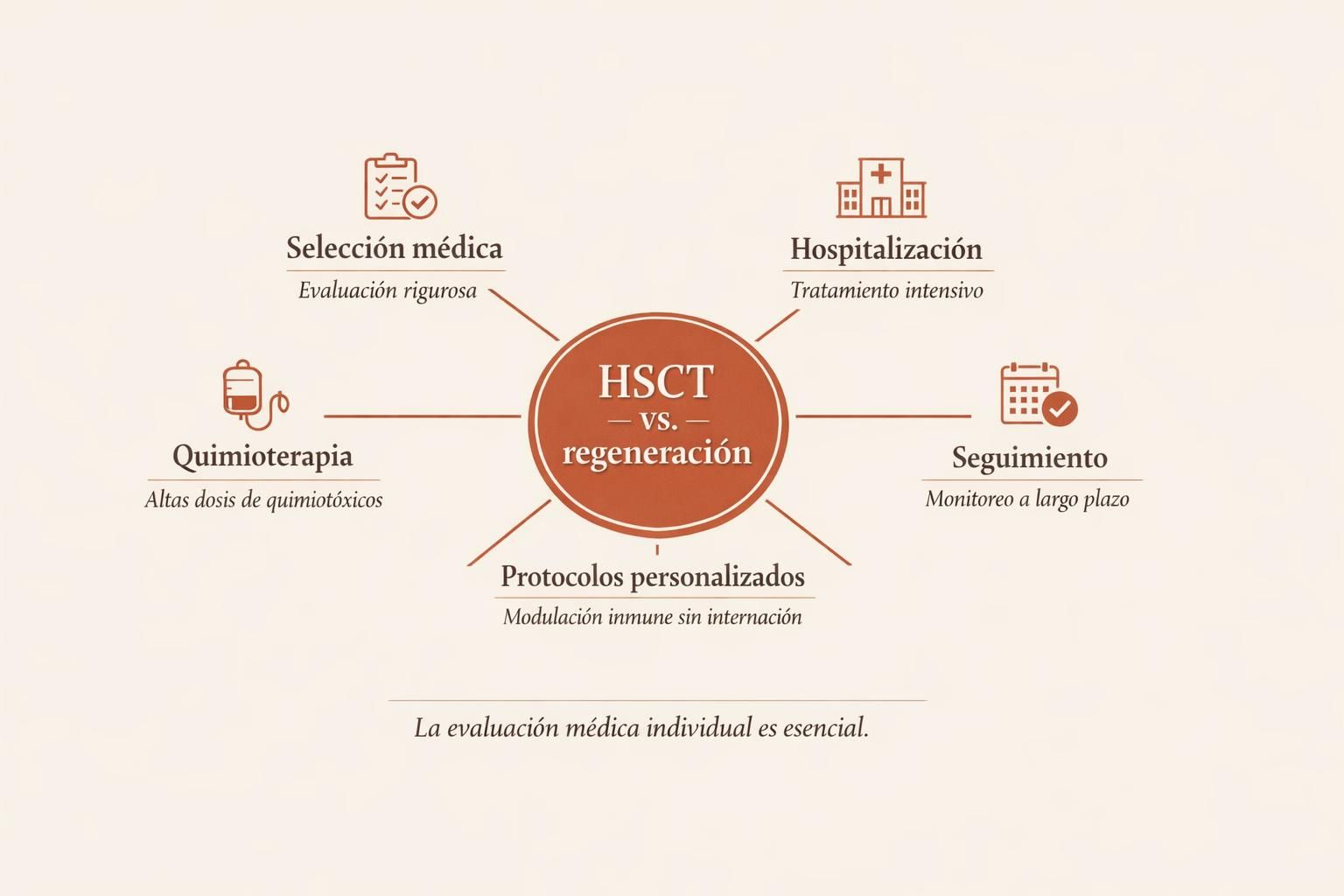
HSCT is not a simple outpatient therapy. It requires hospitalization, immunosuppressive chemotherapy, intensive medical monitoring, and careful infection management during the recovery period. Patients typically spend several weeks in a hospital setting.
Some clinics in Mexico do offer HSCT for MS. The quality of care, patient selection protocols, physician experience, and hospital infrastructure vary significantly between providers. Patients researching this option should ask detailed questions before committing to any program.
Key questions to ask any HSCT provider include:
- What hospital or clinical facility performs the procedure?
- What is the medical team’s specific experience with HSCT for MS?
- What conditioning regimen does the clinic use, and why?
- What is the patient selection and screening process?
- What does the recovery and follow-up protocol look like?
- Is the clinic operating under recognized regulatory oversight?
Patients should be cautious of any provider who minimizes risks, guarantees outcomes, or skips thorough medical evaluation. HSCT carries real risks, including infection, organ stress, and treatment-related complications. Responsible expectations and transparent clinical communication matter enormously.
How Regenerative Medicine Differs From HSCT
HSCT and regenerative medicine protocols are not the same thing. Canadian patients sometimes encounter both options during their research and may feel confused about how they compare.
HSCT is an intensive procedure that aims to ablate and rebuild the immune system. It targets disease activity directly. Regenerative medicine protocols, by contrast, focus on supporting the body’s repair processes, modulating inflammation, and promoting neurological wellness. They do not involve chemotherapy or hospitalization.
Regenerative approaches for MS-related concerns may include mesenchymal stem cell therapy, exosome therapy, ozone-based blood therapies, peptide support, and recovery technologies. These are not replacements for HSCT in patients who are strong candidates for that procedure. However, they may offer meaningful support for patients who are not HSCT candidates, those who have already undergone HSCT, or those who are seeking complementary approaches to support neurological health and immune balance.
At Cellular Institute, our team designs personalized protocols. We do not apply a single template to every patient. Each protocol reflects the individual’s health history, inflammatory profile, goals, and clinical context. Learn more about our approach to regenerative medicine in Cancún.
What Affects Quality and Safety in Any Stem Cell Program
Whether a patient pursues HSCT or a regenerative medicine protocol, the quality of the clinical environment and biologic products matters. Patients should never choose a clinic based on price alone.
At Cellular Institute, our affiliated lab ecosystem through Cellgenic supports biologic quality at every stage. This includes traceability, sterility testing, viability documentation, and xeno-free processing standards. Our certified stem cells reflect a process built on transparency, not just marketing claims.
Patients should also ask about physician oversight. Every protocol at Cellular Institute involves physician evaluation before treatment begins. Our clinic operates within Mexico’s medical regulatory framework with COFEPRIS-recognized licensing structures. Our immunology team, led by Dr. Roni Moya, Immunologist, brings specific expertise in immune health, autoimmune conditions, and chronic inflammation support.
For patients navigating this decision, our article on stem cell therapy safety in Mexico offers a helpful starting framework.
Who May Be a Candidate for Regenerative Protocols at Cellular Institute
Regenerative medicine protocols at Cellular Institute may be appropriate for MS patients who:
- Do not qualify for or choose not to pursue HSCT
- Have already completed HSCT and want to support recovery and immune optimization
- Are seeking complementary support for inflammation, fatigue, and neurological wellness
- Want a physician-guided, non-hospitalization approach to regenerative support
- Have been medically evaluated and deemed appropriate candidates by a licensed physician
Candidate evaluation is always required. Not every patient is appropriate for every protocol. Our team reviews each case individually before any recommendation is made.
Who May Not Be a Strong Candidate
Regenerative protocols are not appropriate for everyone. Patients with active infection, certain autoimmune flares, uncontrolled systemic illness, or other contraindications may not be suitable candidates at a given time. Some patients may need to stabilize their condition before beginning any regenerative program. A thorough medical intake helps identify these factors.
How Cellular Institute Approaches MS-Related Regenerative Support
Cellular Institute takes a physician-guided, protocol-centered approach to every patient. For patients with neurological and immune-related concerns, this may include a combination of mesenchymal stem cell therapy, exosome therapy, EBOO therapy in Cancún to support systemic inflammation and oxidative stress, peptide protocols, hyperbaric oxygen therapy, and recovery lounge technologies.
We do not promise that any of these therapies will halt MS progression. We do design thoughtful, evidence-informed protocols around the patient’s specific situation. Results vary. The goal is to support the body’s capacity for repair and regulation in appropriately selected candidates, under physician supervision at every step.
International patients from Canada benefit from our coordinated medical tourism infrastructure. We support patients with bilingual coordination, logistics, and structured follow-up. Our guide to medical tourism in Mexico covers what Canadian patients can expect when planning treatment travel to Cancún.

Frequently Asked Questions
Does Cellular Institute perform HSCT for MS?
No. Cellular Institute does not perform hematopoietic stem cell transplant. HSCT is an intensive hospital-based procedure that requires chemotherapy, immunosuppression, and extended inpatient care. We offer physician-guided regenerative medicine protocols that may support immune modulation, inflammation balance, and neurological wellness in appropriately evaluated candidates. These are distinct from HSCT.
Is it safe to travel to Mexico for MS treatment?
Safety depends on the clinic, the procedure, and the patient’s individual health status. For regenerative protocols at a physician-led clinic with recognized regulatory structure and quality standards, the risks can be managed responsibly. Patients should research clinics carefully, ask about physician oversight, biologic product quality, and follow-up support. Reading about safe stem cell clinics in Mexico is a good starting point.
How much does regenerative medicine for MS cost in Mexico?
Protocol costs vary depending on the therapies included, the number of sessions, and the complexity of the patient’s case. Cellular Institute builds personalized protocols rather than fixed packages, so pricing reflects what is clinically appropriate for each individual. Our article on stem cell therapy cost in Mexico offers helpful context for setting expectations.
Can regenerative medicine support patients who have already done HSCT?
Some patients who have completed HSCT explore regenerative support therapies afterward to support recovery, immune balance, and long-term wellness. Whether this is appropriate depends on the individual’s medical status, time since transplant, and current health profile. A physician evaluation is required to assess candidacy.
Final Thoughts
Canadian patients living with MS deserve honest, clear information. The decision to travel abroad for any medical procedure deserves careful research, not rushed choices driven by desperation or online pressure.
HSCT remains a high-intensity, clinically significant procedure. If you are evaluating this option, ask detailed questions about hospital quality, physician experience, patient selection, and safety protocols. Do not let pricing or urgency override clinical judgment.
If you are exploring regenerative medicine protocols that may support immune health, inflammation, and neurological wellness outside of the HSCT pathway, Cellular Institute offers a physician-guided, personalized approach in a safe and coordinated environment in Cancún.
We invite you to schedule a discovery call to speak with our team. We will review your history, answer your questions honestly, and help you understand whether you may be a candidate for a personalized regenerative protocol.
Medical Disclaimer
This article is for educational purposes only and does not replace medical advice, diagnosis, or treatment. Regenerative therapies are not appropriate for every patient, and outcomes vary. A licensed physician must evaluate your medical history, goals, and candidacy before any treatment can be recommended.