

Written by: Cellular Institute Editorial Team
Medical reviewer: Dr. Matilde Rodríguez – CP 12651081
Laboratory reviewer: Biotecnóloga Diana Navarrete – CP 15029468
Quick Answer
Exosome therapy involves the use of tiny cell-signaling particles called exosomes, which the body naturally produces to carry messages between cells. Unlike stem cell therapy, exosome therapy does not introduce living cells into the body. Instead, it delivers a concentrated package of growth factors, proteins, and signaling molecules designed to support the body’s own repair processes. Both therapies fall under the broader category of regenerative medicine, but they work differently and may suit different patients. Physician evaluation is required to determine whether either therapy is appropriate for your specific condition and health history.
What Are Exosomes?
Exosomes are extracellular vesicles, meaning they are tiny structures released by cells to communicate with other cells throughout the body. Think of them as microscopic messengers. Every cell in your body produces them. They carry proteins, lipids, RNA, and growth factors from one cell to another.
In regenerative medicine, exosomes derived from stem cells attract significant attention. These particles carry many of the same signaling instructions that stem cells use to support tissue repair, modulate inflammation, and influence cellular behavior. Researchers believe that much of the benefit attributed to stem cell therapy may actually come from the signaling molecules those cells release, including exosomes.
Because exosomes are cell-derived but do not contain a nucleus or full cell structure, they offer a different kind of biological tool. They may support the body’s natural repair environment without introducing live cells that need to survive, engraft, or replicate.
How Does Exosome Therapy Differ From Stem Cell Therapy?
This is one of the most common questions patients ask. The differences are meaningful, and understanding them can help you have a more informed conversation with a physician.
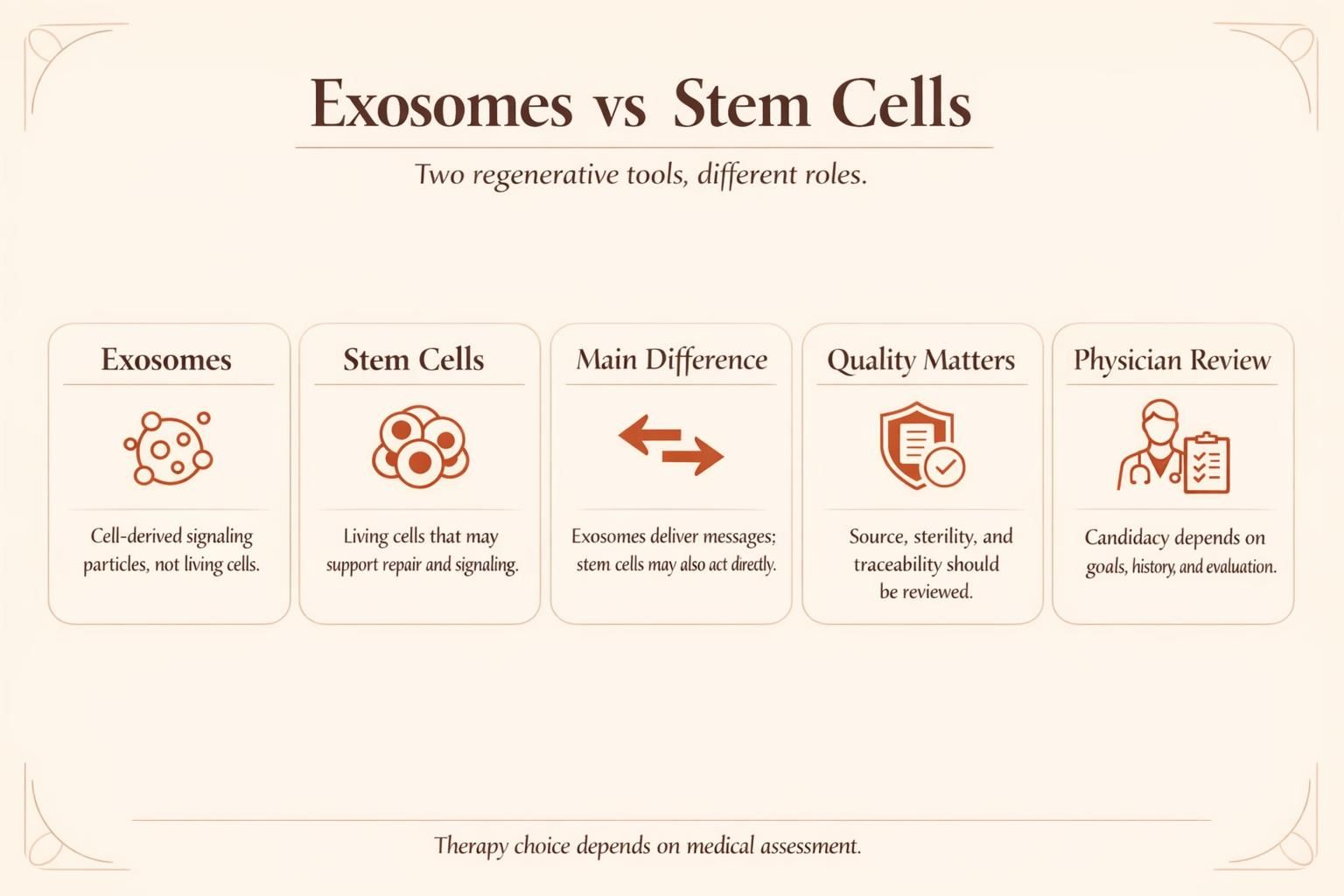
- Stem cell therapy introduces living cells into the body. These cells may differentiate into other cell types, release signaling molecules, and support tissue repair directly. The cells themselves are the active component.
- Exosome therapy delivers cell-derived signaling particles without introducing live cells. The exosomes carry instructions that may help existing cells behave in a more regenerative way.
Stem cell therapy may offer a more sustained biological presence, particularly for conditions involving significant tissue damage or immune dysfunction. Exosome therapy may appeal to patients who want targeted cell signaling support with a different safety and logistics profile.
Neither therapy is universally superior. The right choice depends on your health history, goals, condition severity, and what a physician determines after a thorough evaluation. Some protocols may combine both approaches as part of an integrated regenerative strategy.
To explore the full range of types of stem cell treatments available in Mexico, it helps to understand how each modality works and when it may be appropriate.
What Conditions May Be Appropriate for Exosome Therapy?
Exosome therapy is explored across a wide range of conditions in regenerative medicine research. At this stage, evidence is still developing, and responsible clinics will present realistic expectations rather than absolute claims.
Areas where exosome therapy may play a supportive role include:
- Joint inflammation and musculoskeletal recovery
- Post-injury tissue repair support
- Immune modulation and chronic inflammation
- Neurological support and cognitive health
- Skin rejuvenation and regenerative aesthetics
- Longevity and cellular optimization protocols
These are areas of active clinical interest. Results vary by patient, and no clinic should promise specific outcomes. Physician evaluation helps determine whether exosome therapy may fit within a broader protocol for your case.
What Affects the Quality and Safety of Exosome Products?
Not all exosome products carry the same quality. This is one of the most important things patients should understand before comparing clinics or prices.
Key quality factors include:
- Source: Where do the exosomes come from? Reputable sources include Wharton’s jelly-derived mesenchymal stem cells, which produce a rich signaling profile.
- Concentration: The number of exosome particles per dose varies significantly between products. Higher is not always better without clinical context, but underdosed products may provide little benefit.
- Processing standards: Xeno-free processing, sterility testing, and viability documentation all matter. Patients should ask clinics whether products come with a certificate of analysis.
- Storage and handling: Exosomes are biologically sensitive. Proper storage and handling protocols protect their integrity between the lab and the patient.
- Traceability: A responsible clinic should be able to tell you where the product comes from and provide documentation of quality control.
At Cellular Institute, biologics quality starts at the lab level. Through our affiliated lab ecosystem, Cellgenic supports in-house quality control, traceability, and biologic preparation with a focus on sterility, viability, and product documentation. This level of transparency matters, especially for patients traveling internationally for treatment.
Who May Be a Candidate for Exosome Therapy?
Patients who may be appropriate candidates for exosome therapy often include those looking to:
- Support recovery from musculoskeletal injuries or joint inflammation
- Add cell signaling support to an existing regenerative protocol
- Explore longevity and cellular optimization as part of a broader health strategy
- Address skin or aesthetic concerns using regenerative tools
- Support immune balance and reduce chronic inflammatory burden
Exosome therapy may also complement stem cell therapy as part of a layered protocol, depending on physician assessment.
Who May Not Be a Candidate?
Certain patients may require additional evaluation or may not be appropriate candidates at a given time. These may include patients with:
- Active infections or uncontrolled systemic illness
- Certain autoimmune conditions requiring careful immune consideration
- Recent cancer history (requires physician review)
- Pregnancy or breastfeeding
- Specific medication interactions that require medical clearance
Only a physician can properly evaluate candidacy. These are general considerations, not absolute exclusions. A thorough medical intake and clinical review must precede any treatment recommendation.
How Cellular Institute Approaches Exosome Therapy
Cellular Institute does not position exosome therapy as a standalone injection. Our medical team evaluates each patient’s history, goals, lab results, and health status before designing a protocol. Exosomes may be part of a larger strategy that includes stem cell therapy, peptide therapy, EBOO, recovery technologies, or other advanced regenerative tools.
Our approach reflects a core belief: the therapy is only one part of the strategy. The protocol around the therapy matters just as much.
Patients traveling to Cancún for treatment receive coordinated support throughout their journey, from pre-travel preparation and medical evaluation to treatment day, recovery, and structured follow-up. The goal is not just to administer a biologic product. It is to build a complete regenerative experience around the patient.
Our medical team includes specialists in cardiology, orthopedics, immunology, and regenerative aesthetics. Our immunologist, Dr. Roni Moya, provides specialized evaluation for patients with immune-related or inflammatory concerns, helping ensure that protocols are designed with safety and biological context in mind.
Cellular Institute also operates within Mexico’s medical regulatory framework and maintains COFEPRIS-recognized licensing structures for regenerative medicine and tissue handling. For patients researching stem cell therapy safety in Mexico, regulatory structure and product documentation are among the most important factors to evaluate.
Questions to Ask Before Choosing a Clinic
Whether you are considering exosome therapy, stem cell treatment, or a combination protocol, these questions can help you evaluate any clinic more effectively:
- Where do your exosome or stem cell products come from?
- What quality documentation is available, such as a certificate of analysis?
- Does a physician evaluate my candidacy before recommending a protocol?
- Is the treatment delivered as a standalone injection or as part of a broader protocol?
- What recovery support and follow-up care do you provide?
- How does the clinic handle patients who travel internationally for treatment?
These questions separate serious medical providers from clinics focused primarily on volume. If a clinic cannot answer them clearly, that alone is important information. For more guidance, our team has put together a detailed resource on how to choose a stem cell clinic in Mexico that applies equally to exosome therapy decisions.

Frequently Asked Questions
Is exosome therapy the same as stem cell therapy?
No. Stem cell therapy introduces living cells into the body. Exosome therapy delivers cell-derived signaling particles without live cells. Both fall under regenerative medicine, but they work through different mechanisms. A physician can help determine which approach, or which combination, may be appropriate for your case.
Are exosomes safe?
Exosome therapy carries a different risk profile than stem cell therapy because no living cells enter the body. However, product quality, source, and clinical oversight all affect safety. Reputable clinics use well-documented, quality-tested products and require physician evaluation before treatment. No therapy is without risk, and responsible expectations are important.
How do I know if I am a candidate for exosome therapy?
Candidacy requires a thorough medical evaluation. Your physician will review your health history, current medications, diagnosis, inflammation status, and goals before recommending any regenerative protocol. You cannot determine candidacy from a website alone.
Can exosome therapy be combined with stem cell therapy?
Yes, in some cases. Many regenerative medicine protocols use a layered approach that may include both stem cells and exosomes, depending on the patient’s condition and goals. Other complementary tools such as peptide therapy, EBOO, or hyperbaric oxygen may also be incorporated as part of a personalized protocol. A physician designs the combination based on your specific clinical picture.
Final Thoughts
Exosome therapy represents a meaningful development in regenerative medicine. It offers a cell-free approach to biological signaling support, with a growing body of research behind its potential applications. For patients who have heard about this therapy through a referral or clinic website, the most important next step is speaking with a qualified physician who can evaluate your history and help you understand whether this therapy fits your goals.
At Cellular Institute, we guide patients through that process from beginning to end. Our team combines physician expertise, in-house biologics quality through Cellgenic, personalized protocol design, and full medical tourism support in Cancún. We are not selling an injection. We are designing a regenerative experience around you.
If you are ready to learn more, schedule a discovery call with our team to explore whether exosome therapy or another regenerative protocol may be appropriate for your case. There is no pressure, only an honest conversation about your health and your options.
You can also explore our full range of regenerative medicine therapies in Cancún or browse the exosome and regenerative technologies we use to support our patients.
Medical Disclaimer
This article is for educational purposes only and does not replace medical advice, diagnosis, or treatment. Regenerative therapies are not appropriate for every patient, and outcomes vary. A licensed physician must evaluate your medical history, goals, and candidacy before any treatment can be recommended.