

Written by: Cellular Institute Editorial Team
Medical reviewer: Dr. Matilde Rodríguez – CP 12651081
Laboratory reviewer: Biotecnóloga Diana Navarrete – CP 15029468
Quick Answer
The number of plasma exchange sessions a patient needs depends on the underlying condition, the treatment goals, the patient’s overall health, and how the body responds over time. Most protocols range from 3 to 10 sessions, often delivered in a series over days or weeks. However, there is no universal number. A physician must evaluate your individual history and goals before recommending a specific protocol. Plasma exchange is not a one-size-fits-all therapy.
What Is Plasma Exchange and Why Does Session Count Matter?
Plasma exchange, also called therapeutic plasma exchange or plasmapheresis, involves removing a portion of a patient’s blood plasma and replacing it with a substitute fluid or donor plasma. The goal is to reduce the concentration of proteins, antibodies, inflammatory markers, or other circulating substances that may be contributing to symptoms or disease burden.
Session count matters because plasma exchange is a process therapy, not a one-time event. A single session may reduce circulating substances, but sustained benefit often requires multiple sessions over a structured period. Understanding how many sessions are typical for your condition helps you plan your schedule, your budget, and your expectations responsibly.
If you are exploring regenerative options alongside plasma-based therapies, learning about regenerative medicine in Cancún may help you understand how these approaches can be part of a broader physician-guided protocol.
General Session Ranges by Condition Type
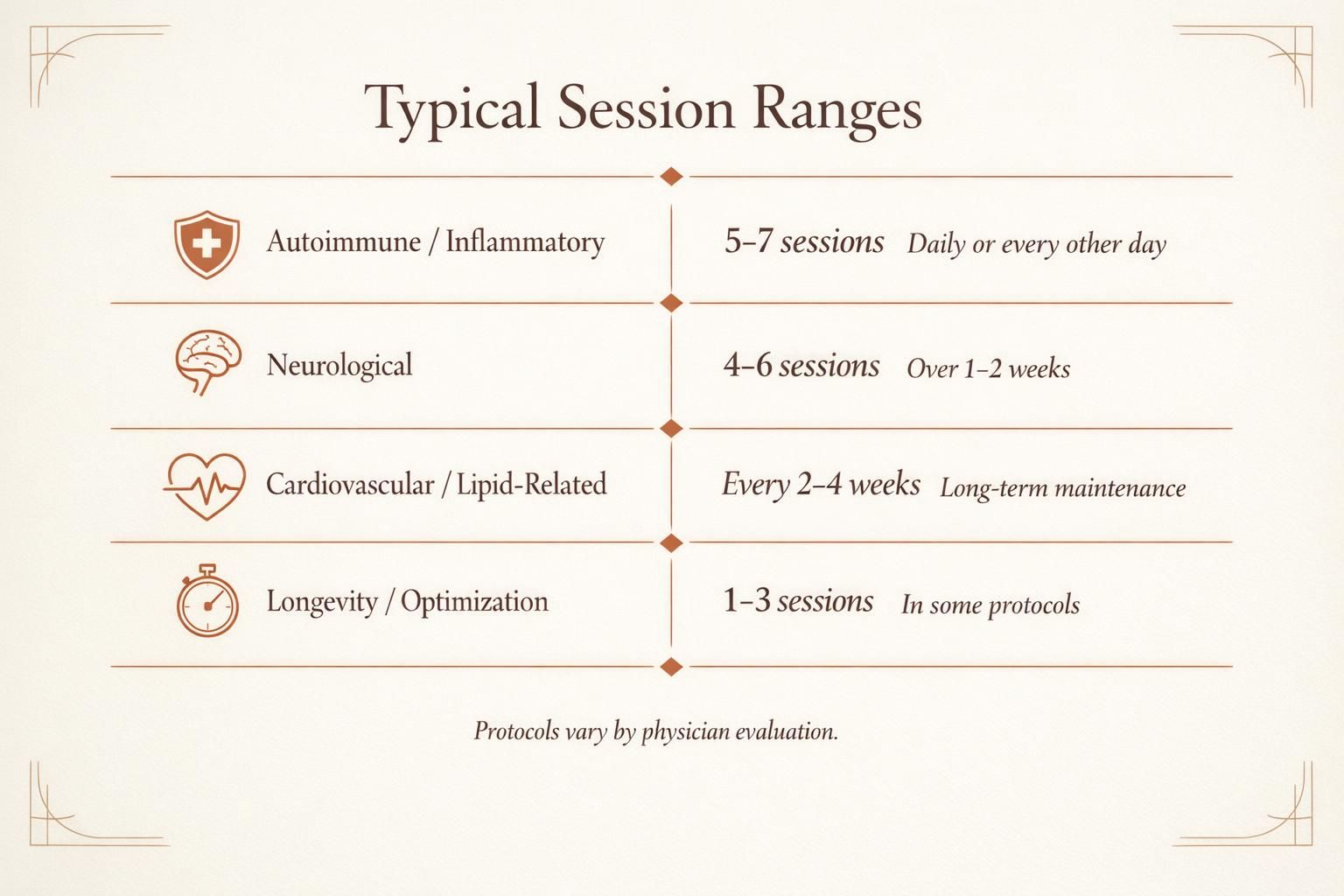
Different conditions call for different treatment volumes. The ranges below reflect what published medical literature and specialty clinics commonly recommend. These are educational guidelines only. They are not a substitute for physician evaluation.
Autoimmune and Inflammatory Conditions
Conditions involving misdirected immune responses, such as myasthenia gravis, Guillain-Barré syndrome, and neuromyelitis optica, often follow protocols of 5 to 7 sessions. Sessions are typically delivered daily or every other day. Some patients require a second series if symptoms return or if the initial series produces only partial benefit.
For inflammatory conditions more broadly, plasma exchange may support the reduction of circulating inflammatory mediators. Dr. Roni Moya, Immunologist, works with patients at Cellular Institute whose goals include addressing systemic inflammatory burden as part of a broader regenerative strategy.
Neurological Conditions
Neurological indications often follow short, intensive series. Many protocols involve 4 to 6 sessions delivered over 1 to 2 weeks. The timing is important because rapid removal of pathogenic antibodies or proteins may be needed to support neurological recovery. Ongoing maintenance sessions are sometimes considered when the condition is recurrent or chronic.
Cardiovascular and Lipid-Related Conditions
For conditions such as familial hypercholesterolemia, where lipid-lowering medications are insufficient, plasma exchange is often used on an ongoing basis. Patients may receive sessions every 2 to 4 weeks long-term. This is a significantly different structure than the short-term series used for acute neurological or autoimmune presentations.
Cardiovascular health is also a key area of focus at Cellular Institute. Dr. Rafael Moguel, Medical Director and cardiologist, brings specialized oversight to patients whose protocols involve cardiovascular considerations or systemic health optimization.
Longevity and Optimization Protocols
Some patients pursue plasma exchange outside of traditional disease indications, as part of a longevity or optimization strategy. In this context, protocols vary widely. Some patients receive 1 to 3 sessions as part of a broader regenerative experience. The goal in these cases is typically to reduce circulating factors associated with aging or chronic inflammation, not to address a specific diagnosis. Physician evaluation remains essential to determine candidacy and appropriate session frequency.
Key Factors That Determine Your Ideal Number of Sessions
Understanding the general ranges is helpful. But your physician will consider several individual factors before recommending a specific protocol.
- Condition severity and stage: More severe or acute presentations often require more frequent sessions over a shorter window.
- Body weight and plasma volume: The volume of plasma exchanged per session depends on your size. This affects both session duration and how many sessions are needed to achieve a meaningful reduction in target substances.
- Biomarker response: Physicians often monitor labs between sessions to evaluate how well the body is responding. This guides whether to continue, pause, or adjust the protocol.
- Tolerance and recovery capacity: Some patients experience fatigue, fluid shifts, or temporary discomfort after sessions. How well you recover between sessions influences the pacing of the protocol.
- Combination with other therapies: Plasma exchange is often part of a broader treatment plan. When combined with immunosuppressants, regenerative therapies, or recovery technologies, the protocol may be adjusted accordingly.
At Cellular Institute, the medical team designs protocols around the patient’s full picture. This includes diagnostics, health history, and treatment goals. A single therapy is rarely the complete answer. Complementary tools such as EBOO therapy in Cancún may also be considered for patients with inflammatory or systemic health goals as part of an integrated approach.
Is Plasma Exchange Always Done in a Series?
In most medical contexts, yes. Plasma exchange works progressively. A single session reduces the concentration of target substances in the blood, but the body often replenishes them within days. A series of sessions maintains a lower concentration long enough to support the therapeutic goal.
However, the structure of the series varies. Some protocols are intensive, with daily sessions for one to two weeks. Others are spaced weekly or biweekly. Maintenance protocols extend over months or years. The right structure depends entirely on why you are receiving treatment and how your body responds.
What to Ask a Clinic Before Committing
Not all clinics approach plasma exchange with the same level of clinical rigor. Before committing to a protocol, patients should ask the right questions.
- How many sessions do you recommend for my specific condition or goal, and why?
- Will my labs and biomarkers be monitored between sessions?
- What replacement fluid will be used, and what are the considerations for my case?
- Is plasma exchange being combined with other therapies, and how are those sequenced?
- What does the full cost of the protocol include?
- What follow-up support is provided after the series ends?
If you are evaluating clinics in Mexico, it helps to understand what separates quality providers from less rigorous ones. Our guide on how to choose a stem cell clinic in Mexico offers practical criteria that apply broadly to regenerative medicine evaluation.

Frequently Asked Questions
How long does each plasma exchange session typically take?
Most sessions last between 1.5 and 3 hours, depending on the volume of plasma being exchanged and the equipment used. Patients usually remain seated or reclined during the procedure. Some clinics pair sessions with IV support or recovery protocols to help the body adjust afterward.
Can plasma exchange be combined with other regenerative therapies?
Yes. In physician-guided protocols, plasma exchange may be sequenced alongside other regenerative tools such as exosome therapy, peptide therapy, or recovery technologies like hyperbaric oxygen. The sequencing and timing should be determined by a physician based on your individual goals and health status.
Is plasma exchange appropriate for longevity or anti-aging goals?
Some longevity-focused clinics include plasma exchange as part of optimization protocols. The evidence base for this specific application is still developing. Patients pursuing plasma exchange for longevity goals should work with a physician who can evaluate their candidacy, set responsible expectations, and integrate the therapy thoughtfully into a broader plan. Results vary by patient.
How do I know if I am a candidate for plasma exchange?
Candidacy depends on your medical history, current health status, the condition or goal you are addressing, and your ability to tolerate the procedure. A physician evaluation that includes a review of labs, medications, cardiovascular health, and immune status is essential before any protocol can be recommended. Self-selecting treatment without medical oversight is not advisable.
How Cellular Institute Approaches Plasma-Based and Regenerative Protocols
Cellular Institute does not offer a standardized number of sessions. The medical team evaluates each patient individually. The goal is to understand your health picture fully before recommending any therapy or combination of therapies.
For patients whose goals involve systemic inflammation, immune support, or longevity optimization, the team may consider plasma-based therapies alongside other evidence-informed tools. These may include EBOO therapy, regenerative cell therapies, peptide therapy, and recovery technologies such as hyperbaric oxygen or red light therapy.
This integrated approach reflects a core belief at Cellular Institute: the protocol around the therapy matters just as much as the therapy itself. Patients who travel for treatment deserve a complete medical experience, not just a procedure.
Ready to Understand What May Be Right for Your Case?
If you are researching plasma exchange and want to understand whether you may be a candidate, the best next step is a physician conversation. The Cellular Institute team can review your goals, your health history, and your questions in a no-pressure discovery call before you make any decisions.
Schedule a discovery call to speak with our patient coordination team and start building a clearer picture of what may be appropriate for your situation.
You can also explore more patient education resources on the Cellular Institute blog to learn how regenerative medicine is being used to support recovery, immune health, and long-term optimization.
Medical Disclaimer
This article is for educational purposes only and does not replace medical advice, diagnosis, or treatment. Regenerative therapies are not appropriate for every patient, and outcomes vary. A licensed physician must evaluate your medical history, goals, and candidacy before any treatment can be recommended.