
Written by: Cellular Institute Editorial Team
Medical reviewer: Dr. Matilde Rodríguez – CP 12651081
Laboratory reviewer: Biotecnóloga Diana Navarrete – CP 15029468
Quick Answer
Plasma exchange, also called plasmapheresis, may support symptom management in certain forms of peripheral neuropathy, particularly those driven by antibody-mediated inflammation. The evidence is strongest for autoimmune-related neuropathies such as Guillain-Barré syndrome and chronic inflammatory demyelinating polyneuropathy (CIDP). For diabetic, chemotherapy-induced, or idiopathic neuropathy, the picture is more complex. Physician evaluation is required to determine whether plasma exchange, or a complementary regenerative protocol, may be appropriate for your specific case.
What Is Peripheral Neuropathy and Why Are Patients Searching for Alternatives?
Peripheral neuropathy refers to damage or dysfunction in the peripheral nerves. These are the nerves that carry signals between the brain, spinal cord, and the rest of the body. When they are damaged, patients often experience burning pain, tingling, numbness, weakness, or loss of coordination.
The causes vary widely. Autoimmune activity, diabetes, chemotherapy toxicity, and unknown idiopathic factors can all drive nerve damage. Many patients try multiple medications without finding adequate relief. That gap is exactly why more people are researching options like plasma exchange, regenerative medicine, and advanced biological therapies.
What Is Plasma Exchange and How May It Work?
Plasma exchange is a medical procedure that removes plasma from the blood. During the process, a machine separates the liquid portion of your blood from the blood cells. The plasma is replaced with a substitute solution or donor plasma. The goal is to remove harmful antibodies, immune complexes, or inflammatory proteins that may be attacking nerve tissue.
In autoimmune neuropathies, the immune system sometimes produces antibodies that mistakenly target myelin or nerve fibers. Removing those antibodies temporarily reduces the inflammatory attack. This may allow the nervous system to begin a recovery process. However, the benefit can be temporary, and repeated treatments are often necessary.
It is important to understand that plasma exchange does not address the root cause of why the immune system is misfiring. That is why many physicians use it as part of a broader treatment strategy, not as a standalone solution.
What Does the Evidence Suggest?
Clinical evidence supports plasma exchange most clearly in the following conditions:
- Guillain-Barré Syndrome (GBS): Plasma exchange has established support for acute GBS, particularly when started early in the disease course.
- Chronic Inflammatory Demyelinating Polyneuropathy (CIDP): Multiple studies show plasma exchange may reduce symptom severity and improve nerve function in CIDP patients.
- Multifocal Motor Neuropathy and paraprotein-associated neuropathies: Some evidence supports a role in selected patients, though results vary.
For diabetic neuropathy or chemotherapy-induced peripheral neuropathy, the evidence for plasma exchange specifically is limited. These forms of nerve damage involve metabolic injury, oxidative stress, and structural nerve changes rather than primarily antibody-driven inflammation. A different therapeutic approach may be more appropriate in these cases.
What Patients Should Know About Safety and Candidacy
Plasma exchange is a medical procedure with real risks. These may include low blood pressure, infection risk, clotting complications, allergic reactions to replacement fluids, and electrolyte imbalances. Patients with cardiovascular conditions, bleeding disorders, or hemodynamic instability may not be suitable candidates.
Candidacy requires a thorough medical evaluation. A physician must review your diagnosis, the cause of your neuropathy, your overall health, and your treatment history. Not every patient with peripheral neuropathy is a candidate for plasma exchange. And for many patients, a regenerative medicine approach that targets inflammation and nerve support through complementary modalities may be a more appropriate starting point.
Our team includes Dr. Roni Moya, Immunologist, who evaluates patients with autoimmune and inflammatory conditions to help determine whether regenerative protocols may be appropriate for their immune profile and nerve health goals.
How Regenerative Medicine May Support Peripheral Neuropathy
Regenerative medicine does not replace conventional neurology or immunology. Instead, it may offer complementary tools designed to support the body’s own repair capacity, modulate inflammation, and promote nerve tissue recovery in appropriately selected patients.
At Cellular Institute, we approach peripheral neuropathy as a multifactorial condition. A patient with autoimmune-driven nerve damage has different needs than a patient whose neuropathy stems from chemotherapy or uncontrolled blood sugar. That is why the protocol is always personalized.
Depending on the evaluation, a regenerative protocol may include advanced blood filtration therapies designed to reduce circulating inflammatory burden, regenerative cell therapies aimed at supporting tissue repair, or adjunct modalities such as hyperbaric oxygen or red light therapy to support nerve oxygenation and cellular recovery.
Our regenerative medicine in Cancún programs are built around physician-guided evaluation, not off-the-shelf packages. The therapy is only one part of the strategy. The clinical reasoning behind the protocol matters just as much.
The Role of EBOO Therapy in Inflammation-Driven Nerve Conditions
One advanced tool our team uses in inflammation-related protocols is EBOO therapy, which stands for Extracorporeal Blood Oxygenation and Ozonation. Like plasma exchange, EBOO works outside the body with blood. However, it uses ozone and oxygen filtration rather than plasma removal to reduce circulating inflammatory markers and oxidative stress.
For patients with peripheral neuropathy driven by chronic systemic inflammation, EBOO therapy and systemic inflammation research suggests it may support a reduction in inflammatory burden. This can complement other regenerative tools in a comprehensive protocol. You can also explore EBOO therapy in Cancún to learn more about how this modality is applied clinically.
Who May Be a Candidate for a Regenerative Neuropathy Protocol?
Patients who may benefit from a physician-guided regenerative evaluation include those who:
- Have a confirmed neuropathy diagnosis with a known or suspected inflammatory component
- Are not finding sufficient relief from medications alone
- Have been evaluated by a neurologist but want to explore complementary support options
- Are managing an autoimmune condition associated with nerve damage
- Are recovering from chemotherapy and experiencing persistent nerve symptoms
- Have been told their neuropathy is idiopathic and want to understand whether inflammation may be a factor
Who May Not Be a Candidate
Regenerative protocols are not appropriate for every patient. Individuals with active systemic infections, certain blood or clotting disorders, advanced organ dysfunction, or specific contraindications to biologics may not qualify. A full medical history review and physician evaluation are required before any protocol can be considered.
How Cellular Institute Approaches This
Cellular Institute takes a physician-guided, protocol-first approach to complex conditions like peripheral neuropathy. We do not offer a single injection and send patients home. We design a complete regenerative experience around each patient’s diagnosis, inflammatory profile, medical history, and recovery goals.
Our team evaluates candidacy carefully. If plasma exchange or another conventional intervention is the most appropriate first step, we will say so. If a complementary regenerative protocol may support your recovery alongside conventional care, our physicians will map that out clearly.
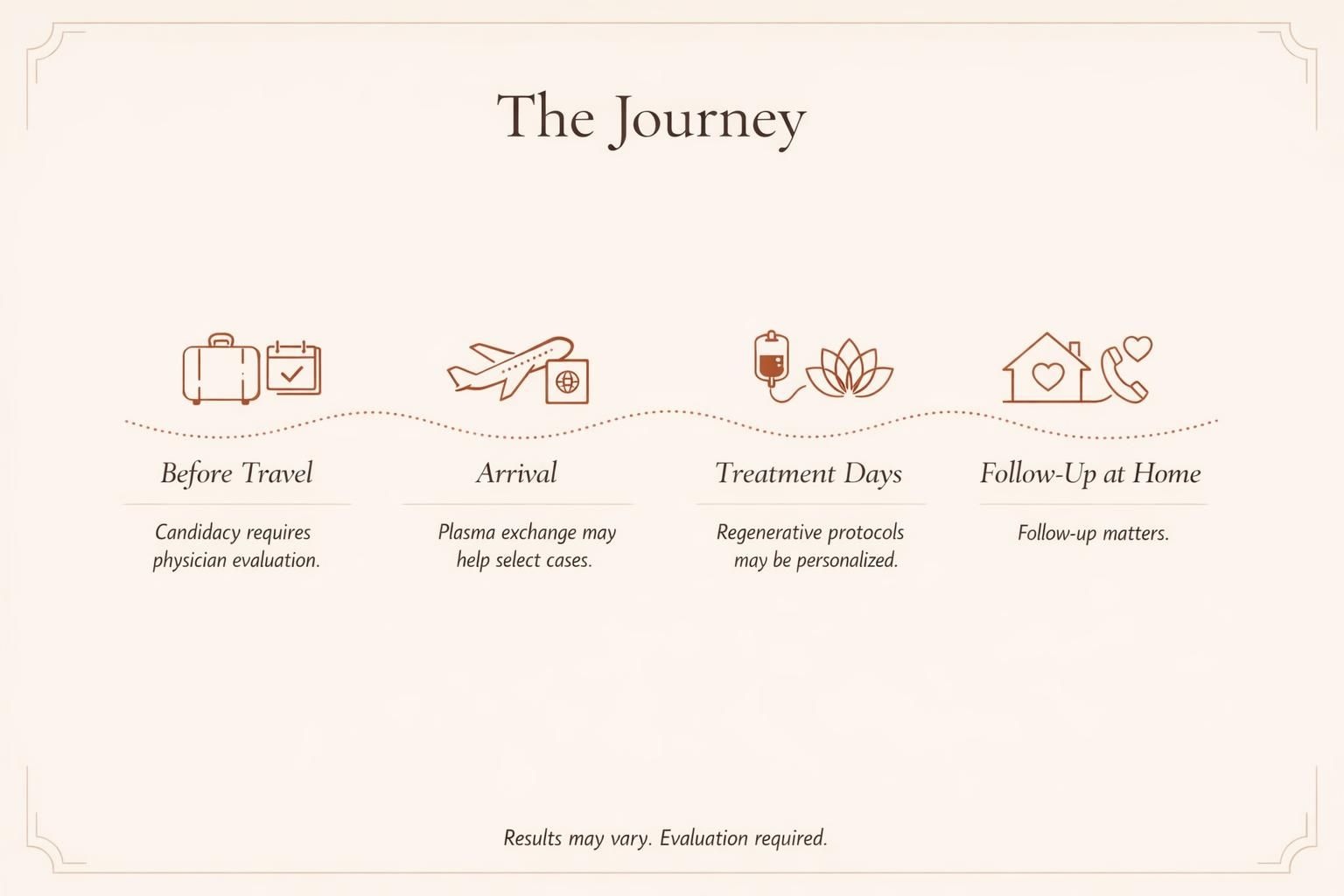
We also support international patients traveling for treatment with coordinated logistics, bilingual care, and structured follow-up. If you are considering medical tourism in Mexico, understanding what a complete patient experience looks like — before, during, and after treatment — matters as much as the therapy itself.
Questions to Ask Before Choosing a Clinic
- Does the clinic require a medical evaluation before recommending any therapy?
- Does the physician understand my specific type of neuropathy and its cause?
- Is the protocol personalized, or does everyone receive the same treatment?
- What complementary modalities are included, and why?
- What quality standards apply to any biologics used in the protocol?
- What does follow-up look like after treatment?
- Is the team experienced with autoimmune and inflammatory nerve conditions?
If you want broader guidance on evaluating regenerative medicine clinics, our article on how to choose a stem cell clinic in Mexico covers the key questions patients should ask before booking any treatment abroad.

Frequently Asked Questions
Is plasma exchange a cure for peripheral neuropathy?
No. Plasma exchange is not a cure. It may temporarily reduce antibody-mediated inflammation in certain autoimmune neuropathies. Most patients require multiple sessions, and the condition can return if the underlying immune dysregulation is not addressed. Results vary significantly by patient and diagnosis.
Can regenerative medicine replace plasma exchange for neuropathy?
Not necessarily. Plasma exchange and regenerative medicine serve different purposes. For some patients, both may play a role at different stages of care. A physician must evaluate your case to determine which approach — or which combination — may be appropriate. One does not automatically replace the other.
How do I know whether my neuropathy has an autoimmune component?
A neurologist or immunologist can evaluate your symptoms, run specific blood panels, and assess nerve conduction studies to identify whether autoimmune activity is contributing to your nerve damage. This evaluation is an essential step before considering any therapy, including plasma exchange or regenerative protocols.
What is included in a regenerative neuropathy protocol at Cellular Institute?
Protocols vary by patient. Following a medical evaluation, the physician may recommend a combination of advanced blood filtration therapies, regenerative cell-based support, recovery technologies such as hyperbaric oxygen or red light therapy, and personalized follow-up. The goal is to address the inflammatory and structural factors contributing to your nerve symptoms, not to apply a generic treatment to every patient.
Final Thoughts
Peripheral neuropathy is a complex condition, and the patients who research plasma exchange are often those who have already tried conventional options without adequate relief. That search for answers is valid. So is the question of whether regenerative medicine may offer additional support.
The honest answer is: it depends. It depends on your diagnosis, the cause of your neuropathy, your current health status, and whether your inflammation profile makes you a candidate for specific interventions. No clinic should promise you results without a proper evaluation first.
At Cellular Institute, we start with that evaluation. If you want to understand whether a regenerative protocol may be appropriate for your case, we invite you to schedule a discovery call with our team. We will listen, review your situation, and help you understand your options with honest, physician-guided guidance.
Medical Disclaimer
This article is for educational purposes only and does not replace medical advice, diagnosis, or treatment. Regenerative therapies are not appropriate for every patient, and outcomes vary. A licensed physician must evaluate your medical history, goals, and candidacy before any treatment can be recommended.