Listen to this article
Listen to this article
Are you considering stem cell therapy? As with any medical treatment, there could be some potential risks or side effects – learn more in this article.
Regenerative medicine has taken the world by storm – from breakthroughs such as stem cell therapy to Muse cells, NK cells treatments and biohacking, it allows you to leverage the power of healing at the cellular level, where damage actually begins.
If you are looking for a solution to your pain or condition that goes beyond just managing symptoms, we can help you. Stem cell therapy doesn’t just mask discomfort – it repairs, replaces and reprograms your cells, giving the body the chance to rebuild from within.
However, while treatments with stem cells can be extremely effective and very safe compared to other solutions, there are some potential side effects and risks of stem cell therapy that you need to know.
There is no medical treatment 100% free of risk – but stem cell therapy can be one of the safest regenerative options, especially if it’s performed by an experienced team such as Cellular Hope Institute.
Here is everything you need to know about the possible side effects and risks of stem cell therapy:
What Are The Risks of Stem Cell Therapy?
So, what can you expect if you are thinking of undergoing treatment with stem cells? Let’s take a deeper look so you can prepare accordingly, and choose the best solution and clinic for your health situation:
Common Risks of Stem Cell Therapy
Let’s begin with the most common side effects and risks of stem cell treatments – the ones that are usually temporary, and will often resolve by themselves (or with minimal care).
Reactions at the injected area
Since stem cells are typically injected through targeted injections or infusions, it is completely normal to experience temporary soreness, swelling, redness, or mild bruising.
Don’t worry about it – it’s a response of the body to procedures that involve needles. You can expect it to fade within a few hours to a few days, and you likely won’t need medical intervention.
To help speed up the process, we recommend keeping the area very clean with gentle soap and water. Avoid scratching, rubbing, or putting heavy pressure on the area. And don’t forget to follow after-care instructions provided by our team!
Fiver, chills or fatigue
Sometimes, your immune system may react to the new cells or to the injection process itself. As a result, one of the risks of stem cell therapy is getting short-term flu-like symptoms such as mild fever, chills, tiredness or body aches.
In most cases, there is nothing to stress about. This is often just your body adjusting and responding to the treatment, and it will resolve on its own within a couple of days. Of course, if anything worries you, don’t hesitate to let us know so we can help you out.
Mild immune or inflammatory reactions
Speaking of the risks of stem cell therapy, in some cases you may experience mild immune or inflammatory reactions. This can include temporary swelling, warmth, stiffness, or a light tingling sensation near the treated area as your body responds to the newly introduced cells.
These reactions are usually mild and short-lived – it’s a part of your body’s natural monitoring and healing process.
What percentage of patients get side effects?
According to two big studies, one conducted in 2012 by Manoj M. Lalu and another in 2021 by Yang Wang, which looked at the safety of stem cell therapy for the past 15 years, only 8% of patients actually get side reactions after the treatment.
The studies reviewed a total of 98 trials with 4561 patients across 14 countries, and covered over 20 different health conditions.
Moderate Risks of Stem Cell Therapy
Now, let’s take a look at the moderate risks of stem cell therapy that you may experience. Keep in mind that they are less common, and while they may require some monitoring from our medical team, they are not life-threatening when managed properly.
Infection at the injection site
On some occasions, you may get an infection at the injection site, or even a systemic infection. This can happen if bacteria enter the skin during or after the procedure, especially if the area isn’t kept clean, or your team isn’t following the right sterile techniques.
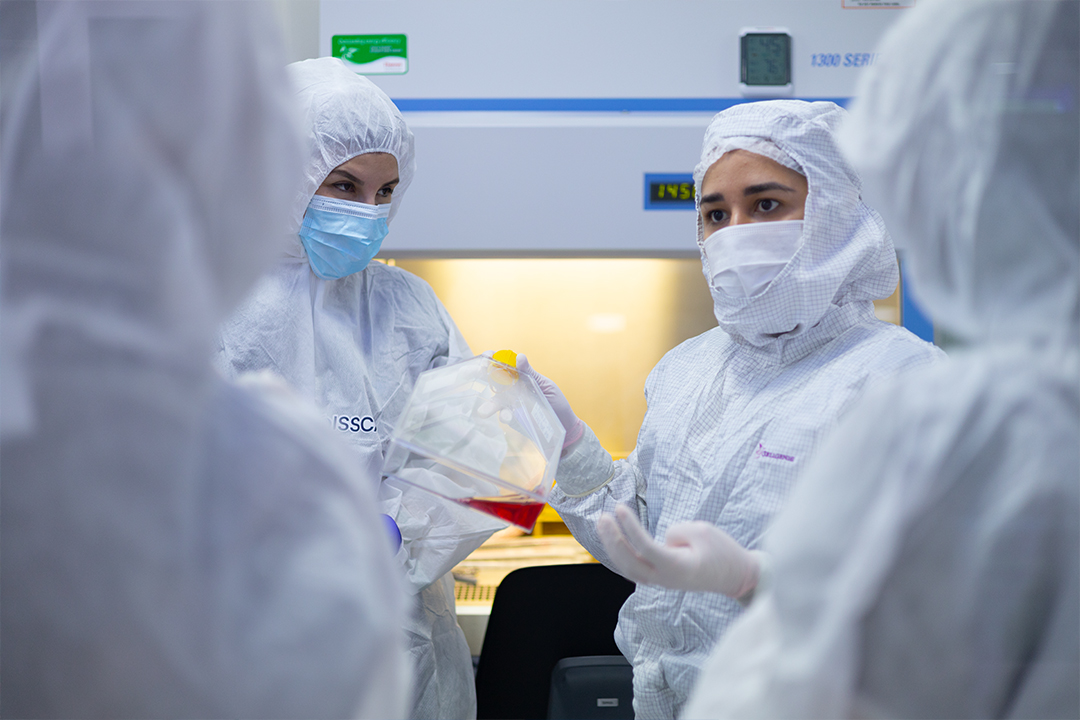
That’s why it’s extremely important to choose a clinic that follows strict medical protocols and uses sterile, single-use equipment, such as Cellular Hope Institute in Cancun, Mexico.
Our team of experienced physicians is committed to the highest safety and quality standards – we hold all three licenses issued by COFEPRIS for the applying, storing, and manufacturing of stem cells.
Allergic reactions or immune rejections
Speaking of the risks of stem cell therapy, another possible, but less frequent outcome are allergic reactions or immune rejections. This happens when your immune system recognizes something in the injected material as foreign.
This could be the donor stem cells themselves, residual proteins, or components used during cell processing. In most cases, these reactions are mild – but choosing high-quality, well-screened cells and a reputable medical team greatly reduces this risk.
Blood clots or unwanted tissue growth
These risks of stem cell therapy are incredibly rare – far less common than the possible mild reactions that you may experience.
In very unusual cases, stem cells can trigger small blood clots if they aggregate in the bloodstream, or they may contribute to abnormal tissue growth if they settle in the wrong area and begin repairing where they shouldn’t.
However, when the treatment is performed with properly processed cells and by experienced physicians such as our incredible team at Cellular Hope Institute, this outcome is extremely uncommon.
Serious Risks of Stem Cell Therapy
Now, let’s take a look at some potential more serious side effects or risks of stem cell therapy. Keep in mind that they are so rare that in some cases, they are considered theoretical because no real cases have been registered.
This can include:
- Tumor formation – some sources list the “possibility of stimulating tumor growth”, but multiple clinical trials with MSCs have shown no malignancies occurred.
- Severe immune reactions -in extremely rare cases, your body may overreact to donor cells and trigger a strong immune response. However, this is mostly theoretical and highly unlikely.
- Fatal complications – these are considered exceptionally rare and are typically linked to improper techniques or unregulated clinics, not the stem cells themselves. When treatments are performed by qualified professionals in accredited medical settings, the likelihood of fatal outcomes is exceedingly low.
How do I Reduce The Possible Side Effects And Risks of Stem Cell Therapy?
The good news is – most side effects and risks of stem cell therapy are mild and temporary, and if you choose to do your treatment with Cellular Hope Institute, you will have a great team by your side to ensure your safety throughout each step of the procedure.
Additionally, here’s how you can reduce any possible risks or side effects to the biggest extent:
- Choose a licensed, accredited clinic with strict medical protocols.
- Verify the source and quality of the stem cells.
- Work with physicians who specialize in regenerative medicine.
- Share your full medical history so the team can assess risks properly.
- Keep the injection site clean and avoid touching, rubbing, or scratching.
- Monitor for unusual symptoms and report them immediately.
- Avoid strenuous activity for the first 24-48 hours.
- Attend all follow-up appointments to track your progress and ensure safe recovery.
Most importantly, make sure to follow all pre-treatment instructions and aftercare guidelines provided by our team, and don’t forget that we are always by your side in case you have any concern.
Which Is The Top Stem Cell Clinic for Stem Cell Treatments?
The best stem cell clinic for getting the best stem cell treatments is Cellular Hope Institute, located in Cancun, México. We are known for our innovative facilities, advanced regenerative therapies, and a team of highly experienced physicians.
If you are looking to improve your symptoms while significantly improving your quality of life, look no further than Cellular Hope Institute. We will accompany you at every step of the process – from picking you up at the airport to ensuring top-notch post-treatment care.
Are you ready to get started? Schedule a consultation today.
FAQ
Can stem cell therapy cause cancer?
Concerns about cancer are common, but current clinical research shows no evidence that properly processed MSC-based stem cell therapy causes malignancy. The risk is considered theoretical and extremely low.
Choosing a reputable, accredited clinic and high-quality cells further minimizes any chance of abnormal cell growth.
What are the long-term risks of stem cell therapy?
Long-term risks of stem cell therapy are considered very low when treatments are performed with high-quality cells in accredited medical settings.
Most concerns – like abnormal tissue growth, immune reactions, or long-term inflammation – are largely theoretical. Clinical studies following patients for years show a strong safety profile with no major long-term complications reported.
How common are serious complications?
Serious complications from stem cell therapy are extremely rare, especially when treatments are done in accredited clinics using properly screened cells. Most patients experience only mild, short-term effects.
Severe reactions, infections, or long-term issues are uncommon and often linked to unregulated clinics rather than the therapy itself.
Can stem cell injections damage nerves or tissues?
Stem cell injections rarely damage nerves or tissues when performed by trained specialists using imaging guidance and proper techniques. Minor soreness or temporary irritation can occur, but significant injury is uncommon.
The risk increases only when injections are done by unqualified providers, which is why choosing an experienced medical team is essential.
Can stem cells migrate to the wrong part of the body?
Stem cells can theoretically migrate to unintended areas, but this is extremely rare when high-quality cells are used and administered correctly. Most stem cells stay where they’re placed or are safely cleared by the body.
Precise injection techniques and proper dosing significantly reduce the chance of cells moving to unwanted locations.
Are the risks higher if I have other medical conditions?
Certain medical conditions – like autoimmune disorders, active infections, or severe cardiovascular issues – may increase the risk of side effects from stem cell therapy. That’s why a full medical evaluation is essential before treatment.
With proper screening and medical oversight, most patients can still receive therapy safely and effectively.